










Bajaj Holdings & Investment Ltd Board Set for Q2 FY27 Results
Key highlights
- Bajaj Holdings is scheduled to consider unaudited Q2 FY27 results on November 3, 2026.
- Bajaj Holdings' April-June sales rose 21.5%, while profit declined 22.7%, according to the supplied data.
- Bajaj Holdings was shown with a market value above ₹1.15 lakh crore.
- Bajaj Holdings declared an interim dividend of ₹65 per share on September 15, 2026.
powered by IRIS
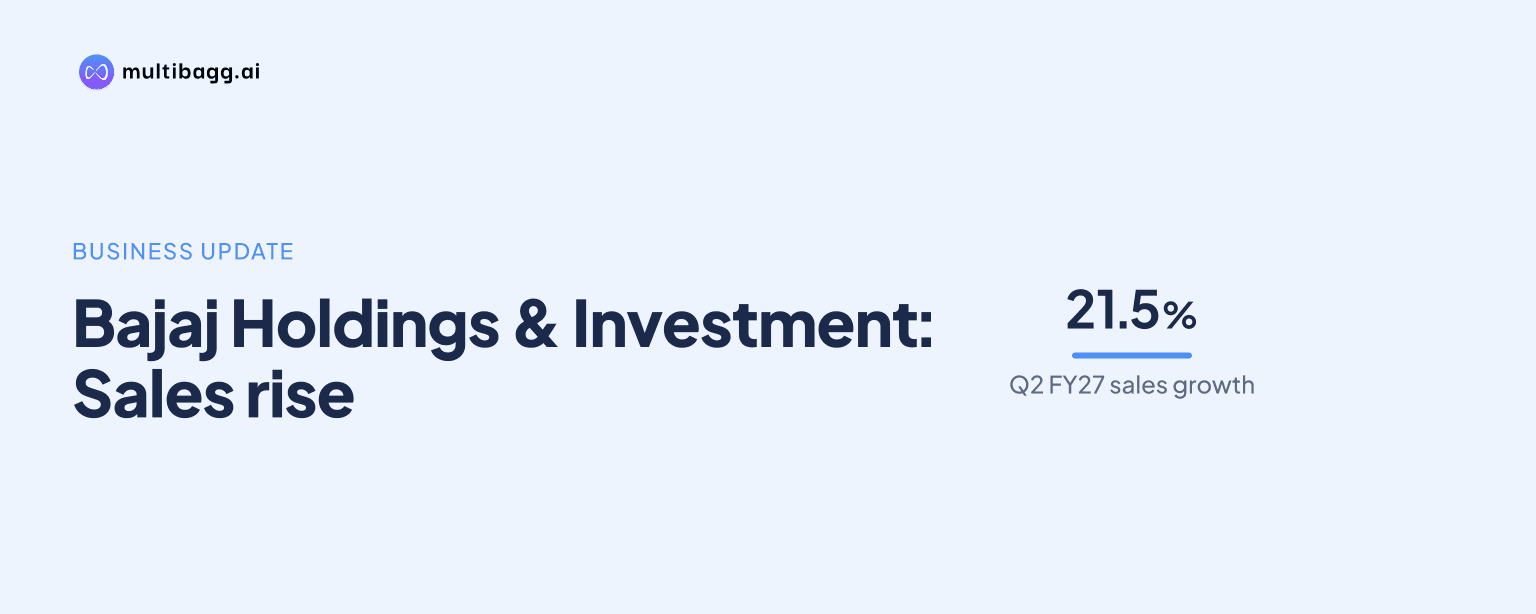
Bajaj Holdings & Investment Ltd is scheduled to consider unaudited Q2 FY27 results on November 3, 2026, for the quarter and half year ended September 30, 2026. The company, valued above ₹1.15 lakh crore in the supplied data, enters the meeting after April-June sales rose 21.5% while profit declined 22.7%.
Know Bajaj Holdings & Investment inside out
Results, valuation, peers and who's buying, in one view.
When will Bajaj Holdings announce Q2 FY27 results?
Bajaj Holdings is scheduled to consider its Q2 FY27 financial results at a board meeting on November 3, 2026. The results cover the July-September 2026 quarter and the first half of FY27, which ended on September 30, 2026.
The company informed the BSE that its board would consider and approve unaudited standalone and consolidated financial results. The supplied information does not include the Q2 FY27 revenue, profit, margin, or investment-income figures. As a result, the November 3 board meeting is the key disclosed event, rather than a confirmed set of quarterly earnings.
The meeting falls during a busy phase of the September-quarter earnings season. Several financial-sector and other major companies, including State Bank of India, Bajaj Finserv, National Stock Exchange of India, Lupin and Multi Commodity Exchange of India, were also listed as scheduled to report results on the same day.
What will the Bajaj Holdings board consider on November 3?
Bajaj Holdings will consider unaudited standalone and consolidated financial statements for the quarter and half year ended September 30, 2026. Standalone numbers generally present the company-level financial position, while consolidated numbers incorporate results of entities included under applicable accounting requirements.
The filing cited in the supplied material does not provide a management outlook, operational target, or expected financial outcome ahead of the meeting. Investors will therefore need to rely on the eventual exchange filing for reported financial data and any board-approved disclosures.
For a holding and investment company, the quarterly release can be relevant beyond sales and profit trends because it may provide context on investment-related income, expenses and changes reflected in its financial statements. However, no such Q2-specific detail was available in the information provided before the scheduled board meeting.
What was Bajaj Holdings' most recent reported performance?
The available data says Bajaj Holdings recorded sales growth of 21.5% in the April-June quarter, while profit declined 22.7%. This divergence makes the upcoming quarterly disclosure relevant because it will show whether the gap between sales growth and profit movement continued into the July-September period.
The company was shown with a market value above ₹1.15 lakh crore. Market value represents the value assigned by the equity market to the company and is distinct from quarterly sales, profit, cash flow or the value of individual investments.
The supplied material does not provide comparable absolute sales or profit figures for Bajaj Holdings. It also does not state the reasons for the reported decline in profit. Any explanation of the movement would require details from the company's quarterly filing or subsequent management communication.
Got a follow-up? Ask IRIS
How does the interim dividend fit into the Q2 results schedule?
Bajaj Holdings declared an interim dividend of ₹65 per equity share on September 15, 2026, for the financial year ending March 31, 2027. The dividend was stated as 650% on an equity share with a face value of ₹10.
That declaration preceded the scheduled Q2 FY27 board meeting. An interim dividend is a board-approved shareholder distribution and should not be treated as a substitute for quarterly earnings. The November 3 meeting is specifically scheduled to consider the company's unaudited financial results for the September quarter and first half.
The dividend disclosure provides a dated corporate-action reference for investors following the company during FY27. But the supplied information does not connect the dividend decision to any particular Q2 operating or financial metric, so no such link can be established from the available details.
Why does the Q2 update matter to investors?
The Q2 update matters because it will provide the next formal financial checkpoint after the supplied April-June data showed higher sales but lower profit. Investors will be able to compare the reported July-September figures with that prior-quarter trend once the company files its results.
The disclosure also arrives when earnings announcements across banking and financial services are drawing market attention to revenue growth, profitability and management commentary. For Bajaj Holdings, the market will have confirmed company-specific information only after the board considers the results and the financial statements are released.
No share-price movement, analyst estimate, guidance revision or Q2 financial result for Bajaj Holdings was included in the supplied data. Accordingly, there is no basis to quantify an immediate market impact before the company makes its filing.
Conclusion
Bajaj Holdings is scheduled to consider unaudited standalone and consolidated Q2 FY27 results on November 3, covering the quarter and half year ended September 30. The available context shows April-June sales growth of 21.5%, a 22.7% decline in profit and a market value above ₹1.15 lakh crore, but it does not include September-quarter earnings figures.
The next item to watch is the board-approved exchange filing from the November 3 meeting. That disclosure should establish the reported Q2 and first-half financial performance, while allowing investors to assess the results against the prior-quarter sales and profit movements and the September 15 interim dividend declaration.