








Castrol India Limited Moves Under Stonepeak's Indirect Control
Key highlights
- Motion JVCo completed the promoter-level acquisition on October 30, 2026.
- Castrol Limited holds 50.45 crore Castrol India shares, representing 51% of equity.
- bp retains a 35% non-controlling interest in Motion JVCo after the deal.
- The wider Castrol transaction was reported at an enterprise value of about US$10.1 billion including debt.
powered by IRIS
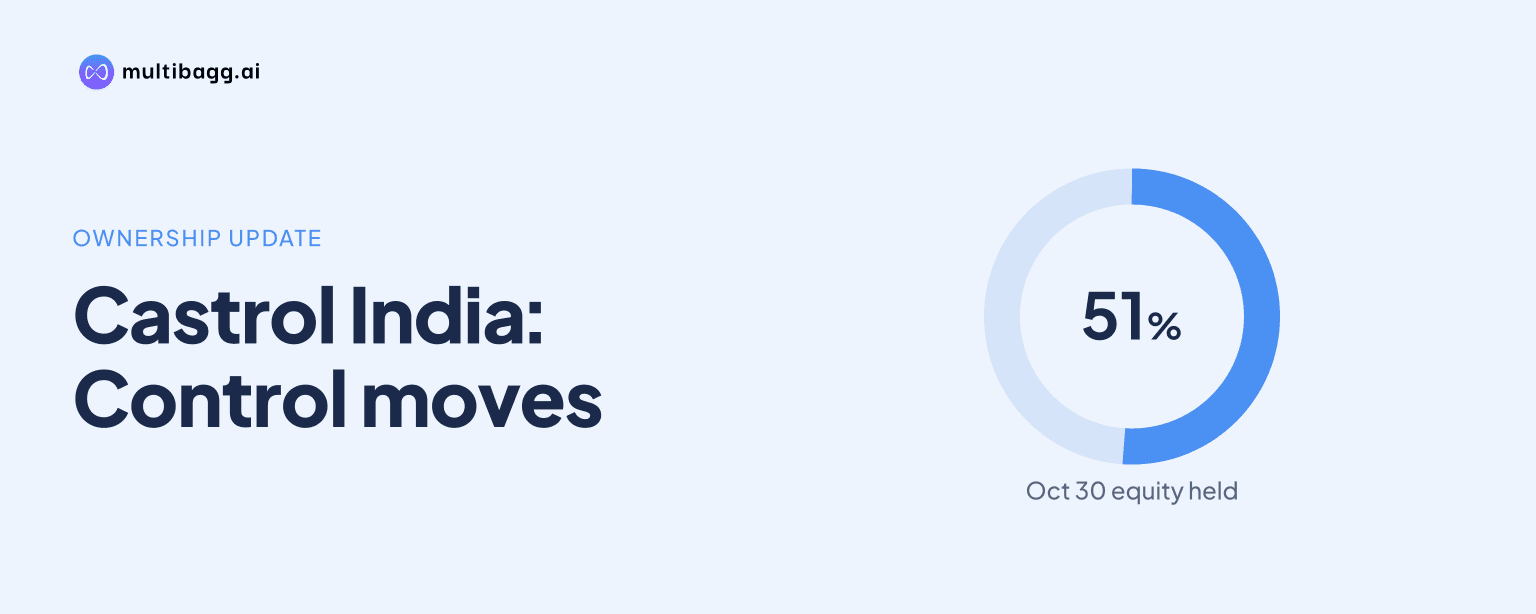
Castrol India Limited moved under Stonepeak's indirect control on October 30, 2026, after Motion JVCo Limited acquired the promoter chain that holds 51% of the Indian lubricant company. The transaction transfers control from bp p.l.c. to Stonepeak while bp retains a 35% non-controlling interest in Motion JVCo.
Know Castrol India inside out
Results, valuation, peers and who's buying, in one view.
How did Stonepeak gain indirect control of Castrol India?
Stonepeak gained indirect control of Castrol India through Motion JVCo's acquisition of Castrol Group Holdings Limited from bp. Stonepeak Infrastructure Fund V carried out the acquisition through Motion JVCo, which acquired 100% of the equity share capital of Castrol Group Holdings Limited, or CGHL.
CGHL owns 100% of Castrol Limited, the promoter of Castrol India. Castrol Limited holds 50.45 crore equity shares in Castrol India, representing 51% of the company's total equity share capital. Control of CGHL therefore resulted in Motion JVCo obtaining sole indirect control of Castrol Limited and Castrol India.
The control transfer includes voting rights attached to Castrol Limited's 51% holding. Castrol India disclosed the completion of the transaction in a regulatory filing dated November 2, 2026. The company said the change arose from the completion of the offshore promoter-level transaction rather than from a direct purchase of its listed shares.
The sale and purchase agreement for the transaction had been signed on December 23, 2025. Completion on October 30, 2026, brought the deal from its announced stage to a completed ownership transition for the Castrol business and its related shareholdings.
What are the key terms of the Castrol transaction?
The completed transaction gives Motion JVCo full ownership of CGHL, while bp continues as a minority investor in the acquiring vehicle. As part of the arrangement, Motion JVCo issued and allotted shares equal to 35% of its share capital to BP Motion Holdings Limited, an indirect wholly owned subsidiary of bp.
This structure means Stonepeak holds control of Motion JVCo, while bp has a non-controlling interest in it. As a result, bp no longer has indirect control over Castrol India despite retaining economic exposure to the wider Castrol business through its stake in Motion JVCo.
The broader Castrol deal was announced in December 2025. bp agreed to sell a 65% stake in its lubricants business to Stonepeak for around US$6 billion in net proceeds, with the transaction valuing Castrol at about US$10.1 billion including debt. Canada Pension Plan Investment Board was also identified as an investor in the transaction, with an investment of up to US$1.05 billion.
Why is the promoter shareholding important for Castrol India investors?
The promoter holding is important because the 51% stake gives its owner majority voting rights in Castrol India. With the acquisition complete, Stonepeak controls the promoter chain and the voting rights attached to the 50.45 crore shares held by Castrol Limited.
The transaction does not alter the number of shares held by Castrol Limited in Castrol India. Rather, it changes the party that indirectly controls the promoter entity. For public shareholders, this distinction is significant because a listed company's promoter shareholding can remain unchanged even when its ultimate controlling shareholder changes.
The source material also states that Motion JVCo, Stonepeak Motion Holdco Limited and CPP Investment announced an open offer to acquire up to 26% of Castrol India. The offer was linked to the indirect acquisition of control following the global Castrol deal. A previously reported offer size was ₹4,990 crore at ₹194.04 per share.
The completion filing establishes that the indirect control transaction has closed. It does not, by itself, provide an outcome for the open offer or state the final level of shares that may be tendered by public shareholders.
Got a follow-up? Ask IRIS
What is the background to bp's sale of Castrol?
The sale forms part of bp's wider asset-sale programme. The company had outlined plans to sell US$20 billion of assets as it sought to reduce net debt from US$26 billion to a range of US$14 billion to US$18 billion by the end of 2027. The Castrol transaction was reported as bp's largest divestment under that programme.
Castrol India has had a long-standing promoter relationship with bp. Historical disclosures cited in the source material show that bp reduced its holding in Castrol India through earlier stake sales while retaining majority ownership. After those sales, the promoter's holding stood at about 51%, which is now owned by Castrol Limited within the acquired corporate chain.
The wider Castrol portfolio also includes minority interests in businesses across several markets. The disclosed markets include India, Vietnam, Saudi Arabia and Thailand. The India transaction is notable because Castrol Limited's 51% shareholding in the listed company gives the acquiring group majority control rather than merely a minority economic interest.
How does the ownership change affect Castrol India's operations and market position?
The disclosed event is an ownership and control change at the promoter level. The information provided does not announce changes to Castrol India's management, operating strategy, manufacturing arrangements, product portfolio or customer operations. Its immediate relevance is the transfer of ultimate control and voting rights from bp to Stonepeak.
For investors, the central facts are the completed October 30 transaction, the promoter's 51% shareholding and bp's continuing 35% non-controlling interest in Motion JVCo. These details define the post-transaction ownership structure and explain why Stonepeak, rather than bp, now indirectly controls the listed company.
The transaction also places Castrol India within an investor-led ownership structure in which Stonepeak has control and bp remains a minority participant. Any future operational changes, board actions or updates on the proposed open offer would need to be assessed through subsequent company disclosures and applicable regulatory filings.
Conclusion
Castrol India has undergone a change in ultimate ownership without a direct transfer of the promoter's listed shareholding. Motion JVCo's acquisition of CGHL transferred indirect control of Castrol Limited, which owns 50.45 crore Castrol India shares, or 51% of the company's equity. Stonepeak now controls that promoter chain, while bp has retained a 35% non-controlling interest in Motion JVCo.
Investors will next watch for disclosures on the proposed open offer for up to 26% of Castrol India and any filings that clarify its progress or outcome. Market participants may also monitor future updates from Castrol India on governance, management and operating plans following the completed promoter-level control transfer.