










Krsnaa Diagnostics: Rajasthan Rollout Shifts the Investment Case
Key highlights
- The Rajasthan PPP was previously expected to generate ₹300-350 crore in annual revenue.
- A court ruled in KDL's favour on the Rajasthan pathology tender in August 2023.
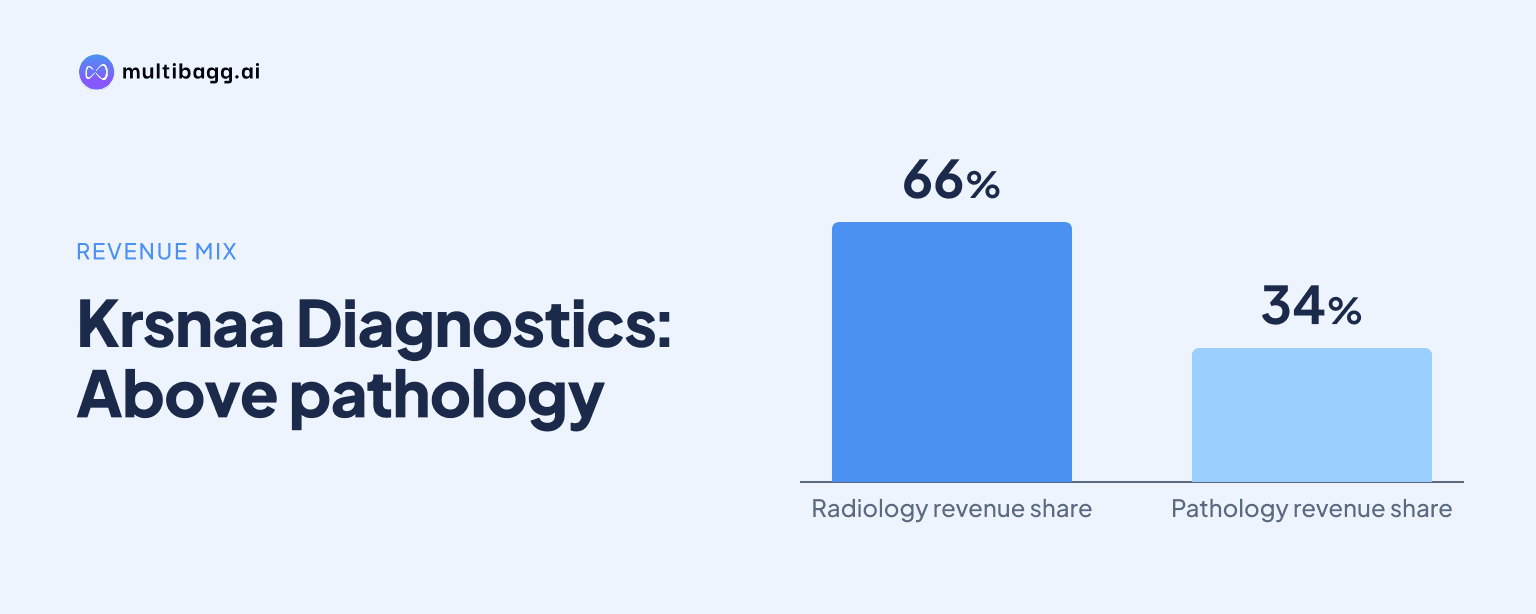
- KDL reported radiology at 66% of revenue and pathology at 34% of revenue.
- The proposed ADB debt financing for KDL's network expansion was up to ₹430 crore.
powered by IRIS
Krsnaa Diagnostics Limited's investment case is increasingly tied to the Rajasthan PPP rollout, previously framed as a ₹300-350 crore annual revenue opportunity, alongside a planned retail mix shift and a large capital expenditure programme. The revised emphasis matters because Krsnaa Diagnostics Limited remains heavily exposed to government-linked diagnostic contracts and their implementation timelines.
Know Krsnaa Diagnostics inside out
Results, valuation, peers and who's buying, in one view.
Why has the Rajasthan PPP become central to the Krsnaa Diagnostics case?
The Rajasthan public-private partnership, or PPP, rollout has become a larger part of the case because it offers a potentially material revenue stream if implemented as planned. Earlier assessments treated the Rajasthan opportunity as a single large contract expected to generate ₹300-350 crore annually. The current view gives greater weight to the visibility of the rollout rather than treating it only as a contract win.
The company had received a letter relating to the Rajasthan pathology tender in May 2023. In August 2023, a court ruled in the company's favour and directed it to meet conditions related to additional performance security. The source states that authorities were then willing to proceed with the agreement, with no contest remaining between the parties. Revenue from that contract was expected to begin accruing in calendar year 2024 or FY25.
The distinction is important for a PPP-focused operator. A tender award does not by itself create revenue, as centres, laboratories, equipment and operational systems must be deployed under the agreed conditions. The Rajasthan opportunity therefore links financial expectations to implementation progress, contractual compliance and the start of diagnostic activity.
How does KDL's business model support the expansion plan?
KDL operates a technology-enabled diagnostics model spanning imaging, clinical laboratory services and teleradiology. Its operating mix differs from listed diagnostic peers that are more focused on business-to-consumer pathology, as KDL has a substantial business-to-government presence through PPP arrangements with government healthcare facilities.
Under this model, KDL deploys and operates diagnostic centres after winning tenders from central, state or municipal authorities. The source describes radiology as contributing 66% of revenue and pathology as contributing 34%. It also says the company provides tests at prices typically 50-60% below peers, positioning affordability as a central feature of its service proposition.
The company has reported an established PPP footprint of more than 2,020 diagnostic centres across 15 states and two union territories, Delhi and Chandigarh. It has also operated centres under partnerships with private hospitals. This network is relevant to the retail strategy because existing pathology infrastructure may support additional collection centres and direct access to individual consumers.
Got a follow-up? Ask IRIS
What are the retail mix and capex plans?
The revised thesis places more emphasis on KDL's intended shift towards a higher retail mix and its planned capital expenditure programme. The stated growth strategy included expanding pathology by using existing diagnostic infrastructure, adding collection centres and reaching end consumers through digital marketing and awareness of its pricing.
A retail expansion can broaden the customer base beyond institutional contracts, but the source does not quantify the expected change in retail contribution or give a detailed capex amount for the current plan. It does, however, outline a network expansion project for which the Asian Development Bank proposed debt financing of up to ₹4,300 million, equivalent to ₹430 crore, through senior secured non-convertible debentures.
Capital spending is particularly relevant in radiology, where CT and MRI equipment must be installed and maintained. Earlier disclosures listed contracts involving CT scanners, MRI scanners, laboratories and collection centres across several states. These projects can create long-tenure operating opportunities, but they also require timely deployment before revenue can build.
What risks should investors consider in KDL's PPP model?
Execution, PPP dependence and margin pressure are the clearest risks identified in the revised thesis. Revenue visibility from long-term government contracts can be valuable, but it is dependent on tender processes, legal clearances, performance-security requirements, centre commissioning and operating conditions set by public authorities.
KDL's government-linked model also creates exposure to a smaller set of large contracts than a widely dispersed consumer diagnostics business. Delays in activation or changes in tender conditions could affect the timing of revenue recognition. The Rajasthan legal process illustrates why an awarded opportunity may still require further steps before operations begin.
Margin pressure is another consideration because KDL's affordable-pricing model and radiology-heavy operations require continued control over equipment, staffing and operating costs. The source does not provide current margin figures, so no conclusion can be drawn on the scale of any pressure. Investors will need to assess reported profitability alongside progress in new centre activation and retail expansion.
How does the AI collaboration fit KDL's operations?
KDL has announced a strategic collaboration with AZmed, a medical imaging company specialising in artificial intelligence solutions for radiology. The announcement is relevant because radiology is the larger component of KDL's reported revenue mix and is central to many of its PPP contracts.
The source does not disclose financial terms, a deployment timetable or a quantified impact on revenue or costs from the collaboration. It therefore provides evidence of an operational initiative, rather than a basis to estimate earnings impact. Its relevance will depend on how the technology is deployed across KDL's imaging network.
Conclusion
Krsnaa Diagnostics Limited's revised investment case is defined by the execution of the Rajasthan PPP opportunity, the attempt to build a larger retail presence and the funding and delivery of network expansion. The ₹300-350 crore earlier annual expectation for Rajasthan makes implementation progress more significant than a conventional tender announcement.
Investors should watch for disclosed progress on Rajasthan commissioning and revenue accrual, changes in retail mix, capital expenditure execution and profitability trends. Updates on the AZmed collaboration and any further detail on the proposed ₹430 crore ADB-backed debt financing would also help clarify the pace and cost of expansion.