










Quadrant Televentures Limited Files Resolution Plan With NCLT
Key highlights
- Quadrant Televentures filed its CoC-approved resolution plan with NCLT Mumbai Bench-I on August 27, 2026.
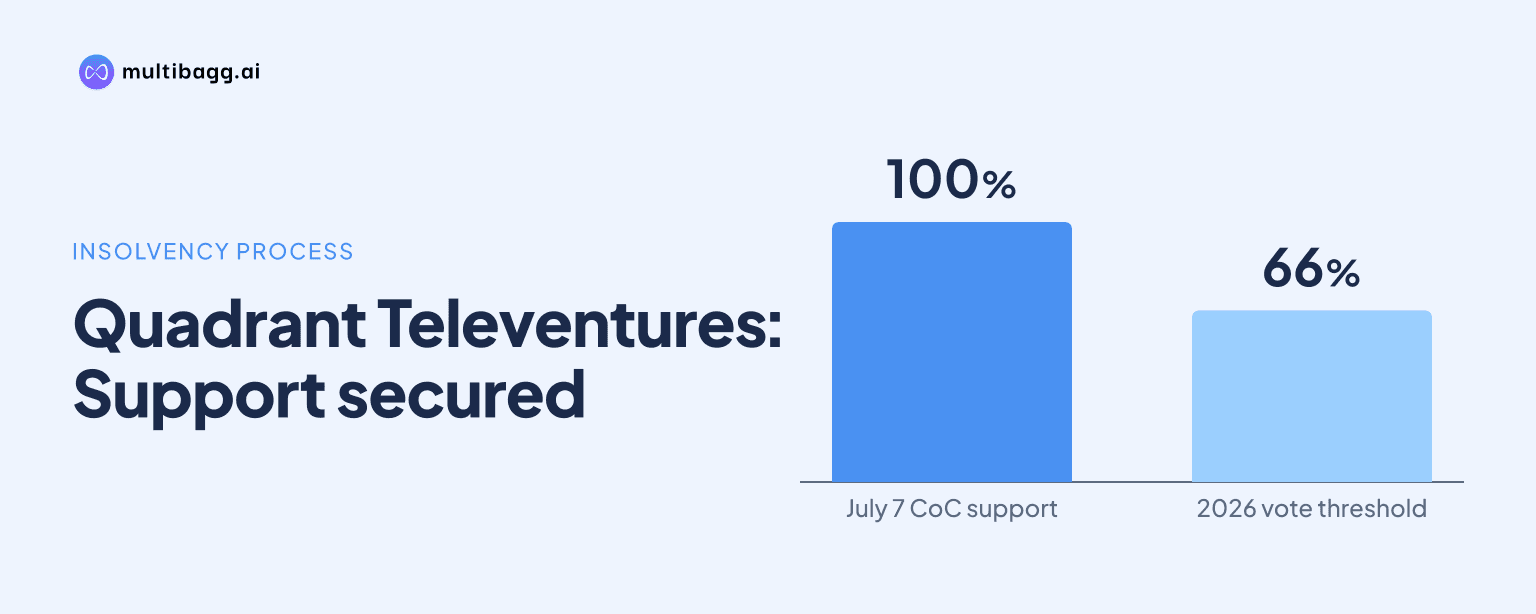
- The selected plan secured 100% creditor voting support at the 12th CoC meeting on July 7, 2026.
- The stated voting threshold for approving a resolution plan was 66%.
- Quadrant Televentures has been under CIRP since the NCLT order dated September 2, 2025.
powered by IRIS
Quadrant Televentures Limited filed a resolution plan with NCLT Mumbai Bench-I on August 27, 2026, after the plan secured 100% voting support from its Committee of Creditors, moving the company’s insolvency process to the tribunal approval stage.
Know Quadrant Televentures inside out
Results, valuation, peers and who's buying, in one view.
What did Quadrant Televentures Limited file with the NCLT?
Quadrant Televentures filed the resolution plan approved by its Committee of Creditors, or CoC, before NCLT Mumbai Bench-I for final approval under Section 31 of the Insolvency and Bankruptcy Code, or IBC. The submission was made by the Resolution Professional on August 27, 2026, according to the company’s disclosure.
The filing is a procedural milestone in the Corporate Insolvency Resolution Process, or CIRP, of Quadrant Televentures. The company has been under CIRP since an NCLT order dated September 2, 2025. A CoC-approved plan does not take effect immediately, as the tribunal must first examine it under the applicable provisions of the IBC.
The available disclosure does not identify the successful resolution applicant or state the financial terms of the approved plan. It also does not provide proposed recoveries for creditors, the treatment of existing shareholders, or any operational proposal for the company after implementation.
How did the Committee of Creditors approve the plan?
Quadrant Televentures’ CoC approved one resolution plan with 100% voting support at its 12th meeting held on July 7, 2026. The voting level was above the stated 66% threshold required for approval of a resolution plan.
Creditors considered multiple plans submitted during the process. One proposal received unanimous support, while the other submitted resolution plans were rejected, according to the investor disclosure. The unanimous vote establishes creditor consensus on the selected proposal, but does not replace the NCLT’s statutory review.
The company’s subsequent disclosures show that the CIRP continued through further CoC meetings. At the 15th CoC meeting on August 25, 2026, the sole voting item related to approval of an agenda on shorter notice was also approved with 100% votes in favour. The 17th meeting approved the appointment of legal counsel for a Department of Telecommunications, or DoT, application on October 17, 2026.
Why is NCLT approval still required for the resolution plan?
NCLT Mumbai Bench-I must approve the plan under Section 31 of the IBC before it can become binding on the relevant parties. The tribunal’s review follows the CoC’s commercial decision and determines whether the submitted plan meets the legal requirements applicable to a CIRP resolution.
Until the tribunal passes an order, the CIRP outcome remains unresolved and implementation of the approved plan does not commence. The disclosures describe the August 27 submission as a filing for final approval, not as confirmation that the NCLT has sanctioned the proposal.
This distinction is material for investors and creditors. The 100% CoC vote shows that lenders agreed on a plan, but the available information does not disclose the plan’s consideration, implementation timeline, or the identity of the applicant. Those details are not established by the CoC voting result alone.
Got a follow-up? Ask IRIS
How did the resolution process develop before the filing?
Quadrant Televentures’ resolution process included a reissue of Form G after the CoC relaxed eligibility norms at its January 27, 2026 meeting. Form G is used in the CIRP process to invite expressions of interest from prospective resolution applicants.
The process included several revised dates for expressions of interest and resolution-plan submissions. Disclosures show invitations or extensions dated February 15, February 21 and March 2, 2026. The March 2 entry stated that the deadline for submission of expressions of interest had been extended until March 2 and that no further extension would be granted.
The sequence indicates that the CoC continued the process after modifying eligibility conditions and granting requested extensions. Multiple resolution plans were eventually evaluated before creditors selected one plan at the July 7 meeting. The filing at the NCLT followed on August 27.
What does the filing mean for investors and creditors?
For creditors, the NCLT filing advances the process from plan selection to judicial consideration. The confirmed facts are that creditors unanimously approved one plan and that it has been submitted to the tribunal. The disclosures do not state the amount creditors may recover or when recoveries could occur.
For investors, the filing creates a defined next procedural milestone: the NCLT’s decision under Section 31. There is no disclosed basis to quantify the effect on equity holders because the plan’s financial terms, ownership structure and treatment of existing equity have not been provided.
The DoT-related legal-counsel decision at the 17th CoC meeting also indicates that regulatory or sector-related matters remain part of the ongoing CIRP administration. However, the disclosure does not specify the nature of the proposed application or its implications for the resolution plan.
Conclusion
Quadrant Televentures has reached an advanced stage of its CIRP, with one resolution plan receiving 100% CoC support on July 7, 2026 and being filed with NCLT Mumbai Bench-I on August 27. The process has therefore moved beyond creditor selection, but tribunal approval remains necessary before the plan can be implemented.
The next disclosed issue to watch is the NCLT Mumbai Bench-I’s order under Section 31 of the IBC. Investors may also monitor future company disclosures for the approved applicant’s identity, financial terms, creditor recoveries, treatment of equity holders and developments related to the DoT application.