










Raymond Lifestyle Reports Record ₹2,125 Crore Q2 Income
Key highlights
- Raymond Lifestyle reported record Q2 FY27 total income of ₹2,125 crore, up 14% year-on-year.
- Q2 FY27 EBITDA rose 4% to ₹270 crore, while EBITDA margin declined to 12.7% from 13.9%.
- Garmenting revenue increased 26% to ₹339 crore and branded apparel revenue rose 20% to ₹559 crore in Q2 FY27.
- H1 FY27 total income grew 10% to ₹3,685 crore and EBITDA increased 6% to ₹404 crore.
powered by IRIS
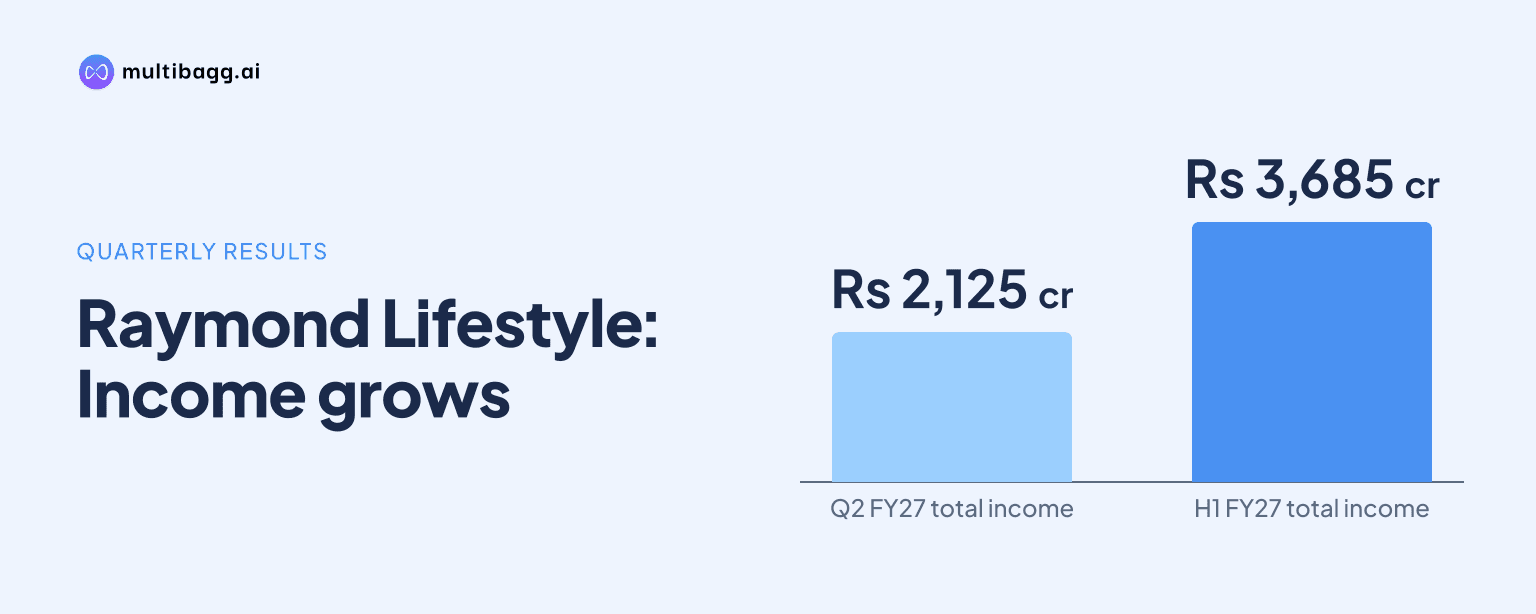
Raymond Lifestyle Limited reported record total income of ₹2,125 crore in Q2 FY27, up 14% from ₹1,865 crore a year earlier, while EBITDA increased 4% to ₹270 crore. The result matters because revenue growth across its garmenting and branded apparel businesses outpaced EBITDA growth, resulting in lower operating margins.
Know Raymond inside out
Results, valuation, peers and who's buying, in one view.
What did Raymond Lifestyle report for Q2 FY27?
Raymond Lifestyle Limited reported its highest-ever quarterly total income of ₹2,125 crore for Q2 FY27, compared with ₹1,865 crore in Q2 FY26. Total income increased 14% year-on-year, while revenue from operations rose 13.2% to ₹2,075 crore from ₹1,832 crore in the corresponding quarter of the previous year.
EBITDA for the September-quarter period stood at ₹270 crore, compared with ₹259 crore a year earlier. This represented 4% year-on-year growth. EBITDA margin was 12.7%, lower than 13.9% in Q2 FY26, reflecting increased marketing investment and input-cost pressure cited in the reported results.
The quarterly numbers show that Raymond Lifestyle expanded its top line despite a margin decline. The difference between revenue growth and EBITDA growth indicates that operating costs rose faster than income during the quarter.
Which businesses drove Raymond Lifestyle's quarterly growth?
Raymond Lifestyle's garmenting and branded apparel operations were the main reported contributors to Q2 FY27 growth. Garmenting revenue rose 26% year-on-year to ₹339 crore, while branded apparel revenue increased 20% to ₹559 crore.
These business-level growth rates were higher than the 13.2% rise in consolidated revenue from operations. The data indicates that demand and execution in garmenting and branded apparel supported the broader quarterly income performance.
The company did not provide segment-level EBITDA figures in the supplied information. As a result, the available data does not establish how much each business contributed to the consolidated EBITDA increase of ₹11 crore during the quarter.
Marketing investment was one of the factors affecting margins. Input-cost pressure was another stated factor. Together, these costs reduced the EBITDA margin even as the company reported record total income.
How did Raymond Lifestyle perform in the first half of FY27?
Raymond Lifestyle reported total income of ₹3,685 crore for the half-year ended September 30, 2026, up 10% from ₹3,340 crore in H1 FY26. EBITDA increased 6% to ₹404 crore from ₹381 crore over the same period.
The H1 EBITDA margin was 11.0%, compared with 11.4% in the prior-year half. The 40-basis-point reduction was smaller than the quarterly margin contraction, although EBITDA growth remained below total-income growth for the six-month period.
The first-half result followed a stronger second quarter, when total income reached ₹2,125 crore. The disclosed figures show that Raymond Lifestyle maintained income and EBITDA growth across the first six months while absorbing higher marketing expenditure and input costs.
Got a follow-up? Ask IRIS
Why did Raymond Lifestyle's EBITDA margin decline?
Raymond Lifestyle's EBITDA margin declined because marketing investments increased and input costs remained under pressure. In Q2 FY27, the margin fell to 12.7% from 13.9%, while the H1 margin declined to 11.0% from 11.4%.
A margin measures EBITDA as a proportion of income. Therefore, the reported decline means EBITDA did not increase at the same pace as total income. In Q2, total income rose 14%, against 4% EBITDA growth. In H1, total income rose 10%, against 6% EBITDA growth.
The figures nevertheless show positive operating-profit growth in both periods. For investors, the result separates two elements of the performance: continued sales expansion in key businesses and a lower share of income being retained as EBITDA.
No share-price movement, net-profit figure, dividend announcement, or forward earnings guidance for Raymond Lifestyle was included in the supplied information. The reported assessment said the H1 performance remained aligned with the company's annual targets.
What does the result mean for investors and the apparel business?
The result shows that Raymond Lifestyle recorded its highest quarterly total income while its key garmenting and branded apparel businesses delivered double-digit revenue growth. Garmenting revenue growth of 26% and branded apparel growth of 20% were notable contributors to the Q2 outcome.
For investors, the key financial issue is the relationship between revenue growth and margins. The company generated ₹260 crore more total income in Q2 FY27 than in Q2 FY26, but EBITDA increased by ₹11 crore, with the margin falling 120 basis points.
The reported performance also highlights the operating effect of promotional and marketing expenditure in apparel-led businesses. Marketing can support brand visibility and sales, but the disclosed quarter shows that higher spending, along with input costs, weighed on profitability ratios.
Conclusion
Raymond Lifestyle delivered record Q2 FY27 total income of ₹2,125 crore and maintained first-half income growth of 10%, supported by higher garmenting and branded apparel revenue. EBITDA also rose in both periods, although margin contraction reflected higher marketing investment and input-cost pressure.
The next areas to watch are whether the company can sustain growth in garmenting and branded apparel and how marketing and input costs affect margins through the remainder of FY27. The company has stated that its first-half execution remains aligned with annual targets, but no further numerical target was disclosed in the supplied information.