










Sun Pharma Advanced Research Company posts ₹24.39 crore Q2 loss
Key highlights
- SPARC reported a consolidated Q2 FY27 loss of ₹24.39 crore on revenue from operations of ₹30.03 crore.
- Consolidated loss after tax for the half year ended September 30, 2026 was ₹45.17 crore.
- Operating cash flow was positive at ₹1,685.17 crore, primarily due to working-capital adjustments.
- SPARC disclosed a ₹12.36 crore exceptional item and allotted warrants at ₹155.80 each.
powered by IRIS
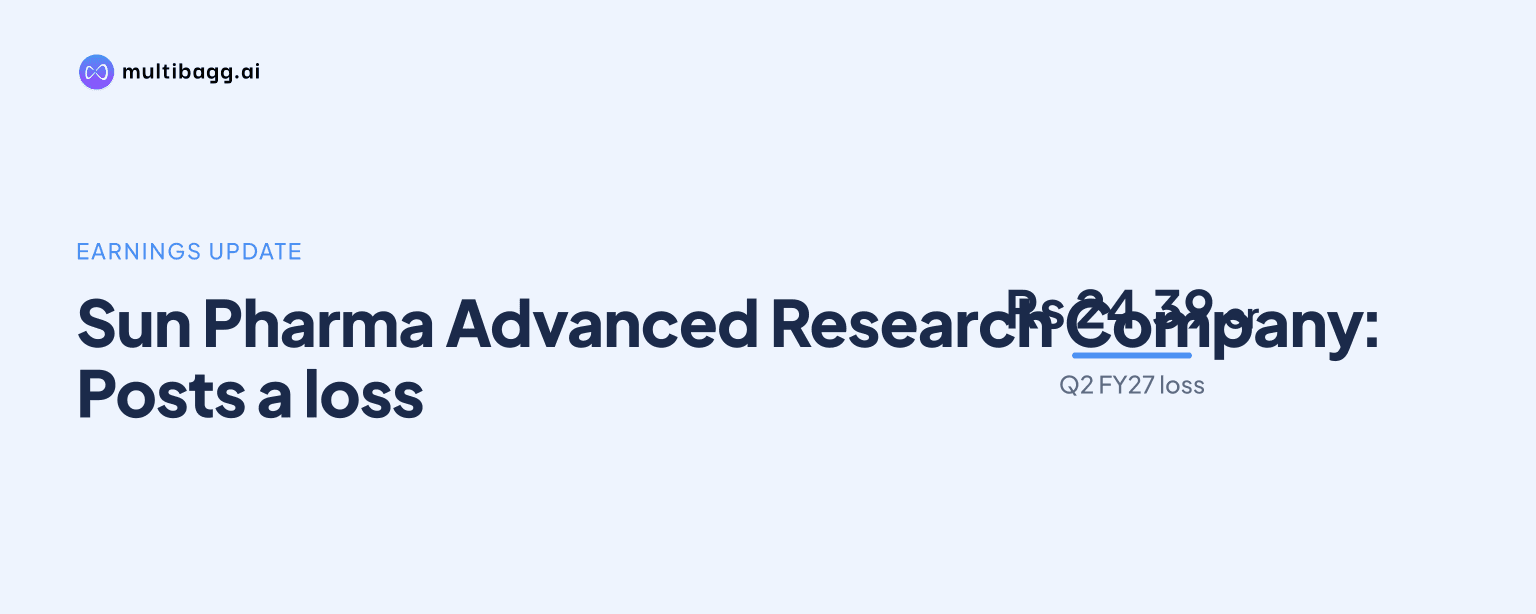
Sun Pharma Advanced Research Company Limited reported a consolidated loss of ₹24.39 crore for the quarter ended September 30, 2026, against revenue from operations of ₹30.03 crore, as lower operating income and expenses kept the research-focused company in the red. The Board approved the unaudited Q2 FY27 results on November 2, 2026.
Know Sun Pharma Advanced Research Company inside out
Results, valuation, peers and who's buying, in one view.
What did SPARC report for Q2 FY27?
SPARC reported consolidated revenue from operations of ₹30.03 crore for the September 2026 quarter and a consolidated loss for the period of ₹24.39 crore. Consolidated total comprehensive loss was ₹25.96 crore. The reported figures were prepared under Indian Accounting Standards, or Ind AS, and remain unaudited.
On a standalone basis, SPARC reported revenue from operations of ₹30.03 crore during the quarter. Total income was ₹53.65 crore, while total expenses were ₹78.23 crore. This resulted in a standalone loss before tax and loss after tax of ₹24.58 crore. Standalone total comprehensive loss was ₹26.22 crore.
The difference between revenue from operations and total income reflects other reported income within the standalone statement. The company did not report a tax charge for the quarter in the supplied financial information, leaving the standalone loss before tax unchanged at the loss after tax level.
How did the first half of FY27 perform?
For the half year ended September 30, 2026, SPARC reported consolidated revenue from operations of ₹69.95 crore and a consolidated loss after tax of ₹45.17 crore. Consolidated loss before tax was ₹44.98 crore, while total comprehensive loss was ₹46.72 crore.
Standalone revenue from operations for the April-September period was also ₹69.95 crore. The standalone loss before tax and loss after tax was ₹45.56 crore, and total comprehensive loss was ₹47.20 crore. These figures show that the company continued to record losses during the first six months of FY27 despite reporting operating revenue.
The supplied information separately describes consolidated revenue of ₹53.65 crore for the half year and a 20.5% year-on-year decline from ₹67.83 crore. However, the detailed consolidated financial overview states half-year revenue from operations of ₹69.95 crore. The detailed results distinguish revenue from operations from total income, and investors should refer to the company’s filed financial statements for line-item reconciliation.
What exceptional items and financing actions were disclosed?
SPARC disclosed a one-time exceptional item of ₹12.36 crore connected with labour code compliance and proceeds from the sale of a Priority Review Voucher. The information provided does not give a detailed allocation of the exceptional item between these two components or specify the accounting line in which each component was recorded.
The company also allotted convertible warrants to Shanghvi Finance Private Limited at ₹155.80 per warrant. Under the disclosed terms, 25% of the warrant price was paid upfront. Convertible warrants can result in an increase in share capital if they are converted in accordance with their terms, although the supplied information does not quantify the number of warrants, potential dilution, or conversion timeline.
The Board’s approval covers both standalone and consolidated results. No immediate shareholder impact was quantified in the supplied material. Investors assessing the financing action would need details such as the warrant count, conversion conditions and applicable regulatory filings to calculate any potential equity impact.
Got a follow-up? Ask IRIS
Why did operating cash flow turn positive?
SPARC reported positive cash flow from operations of ₹1,685.17 crore, primarily because of working-capital adjustments. This was a notable change in the cash-flow statement even as the company reported accounting losses for both the quarter and the six-month period.
Cash flow from operations and profit after tax measure different aspects of financial performance. Profit after tax reflects income, expenses and accounting adjustments for a period, while operating cash flow also captures movements in items such as receivables, payables and other working-capital balances. The supplied results attribute the positive operating cash flow to such adjustments and to one-time gains, rather than to a quantified improvement in recurring profitability.
The scale of the reported operating cash flow relative to the reported loss makes the composition of working-capital movements important for investors. The available information does not provide a line-by-line cash-flow bridge, so it does not establish whether this level of operating cash generation is recurring.
How do the Q2 numbers compare with recent results?
SPARC entered the September quarter after reporting a consolidated net loss of ₹20.78 crore in the June 2026 quarter. June-quarter consolidated net sales were ₹39.92 crore, compared with ₹9.64 crore in the June 2025 quarter, according to the supplied quarterly data. The September-quarter consolidated loss of ₹24.39 crore was therefore higher than the June-quarter loss cited in the available information.
The company had also reported a consolidated net profit of ₹1,553.20 crore for FY26, compared with a net loss of ₹342.51 crore in the previous year. That reported FY26 turnaround needs to be viewed alongside the disclosed sale of a Priority Review Voucher and other exceptional or non-recurring factors, as the current Q2 and half-year results show continuing losses from the reported period.
For the pharmaceutical research sector, revenue can be uneven because licensing transactions, development milestones, intellectual-property monetisation and research spending can materially affect individual reporting periods. SPARC’s Q2 FY27 figures underline the importance of separating operating revenue, other income, exceptional items and cash-flow movements when reviewing its financial performance.
Conclusion
SPARC’s Q2 FY27 results show a consolidated loss of ₹24.39 crore on revenue from operations of ₹30.03 crore, with a first-half consolidated loss of ₹45.17 crore. The reported positive operating cash flow of ₹1,685.17 crore was driven primarily by working-capital adjustments, while the company also disclosed a ₹12.36 crore exceptional item and a convertible-warrant allotment.
The next points to watch are the company’s detailed financial filings for reconciliation of reported revenue measures, further disclosure on the cash-flow movements, and the terms and potential conversion impact of warrants issued to Shanghvi Finance Private Limited. Any future update on the exceptional item, including labour code compliance and Priority Review Voucher proceeds, will also be relevant to assessing recurring performance.