Actions
Action Type



Welcome to Multibagg AI
Log in to access personalized features


Portfolio

Alerts

Ask Iris

Discovery

Timeline
Multibagg AI is an AI powered stock research and analysis platform. We provide data, information, content, and analytics for publicly traded Indian companies listed on NSE and BSE. AI can make mistakes, check important information.
Prices might be delayed by a few minutes.
Join our Exclusive Community


Join our Exclusive Community
Made with 💙 in India. © Finsky Technologies Pvt Ltd. 2026


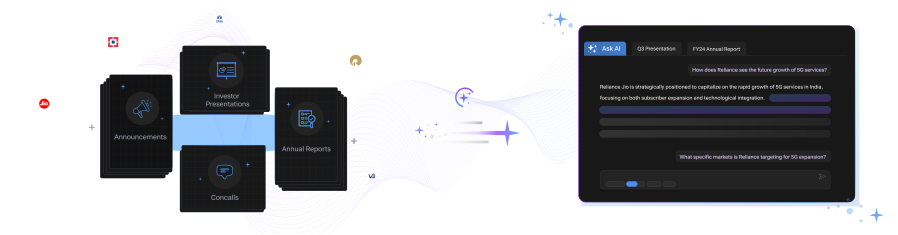
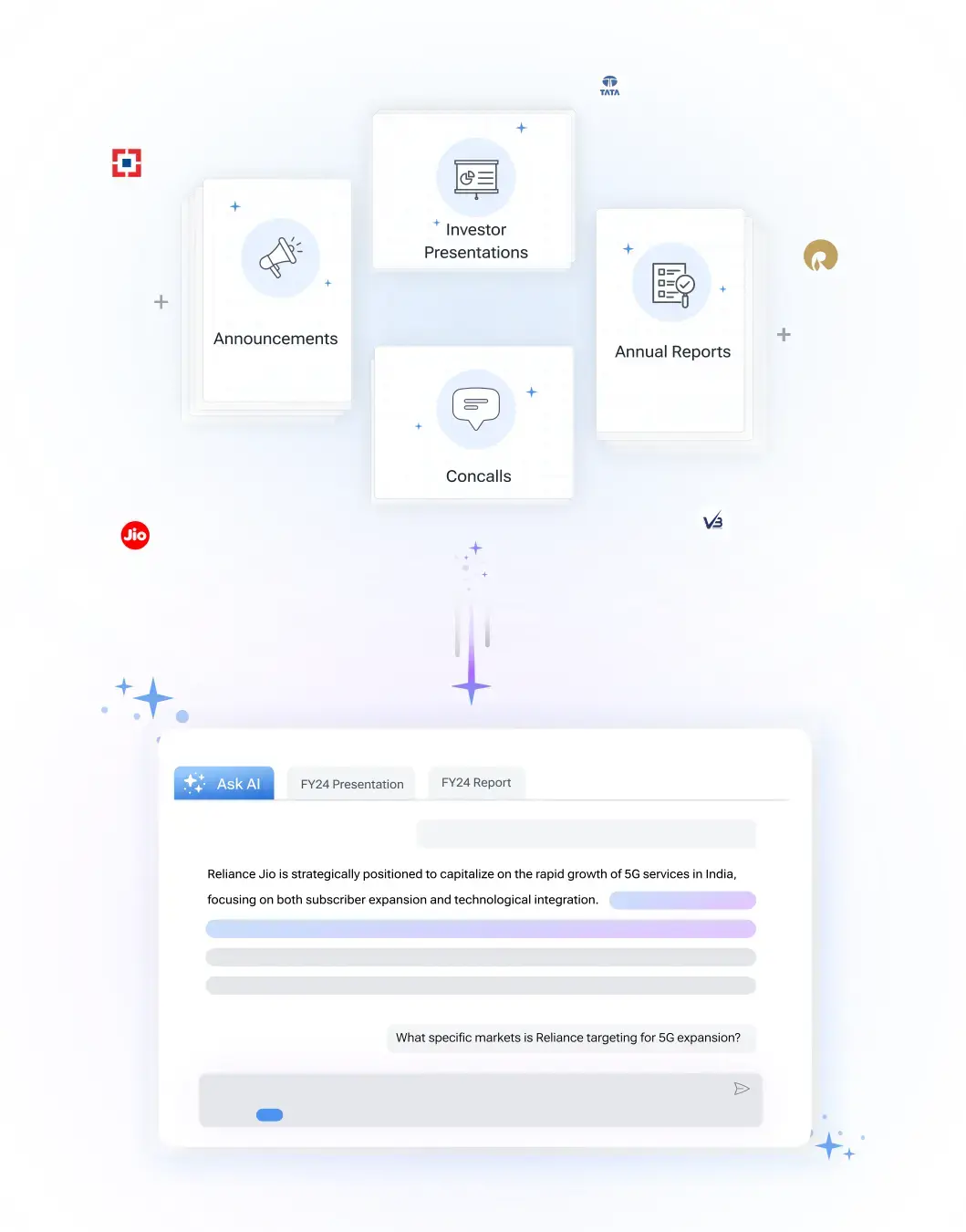
Get instant AI-powered insights about company performance, financials, and strategy. Ask questions about trends, competition, and developments while receiving responses backed by official documents and market data, with clear attribution to source documents.


View Standalone
View Standalone
View Standalone
View Standalone
View Standalone
View Standalone
View Standalone
View Standalone
 Discovery themes featuring this stock
Bearish
4
Neutral
5
Bullish
5
Bearish
18
Neutral
5
Bullish
23
Bearish
14
Neutral
0
Bullish
18


Max India Limited is the listed holding company for Antara Senior Living, operating an integrated senior care platform that includes Residences for Seniors (develop‑and‑manage senior communities), Assisted Care Services (Care Homes and Care at Home) and AGEasy consumer health and wellness products targeted at older adults.
Operational highlights include Estate 360 fully sold with collections of ~INR343 crore ITD and Estate 361 achieving ~100 bookings within its first month; these large project sales have generated measurable development fees and provide short‑to‑medium term revenue visibility for Max India Limited.
Service expansion is material: Antara has reached 485 bed capacity across NCR, Bengaluru and Chennai with sequential occupancy improvement, Care at Home and Care Homes showing quarter‑on‑quarter revenue growth, and management guidance pointing to continued focus on occupancy optimization and measured bed additions for Max India Limited.
Product vertical AGEasy reported strong traction with Q3 revenue ~INR18.8 crore, 88 products/180 SKUs, five patents filed and notable RoAS and gross margin improvements, positioning AGEasy as an asset‑light growth engine and customer engagement channel within the Max India Limited ecosystem.
Financially, consolidated revenue was INR49.8 crore in Q3FY26 (up 27% YoY) but EBITDA loss remained ~INR29 crore; liquidity of ~INR105 crore, consolidated net worth ~INR426 crore, and a planned fundraise of ~INR200–250 crore indicate cash runway management and capital plans at Max India Limited to drive growth and move toward profitability by FY27–FY28.
Bearish
4
Neutral
5
Bullish
5
Bearish
4
Neutral
5
Bullish
5
Bearish
14
Neutral
0
Bullish
18
Bearish
14
Neutral
0
Bullish
18
Bearish
14
Neutral
0
Bullish
18
Finance
Holding Company
863 Cr
High Risk
-6.5
17.9
—
2.0
242.40
121.00
Sales CAGR
Profit CAGR
ROE
ROCE

 Discovery themes featuring this stock
Max India Ltd (MAXIND) is currently trading at 153.50 per share. Stock prices fluctuate during market hours on NSE and BSE based on demand, company updates, and overall market conditions. Refer to the live price chart above for the most recent price movement.
Max India Limited is the listed holding company for Antara Senior Living, operating an integrated senior care platform that includes Residences for Seniors (develop‑and‑manage senior communities), Assisted Care Services (Care Homes and Care at Home) and AGEasy consumer health and wellness products targeted at older adults. Operational highlights include Estate 360 fully sold with collections of ~INR343 crore ITD and Estate 361 achieving ~100 bookings within its first month; these large project sales have generated measurable development fees and provide short‑to‑medium term revenue visibility for Max India Limited. Service expansion is material: Antara has reached 485 bed capacity across NCR, Bengaluru and Chennai with sequential occupancy improvement, Care at Home and Care Homes showing quarter‑on‑quarter revenue growth, and management guidance pointing to continued focus on occupancy optimization and measured bed additions for Max India Limited. Product vertical AGEasy reported strong traction with Q3 revenue ~INR18.8 crore, 88 products/180 SKUs, five patents filed and notable RoAS and gross margin improvements, positioning AGEasy as an asset‑light growth engine and customer engagement channel within the Max India Limited ecosystem. Financially, consolidated revenue was INR49.8 crore in Q3FY26 (up 27% YoY) but EBITDA loss remained ~INR29 crore; liquidity of ~INR105 crore, consolidated net worth ~INR426 crore, and a planned fundraise of ~INR200–250 crore indicate cash runway management and capital plans at Max India Limited to drive growth and move toward profitability by FY27–FY28.
Over the past 52 weeks, Max India Ltd has traded between a low of ₹121.00 and a high of ₹242.40. The 52-week high and low indicate the stock’s price range over the last year and help investors understand its volatility and recent trading levels.
Max India Ltd has a market capitalization of approximately 863.40. Market capitalization represents the total value of a company’s outstanding shares and helps investors understand its size, stability, and relative risk compared to other listed companies.
Max India Ltd’s investment profile depends on its business fundamentals, valuation, and long-term outlook. The stock currently trades at a PE ratio of -6.52 and operates in the its sector sector. Investors typically assess financial performance, growth prospects, and individual risk tolerance before making investment decisions.
Based on its market capitalization of 863.40 Cr, Max India Ltd is classified as a Small Cap stock. Large-cap stocks are generally more stable, while mid-cap and small-cap stocks tend to offer higher growth potential along with higher price volatility.
Max India Ltd operates in the its sector sector. Sector classification matters because companies in the same sector are often affected by similar economic conditions, regulatory changes, and competitive dynamics, which can influence overall stock performance.
The Price-to-Earnings (PE) ratio of Max India Ltd is -6.52. The PE ratio compares a company’s share price to its earnings and is commonly used to assess valuation. Comparing the PE ratio with sector peers and historical levels provides better context.
| Symbol | Watchlist | Price | Market Cap | P/E | P/B | Div Yield (%) | ROE (%) | ROCE (%) | ROA (%) |
201.95 | 1,034 Cr | 7.48 | 0.91 | 0.00 | 7.71 | 8.09 | 4.76 | ||
302.20 | 978 Cr | 2.17 | 0.84 | 0.49 | 4.67 | 5.33 | 4.27 | ||
153.50 | 863 Cr | -6.52 | 1.97 | 0.00 | -29.84 | -21.18 | -19.80 | ||
56.83 | 622 Cr | 10.25 | 0.24 | 0.00 | 1.76 | 2.06 | 2.22 | ||
20.70 | 482 Cr | 6.58 | 1.30 | 0.00 | 18.14 | 21.88 | 13.01 | ||
153.80 | 363 Cr | 4.82 | 1.38 | 0.00 | 26.20 | 23.17 | 8.27 | ||
304.95 | 303 Cr | 28.46 | 2.47 | 0.39 | 8.01 | 11.10 | 7.89 | ||
| Median: 7 Co. | — | 153.80 | 622 Cr | 6.58 | 1.30 | 0.00 | 7.71 | 8.09 | 4.76 |