


Board Meeting
SpiceJet Board to Consider Fund Raising
SpiceJet’s board will meet on November 18, 2026, to consider raising fresh capital through equity, preference shares, debt securities or other permitted instruments.





IRIS
Multibagg AI is an AI powered stock research and analysis platform. We provide data, information, content, and analytics for publicly traded Indian companies listed on NSE and BSE. AI can make mistakes, check important information.
Prices might be delayed by a few minutes.
Join our Exclusive Community


Join our Exclusive Community
Made with 💙 in India. © Finsky Technologies Pvt Ltd. 2026


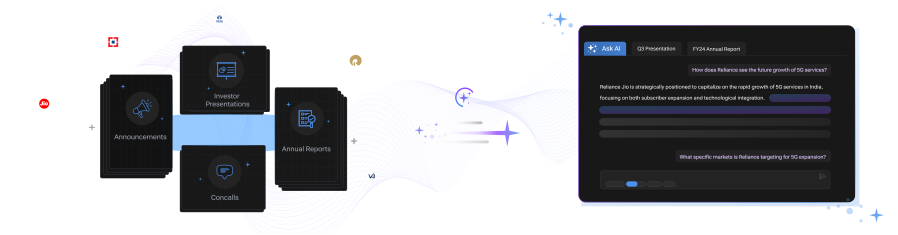
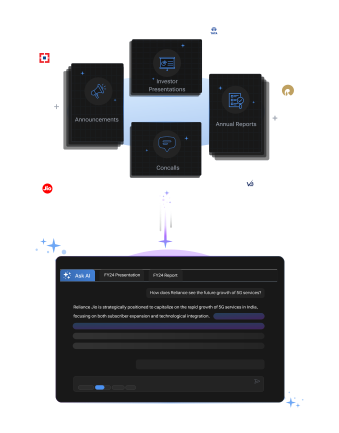
Get instant AI-powered insights about company performance, financials, and strategy. Ask questions about trends, competition, and developments while receiving responses backed by official documents and market data, with clear attribution to source documents.






Investor Presentation
Q3 FY26
Investor Presentation
Q3 FY26
Investor Presentation
Q2 FY26
Investor Presentation
Q2 FY26
Investor Presentation
Q4 FY25
Investor Presentation
Q4 FY25
Investor Presentation
Q3 FY25
Investor Presentation
Q1 FY25

 Discovery themes featuring this stock


SpiceJet Limited is an Indian low‑cost carrier providing passenger and cargo air transport services domestically and internationally, operating a mixed fleet of Boeing 737 variants and Q400 turboprops alongside a dedicated cargo arm (SpiceXpress), and using a combination of wet/damp leases and return‑to‑service activities to manage capacity and network expansion.
Q3 FY26 shows rapid operational scale‑up: ASKM rose 56% QoQ to 277 crore and operational scale expanded ~1.9x since September 2025, with passenger market share climbing to 4.3% driven by wet/damp lease inductions and network expansion into high‑yield regional and UAE routes; this signals an aggressive near‑term growth agenda backed by board approval.
Financial momentum improved QoQ with total income up 84% to INR 1,523 crore and passenger RASK rising 18% QoQ, but SpiceJet reported a PAT loss of INR 268 crore materially affected by forex losses, grounded‑aircraft costs and exceptional items; quarter‑end cash balance was INR 317 crore with INR 171 crore classified as free cash.
Operational discipline is delivering unit cost benefits: operational CASK declined materially QoQ and employee benefit CASK dropped 34% QoQ while aircraft maintenance CASK also fell. Management highlights sustained cost discipline and targeted ungrounding efficiencies, and the company plans to leverage AI‑driven tools for revenue optimisation and network planning as capacity scales.
Strategically, the Board approved monetisation of surplus spare parts to strengthen liquidity, authorised a calibrated fleet ramp‑up relying on wet and damp leases, and filed an application for listing on the National Stock Exchange, reflecting simultaneous focus on capital markets access and an asset‑light approach to near‑term growth.
Transport Services
Airline
1,381 Cr
High Risk
-1.8
18.1
—
—
37.90
7.40
Sales CAGR
Profit CAGR
ROE
ROCE


| Symbol | Watchlist | Price | Market Cap | P/E | P/B | Div Yield (%) | ROE (%) | ROCE (%) | ROA (%) |
475.45 | 1,828 Cr | 22.29 | 2.12 | 1.47 | 9.49 | 12.28 | 7.49 | ||
9.83 | 1,472 Cr | 28.31 | 2.43 | 0.00 | 6.93 | 8.09 | 3.07 | ||
928.85 | 1,447 Cr | 20.85 | 5.04 | 1.40 | 24.17 | 30.24 | 21.47 | ||
9.05 | 1,381 Cr | -1.78 | 0.00 | 0.00 | 17.60 | -18.22 | -13.20 | ||
13.00 | 1,278 Cr | -17.99 | 0.99 | 0.00 | — | — | 0.00 | ||
81.19 | 1,222 Cr | 13.55 | 0.62 | 0.00 | 2.39 | 3.77 | 1.97 | ||
713.60 | 1,078 Cr | 90.78 | 2.33 | 0.49 | 2.56 | 3.03 | 2.34 | ||
| Median: 7 Co. | — | 81.19 | 1,381 Cr | 20.85 | 2.12 | 0.00 | 8.21 | 5.93 | 2.34 |
Bearish
8
Neutral
1
Bullish
5
Bearish
16
Neutral
1
Bullish
29
Bearish
8
Neutral
0
Bullish
24
View Standalone
View Standalone
Bearish
8
Neutral
0
Bullish
24
Bearish
8
Neutral
0
Bullish
24
Bearish
8
Neutral
0
Bullish
24
View Standalone
View Standalone
View Standalone
View Standalone
View Standalone
View Standalone
SpiceJet Ltd (SPICEJET) is currently trading at 9.50 per share. Stock prices fluctuate during market hours on NSE and BSE based on demand, company updates, and overall market conditions. Refer to the live price chart above for the most recent price movement.
SpiceJet Limited is an Indian low‑cost carrier providing passenger and cargo air transport services domestically and internationally, operating a mixed fleet of Boeing 737 variants and Q400 turboprops alongside a dedicated cargo arm (SpiceXpress), and using a combination of wet/damp leases and return‑to‑service activities to manage capacity and network expansion. Q3 FY26 shows rapid operational scale‑up: ASKM rose 56% QoQ to 277 crore and operational scale expanded ~1.9x since September 2025, with passenger market share climbing to 4.3% driven by wet/damp lease inductions and network expansion into high‑yield regional and UAE routes; this signals an aggressive near‑term growth agenda backed by board approval. Financial momentum improved QoQ with total income up 84% to INR 1,523 crore and passenger RASK rising 18% QoQ, but SpiceJet reported a PAT loss of INR 268 crore materially affected by forex losses, grounded‑aircraft costs and exceptional items; quarter‑end cash balance was INR 317 crore with INR 171 crore classified as free cash. Operational discipline is delivering unit cost benefits: operational CASK declined materially QoQ and employee benefit CASK dropped 34% QoQ while aircraft maintenance CASK also fell. Management highlights sustained cost discipline and targeted ungrounding efficiencies, and the company plans to leverage AI‑driven tools for revenue optimisation and network planning as capacity scales. Strategically, the Board approved monetisation of surplus spare parts to strengthen liquidity, authorised a calibrated fleet ramp‑up relying on wet and damp leases, and filed an application for listing on the National Stock Exchange, reflecting simultaneous focus on capital markets access and an asset‑light approach to near‑term growth.
Over the past 52 weeks, SpiceJet Ltd has traded between a low of ₹7.40 and a high of ₹37.90. The 52-week high and low indicate the stock’s price range over the last year and help investors understand its volatility and recent trading levels.
SpiceJet Ltd has a market capitalization of approximately 1,381.12. Market capitalization represents the total value of a company’s outstanding shares and helps investors understand its size, stability, and relative risk compared to other listed companies.
SpiceJet Ltd’s investment profile depends on its business fundamentals, valuation, and long-term outlook. The stock currently trades at a PE ratio of -1.78 and operates in the its sector sector. Investors typically assess financial performance, growth prospects, and individual risk tolerance before making investment decisions.
Based on its market capitalization of 1,381.12 Cr, SpiceJet Ltd is classified as a Small Cap stock. Large-cap stocks are generally more stable, while mid-cap and small-cap stocks tend to offer higher growth potential along with higher price volatility.
SpiceJet Ltd operates in the its sector sector. Sector classification matters because companies in the same sector are often affected by similar economic conditions, regulatory changes, and competitive dynamics, which can influence overall stock performance.
The Price-to-Earnings (PE) ratio of SpiceJet Ltd is -1.78. The PE ratio compares a company’s share price to its earnings and is commonly used to assess valuation. Comparing the PE ratio with sector peers and historical levels provides better context.
The material states SpiceJet’s in-service fleet has shrunk to 11 aircraft after the remaining wet-leased Boeing 737-800s departed.
The DGCA published notices under the IDERA mechanism relating to deregistration and repossession of four Boeing 737-8 MAX aircraft leased to SpiceJet.
SpiceJet challenged the Delhi High Court’s direction to deposit about ₹144.5 crore in an arbitration-related enforcement matter linked to its dispute with KAL Airways and Kalanithi Maran.
It refused to interfere with the Delhi High Court’s order but allowed SpiceJet and Ajay Singh to approach the High Court again for relief based on subsequent developments.