










AGI Infra Shareholders Approve ₹275 Crore QIP Fundraising
Key highlights
- AGI Infra shareholders approved a QIP fundraising mandate of up to ₹275 crore on November 4, 2026.
- Remote e-voting ran from 9:00 am on October 6, 2026, to 5:00 pm on November 4, 2026.
- The approved QIP may involve equity shares or convertible securities issued in one or more tranches.
- AGI Infra's March 2026 QIP process carried a floor price of ₹274.825 per equity share.
powered by IRIS
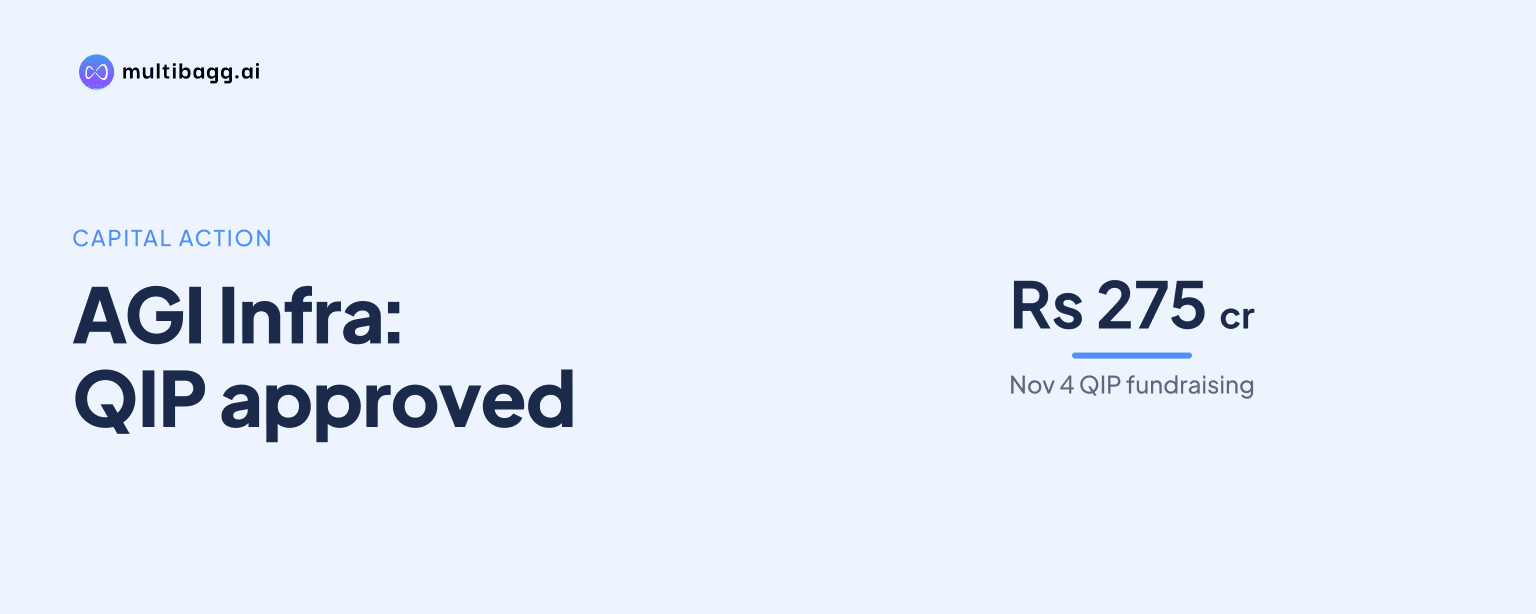
AGI Infra Limited shareholders approved a special resolution to raise up to ₹275 crore through a qualified institutions placement, with voting concluding on November 4, 2026. The approval enables AGI Infra to issue equity shares, or securities convertible into equity shares, in one or more tranches, subject to applicable regulatory requirements.
Know AGI Infra inside out
Results, valuation, peers and who's buying, in one view.
What did AGI Infra shareholders approve?
AGI Infra shareholders approved a special resolution authorising the company to raise up to ₹275 crore through a Qualified Institutions Placement, or QIP. The proposal permits the issuance of equity shares in one or more tranches and can also include securities convertible into equity shares.
The shareholder consent follows the board's decision on September 25, 2026, to pursue the capital raising plan. A QIP is a route through which listed companies can issue eligible securities to qualified institutional buyers under the Securities and Exchange Board of India framework. The approval provides the company with authority to proceed, rather than confirming that securities have already been issued or funds have been received.
When did the postal ballot voting end?
The remote e-voting and physical postal ballot process ended at 5:00 pm on November 4, 2026. Remote e-voting began at 9:00 am on October 6, 2026, following the Postal Ballot Notice dated September 25, 2026.
The company conducted the process under Regulation 30 of the SEBI (Listing Obligations and Disclosure Requirements) Regulations, 2015. AGI Infra announced the postal ballot outcome on November 4, confirming that members had approved the special resolution. The supplied disclosures also indicated that the scrutinizer's report was awaited as part of the voting process documentation.
Why is the QIP approval important for AGI Infra?
The approval is important because it gives AGI Infra the shareholder mandate needed to access institutional capital through the proposed QIP. The company had sought permission to raise the amount in one or more tranches, giving it flexibility over the timing and structure of any eventual issuance within the approved limit.
A QIP can involve the issuance of new equity shares or convertible securities, which means the final impact on the share count will depend on the terms of any issue that follows. The company has not disclosed, in the supplied material, the issue price, number of securities, timing of a launch, or the final allocation under this September approval process.
The approval is also subject to other necessary regulatory clearances under the SEBI (Issue of Capital and Disclosure Requirements) Regulations, 2018. Therefore, the postal ballot result is a key corporate action, but it is not by itself evidence of a completed fundraising transaction.
Got a follow-up? Ask IRIS
What is the background to AGI Infra's QIP activity?
AGI Infra has previously undertaken QIP-related actions during 2026. Its board approved the opening of a QIP issue on March 4, 2026, after adopting key issue parameters at a March 2 board meeting.
For that March process, the company set a floor price of ₹274.825 per equity share with a face value of ₹1 per share. The floor price was calculated under Regulation 176 of the SEBI ICDR Regulations using March 2, 2026, as the relevant date. The company retained the option to offer a discount of up to 5% to the calculated floor price, in line with the applicable rules.
The supplied March disclosure stated that proceeds were proposed to fund ongoing projects and for general corporate purposes, based on the business plan and management considerations. The material provided does not state whether the September-November shareholder mandate is linked to the earlier March QIP process, nor does it provide final fundraising details for the March issue.
How could the approval affect investors and company operations?
For investors, the resolution establishes a potential capital-raising route of up to ₹275 crore, but the financial effect will depend on whether and when AGI Infra issues securities. If new equity shares are issued, existing shareholders' ownership percentages can be diluted. The extent of any dilution cannot be calculated from the available disclosures because the eventual issue price and number of securities have not been announced.
For AGI Infra's operations, the approval gives the board flexibility to mobilise institutional capital in tranches. The company has not provided a specific use-of-proceeds breakdown for the newly approved ₹275 crore mandate in the information supplied. Investors will therefore need to monitor future exchange filings for the issue opening, pricing, allotment, fundraising amount and proposed deployment of proceeds.
The market already has a reference point from the March QIP-related disclosure, where the floor price of ₹274.825 was 9.36% below the previous BSE closing price of ₹303.20. That pricing information relates to the March process and should not be treated as the price for any future issue under the September shareholder approval.
Conclusion
AGI Infra's successful special resolution gives it authority to raise up to ₹275 crore through a QIP in one or more tranches. The completed voting process is significant because shareholder approval is required for the proposed institutional fundraising route, while the final commercial terms remain undisclosed.
The next filings to watch are the scrutinizer's report and any board or exchange announcement on the opening of an issue, its floor price, discount, number of securities, allocation and use of proceeds. These details will determine the actual capital raised and the potential effect on the company's equity base.