










Apollo Hospitals Q2 FY27 Profit Rises 32% to ₹630 Crore
Key highlights
- Apollo Hospitals reported Q2 FY27 revenue of ₹7,615 crore, up 23% year-on-year.
- Consolidated Q2 FY27 net profit rose 32% year-on-year to ₹630 crore.
- Hospital occupancy improved to 73% from 69%, while inpatient volumes grew 14%.
- Apollo HealthCo added 222 net pharmacy stores, taking its network to 7,662 stores.
powered by IRIS
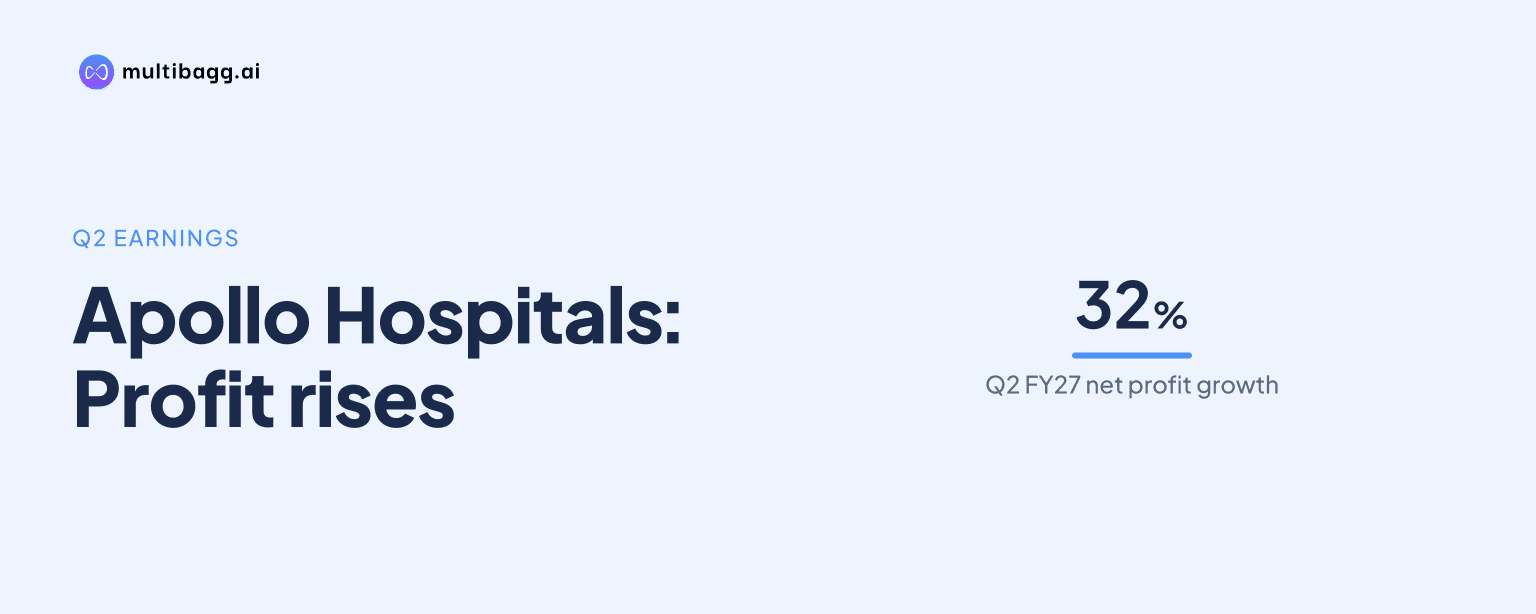
Apollo Hospitals Enterprise Limited reported a 32% year-on-year rise in consolidated net profit to ₹630 crore in Q2 FY27, while revenue from operations increased 23% to ₹7,615 crore. The September-quarter performance reflected higher hospital volumes, improved occupancy, growth in complex medical procedures and continued expansion in pharmacy and digital healthcare operations.
Know Apollo Hospitals Enterprise inside out
Results, valuation, peers and who's buying, in one view.
What did Apollo Hospitals report in Q2 FY27?
Apollo Hospitals reported consolidated revenue from operations of ₹7,615 crore for the quarter ended September 30, 2026, compared with ₹6,189 crore in the corresponding quarter a year earlier. Consolidated net profit rose from ₹477 crore to ₹630 crore, while EBITDA increased 29% to ₹1,191 crore from ₹924 crore.
The EBITDA margin was reported at 16%, compared with 15.5% estimated by Zee Business. Diluted earnings per share from continuing operations stood at ₹43.71 and was not annualised. The reported operating performance was ahead of the cited Zee Business estimates for revenue, EBITDA, margin and profit after tax.
For the first half of FY27, Apollo Hospitals reported consolidated revenue of ₹14,547 crore, up 22% year-on-year. Consolidated net profit for the six months rose 33% to ₹1,211 crore. These figures followed Q1 FY27, when the company had reported revenue of ₹7,043 crore and EBITDA of ₹1,092 crore.
Which businesses drove Apollo Hospitals' quarterly growth?
Healthcare Services was the largest reported contributor, with revenue rising 23% year-on-year to ₹3,900 crore in Q2 FY27. Its EBITDA grew 20% to ₹937 crore, with a 24% margin. Hospital occupancy improved to 73% from 69% a year earlier, while inpatient volumes increased 14%.
Average revenue per patient rose 8% to ₹1,86,880. Apollo Hospitals attributed growth to volume gains in complex specialties and higher-complexity clinical work. Oncology revenue grew 28%, gastroenterology 27%, urology 26%, and cardiac and orthopaedic specialties each grew 20%, according to the supplied results information.
International Patient Services revenue increased 37% year-on-year. Group CFO Krishnan Akhileshwaran said the performance was supported by volume growth, pricing levers and a changing mix of cases. He also cited a rebound in patient inflows from Bangladesh and traction from Africa.
How did Apollo HealthCo and AHLL perform?
Apollo HealthCo reported revenue of ₹3,286 crore in Q2 FY27, an increase of 23% year-on-year, while EBITDA rose to ₹193 crore and profit after tax increased to ₹118 crore. The business added 222 net pharmacy stores during the quarter, taking its network to 7,662 stores as of September 30, 2026.
The digital platform's gross merchandise value grew 20% year-on-year. Core segment GMV, excluding the goods and services tax impact, increased 27% to ₹571 crore from ₹450 crore. The consolidated EBITDA figure included ₹91 crore of Apollo 24/7-related costs, including a non-cash employee stock option charge.
Apollo Health and Lifestyle Limited, which includes primary care and diagnostics operations, reported gross revenue of ₹429 crore, up 20% year-on-year. Its EBITDA rose to ₹61 crore and it reported profit after tax of ₹26 crore, compared with a loss in the year-ago quarter.
Got a follow-up? Ask IRIS
What is Apollo Hospitals' hospital expansion plan?
Apollo Hospitals said its expansion programme remains on track to add around 5,800 beds over the next five years. The company recently commissioned a 180-bed facility in Sarjapur, Bengaluru, adding to its ongoing network expansion across hospital markets.
Its Gurugram facility, with approximately 470 beds, is on track for commissioning in the third quarter of FY27. New capacity is relevant because the company is reporting higher hospital occupancy and inpatient volumes, while pursuing growth through both established and newer hospitals.
The company has stated that it is on track to deliver 20% hospital revenue growth in FY27. Its disclosed framework expects established hospitals to contribute 13%-14% growth, with newer hospitals contributing a further 7%. These are company targets rather than reported full-year results.
How does the Q2 performance matter for investors?
The Q2 results show that Apollo Hospitals' revenue growth was accompanied by faster growth in EBITDA and net profit. Occupancy gains, higher patient volumes and an 8% increase in revenue per patient were key operating measures behind the Healthcare Services performance.
For investors, the results also show the contribution of the broader platform beyond hospitals. HealthCo expanded its pharmacy network and digital GMV, while AHLL moved from a loss in the prior-year quarter to a reported profit. At the same time, Apollo 24/7-related costs of ₹91 crore remained part of the consolidated EBITDA calculation.
The company approved its Q2 and H1 FY27 unaudited financial results at its board meeting on November 4, 2026. Apollo Hospitals scheduled an analyst and investor conference call for November 5, 2026 at 3:00 PM IST, where management commentary on hospital additions, margins and the FY27 growth plan may provide further context.
Conclusion
Apollo Hospitals delivered 23% revenue growth and 32% net profit growth in Q2 FY27, supported by higher occupancy, inpatient volume growth and stronger activity in complex specialties. Healthcare Services remained the main earnings contributor, while pharmacy, digital and lifestyle businesses also reported growth.
The next disclosed event is the November 5, 2026 earnings call. Investors will watch for management detail on the planned addition of around 5,800 beds over five years, the Q3 FY27 commissioning of the approximately 470-bed Gurugram hospital, and progress toward the company's FY27 hospital revenue growth target.