










Asston Pharmaceuticals Limited FY26 Revenue Rises to ₹31.58 Crore
Key highlights
- Asston reported FY26 total revenue of ₹31.58 crore, up 23.32% from ₹25.61 crore in FY25.
- FY26 profit after tax was ₹3.87 crore, compared with ₹3.85 crore in FY25.
- Profit before tax declined to ₹4.59 crore in FY26 from ₹5.02 crore a year earlier.
- Trade receivables stood at ₹36.57 crore in FY26.
powered by IRIS
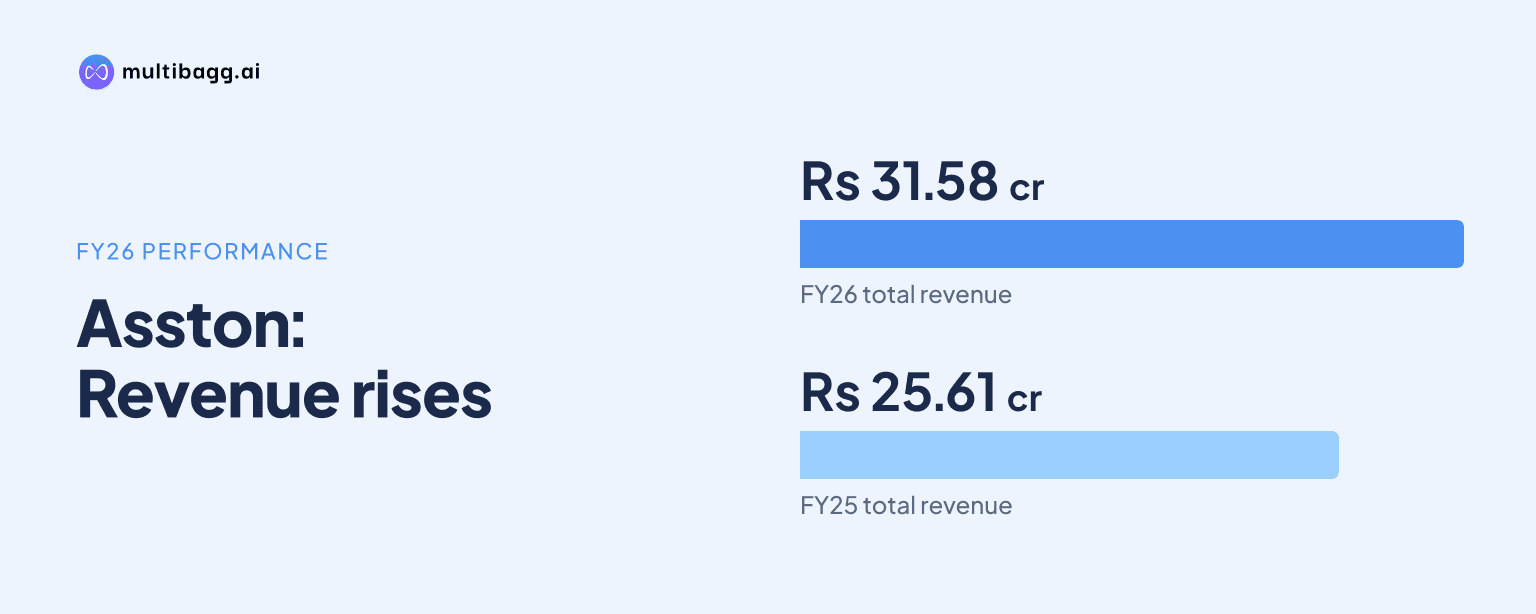
Asston Pharmaceuticals Limited reported FY26 total revenue of ₹31.58 crore, a 23.32% increase from ₹25.61 crore, while profit after tax was ₹3.87 crore. The BSE SME-listed pharmaceutical and nutraceutical manufacturer approved its audited FY26 results on May 29, 2026, with statutory auditors issuing an unmodified opinion.
Know Asston Pharmaceuticals inside out
Results, valuation, peers and who's buying, in one view.
What did Asston report for FY26?
Asston reported total revenue of ₹31.58 crore for the year ended March 31, 2026, compared with ₹25.61 crore in FY25. The company disclosed that the increase in total revenue was 23.32% year on year. Profit after tax was ₹3.87 crore, marginally higher than ₹3.85 crore in the preceding financial year.
The company also reported revenue from operations of ₹25.47 crore in FY26, against ₹25.04 crore in FY25. The difference between revenue from operations and total revenue reflects the separate presentation of total revenue in the company disclosures. Investors should distinguish between these measures when comparing the annual figures.
How did Asston's profitability change in FY26?
Asston's FY26 profit after tax of ₹3.87 crore was nearly unchanged from ₹3.85 crore in FY25, despite the higher total revenue figure. Profit before tax declined to ₹4.59 crore from ₹5.02 crore, indicating that the increase in reported revenue did not translate into a similar rise in pre-tax earnings.
Earnings per equity share, both basic and diluted, were reported at ₹4.92 for FY26, compared with ₹6.14 in FY25. The decline in EPS alongside stable net profit is a relevant metric for shareholders because it shows lower earnings attributed to each equity share than in the previous year.
When were the FY26 results approved and audited?
Asston's board approved the audited financial results for FY26 on May 29, 2026. The statutory auditors issued an unmodified opinion, which means the audit report did not identify a qualification, adverse opinion, or disclaimer regarding the financial statements presented.
The company also released its seventh annual report for FY25-26. Its disclosures describe continued operational progress, but the reported financial data show a mixed earnings picture: total revenue rose strongly, while revenue from operations increased modestly and pre-tax profit declined.
The supplied announcement history also lists a quarterly-results announcement dated September 7, 2026. However, detailed quarterly financial figures are not available in the provided data. The FY26 annual numbers therefore remain the most complete disclosed set of financial information in the source material.
Got a follow-up? Ask IRIS
What do Asston's annual figures show over recent years?
Asston's reported annual revenue has increased over the past several years. Revenue was ₹7.19 crore in FY23, ₹15.84 crore in FY24, ₹25.61 crore in FY25 and ₹31.59 crore in FY26, based on the annual-results table. This represents a substantial expansion in the scale of reported annual revenue over the four-year period.
Profitability has also improved from earlier years, though the pace slowed in FY26. Net profit rose from ₹1.06 crore in FY23 to ₹1.36 crore in FY24, then to ₹3.85 crore in FY25 and ₹3.87 crore in FY26. EBITDA decreased to ₹5.54 crore in FY26 from ₹6.01 crore in FY25, consistent with the decline in profit before tax.
What should investors assess in Asston's FY26 results?
Investors assessing Asston's FY26 performance can focus on the gap between total revenue growth and the relatively flat profit after tax. Total revenue increased by more than 23%, but profit before tax fell by 8.42% and EBITDA declined from the prior year. These movements indicate that higher reported revenue was accompanied by pressure on earnings before tax.
Trade receivables stood at ₹36.57 crore in FY26, according to the source data. This amount was larger than the company's FY26 total revenue of ₹31.58 crore and is therefore an important balance-sheet figure to monitor. The provided information does not explain the ageing, collection schedule, or composition of these receivables, so no conclusion can be drawn on their quality from the disclosed data alone.
As a pharmaceutical and nutraceutical manufacturer listed on the BSE SME platform, Asston operates in a sector where revenue growth, operating profitability, receivable management and compliance disclosures are all relevant to investors. The unmodified audit opinion supports the formal reporting process, while the annual financial trends provide the basis for judging subsequent results.
Conclusion
Asston delivered higher FY26 total revenue of ₹31.58 crore and maintained profit after tax at about ₹3.87 crore. However, the fall in profit before tax, EBITDA and EPS shows that earnings did not rise in line with reported revenue. The distinction between total revenue and revenue from operations is also important when evaluating the company's annual performance.
The next disclosures to watch are updates on operating profitability, revenue from operations and trade-receivable management. With FY26 receivables reported at ₹36.57 crore, future financial statements and company announcements may provide further clarity on collections and whether revenue growth is translating into stronger per-share earnings.