










Bajaj Finance Limited to Set Warrant Price on November 10
Key highlights
- Bajaj Finance will consider the preferential warrant price at its November 10, 2026 board meeting.
- The proposed warrant issue to Bajaj Finserv is worth up to ₹5,800 crore.
- The proposed QIP could raise up to ₹11,700 crore from institutional investors.
- The combined proposed capital raise is up to ₹17,500 crore, subject to shareholder approval.
powered by IRIS
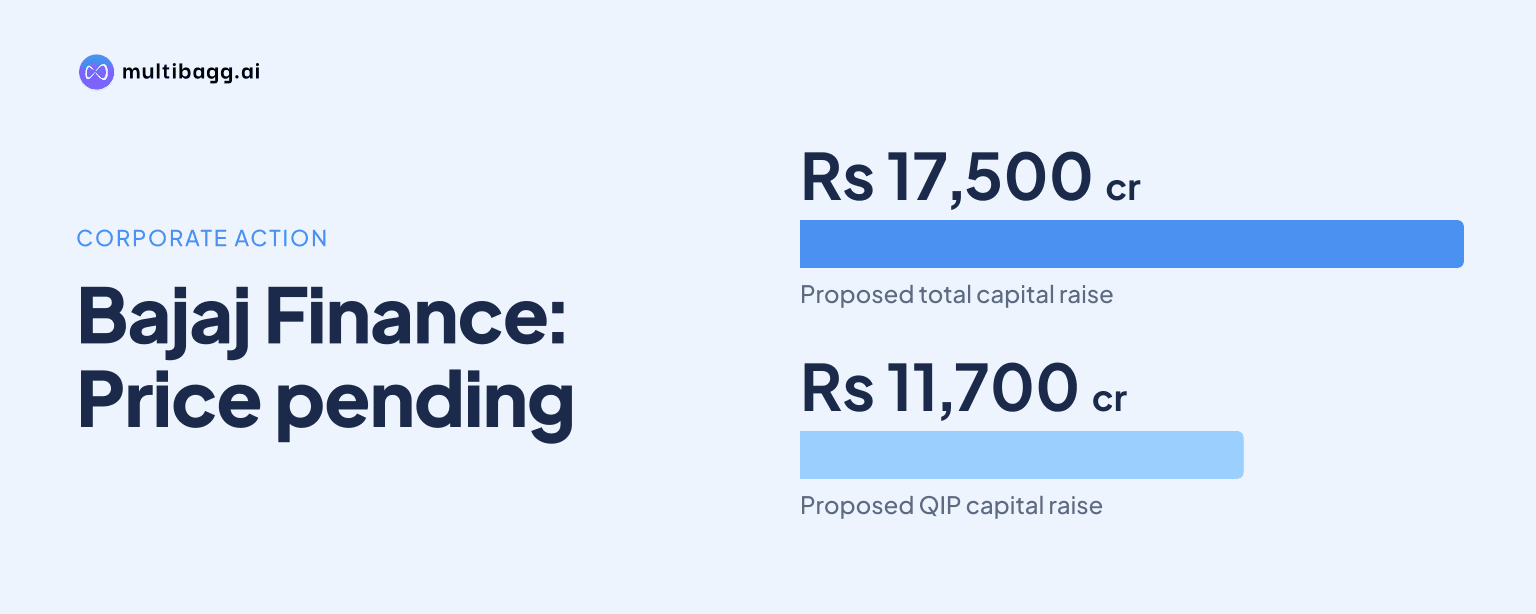
Bajaj Finance Limited is scheduled to consider the price for preferential warrants to Bajaj Finserv Limited on November 10, 2026, a key step in the promoter’s proposed ₹5,800 crore participation in a capital-raising plan of up to ₹17,500 crore that also includes a ₹11,700 crore qualified institutions placement.
Know Bajaj Finance inside out
Results, valuation, peers and who's buying, in one view.
What will Bajaj Finance decide on November 10?
Bajaj Finance will consider and approve the issue price of warrants proposed to be issued on a preferential basis to Bajaj Finserv, its promoter and holding company. The company informed the BSE on November 5 that its board meeting is scheduled for November 10, 2026, for this purpose.
The pricing decision follows the board’s earlier approval on October 1 for a preferential issue of warrants with an aggregate value of up to ₹5,800 crore. Bajaj Finserv is the sole proposed allottee. The issue price is to be determined in line with applicable law, including the pricing framework under the Securities and Exchange Board of India (Issue of Capital and Disclosure Requirements) Regulations, 2018.
The proposal remains subject to shareholder approval. Bajaj Finance has said it will convene an Extraordinary General Meeting to seek approval for both the preferential warrant issue and the proposed qualified institutions placement, or QIP.
How is Bajaj Finance’s ₹17,500 crore capital raise structured?
Bajaj Finance has approved a plan to raise up to ₹17,500 crore through two equity-linked routes: a QIP of up to ₹11,700 crore and preferential warrants of up to ₹5,800 crore for Bajaj Finserv. The QIP would allot shares to eligible institutional investors, while the warrant issue is intended for the promoter and holding company.
The two components have different investor bases but form part of the same proposed capital-raising exercise. A QIP enables a listed company to issue securities to qualified institutional buyers under the relevant regulatory framework. The preferential leg gives Bajaj Finserv an option to subscribe to equity shares through warrant conversion, subject to the terms of the issue.
Got a follow-up? Ask IRIS
What are the terms of Bajaj Finance’s proposed warrants?
Each warrant proposed to be allotted to Bajaj Finserv will be convertible into one equity share of Bajaj Finance. The equity shares issued on conversion will rank pari-passu with the company’s existing fully paid-up equity shares, according to the stated terms.
Bajaj Finserv would be required to pay at least 25% of the consideration when the warrants are subscribed for and allotted. The balance 75% would be payable when the warrants are exercised and the corresponding equity shares are allotted. The warrants carry an 18-month conversion period from the date of allotment.
If the warrants are not exercised within that 18-month window, they would lapse and the initial amount paid would be forfeited to Bajaj Finance under the stated terms. Bajaj Finserv has said its proposed investment would be made entirely in cash. It also indicated that allotment is expected within 15 days of the special resolution being passed by Bajaj Finance shareholders.
Why does the warrant price matter to investors?
The warrant price will determine the number of warrants, and potentially equity shares, that can be issued within the ₹5,800 crore aggregate limit. It is therefore a central detail for assessing the size of Bajaj Finserv’s eventual investment and the equity dilution associated with conversion.
The pricing must comply with the SEBI ICDR Regulations, including applicable floor-price requirements and adjustments. Until the board or an authorised committee determines the price, the final number of warrants and shares that may arise upon conversion is not disclosed in the information provided.
For investors, the broader transaction combines institutional fundraising with promoter participation. The QIP is proposed to bring in institutional capital, while the preferential warrants allow Bajaj Finserv to participate in the capital raise on the disclosed terms. The company has not disclosed a final issue price for the warrants in the November 5 notice.
Conclusion
Bajaj Finance’s November 10 board meeting is focused on fixing the price of preferential warrants proposed for Bajaj Finserv. The decision is a necessary step in the ₹5,800 crore warrant proposal, which sits alongside a ₹11,700 crore QIP and takes the maximum planned capital raise to ₹17,500 crore.
Investors will next watch for the warrant price, the number of warrants to be issued, and the shareholder approval process through the proposed Extraordinary General Meeting. The conversion terms, including the 25% upfront payment and 18-month exercise period, will also remain relevant once the allotment is completed.