










Devyani International Q2 FY27 Revenue Rises 10.4% to ₹1,519 Crore
Key highlights
- Devyani International's Q2 FY27 revenue rose 10.4% year on year to ₹1,519.4 crore.
- Operating EBITDA before Ind AS increased nearly 34% to ₹125.1 crore in Q2 FY27.
- Devyani International added 70 net new stores, taking its India footprint to 1,923 stores.
- Gross margin improved 70 basis points year on year to 68.5% in Q2 FY27.
powered by IRIS
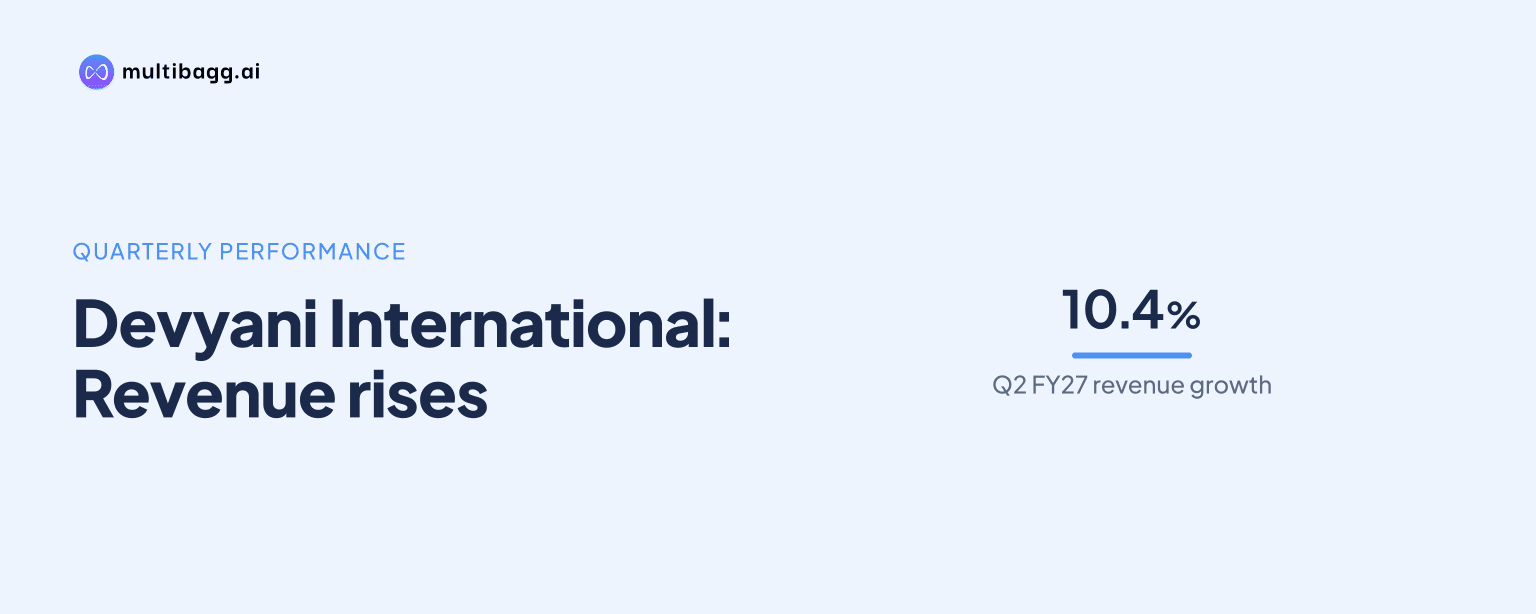
Devyani International Ltd reported Q2 FY27 revenue of ₹1,519 crore, up 10.4% year on year, as positive same-store sales growth across most Indian brands and 70 net store additions supported sales. Operating EBITDA before Ind AS rose nearly 34% to ₹125 crore, while the company returned to a profit before tax of ₹5.7 crore.
Know Devyani International inside out
Results, valuation, peers and who's buying, in one view.
How did Devyani International perform in Q2 FY27?
Devyani International delivered consolidated revenue from operations of ₹1,519.4 crore in the July-September quarter of FY27, compared with ₹1,376.8 crore in Q2 FY26. The 10.4% year-on-year increase reflected positive same-store sales growth, or SSSG, ranging from 4% to 9% across its Indian brand portfolio, with the exception of Pizza Hut.
Management said Pizza Hut recorded sequentially better numbers, although no specific same-store sales figure for the brand was disclosed. The company said its consumer proposition and operating measures had supported a consistent performance across brands during the quarter.
Reported EBITDA increased 17.6% year on year to ₹228.6 crore from ₹194.3 crore. Reported EBITDA margin stood at 15.0%. Separately, operating EBITDA before Ind AS was ₹125.1 crore, up nearly 34% year on year, with an operating EBITDA margin of 8.2%.
Profit before tax was ₹5.7 crore in Q2 FY27, compared with a loss of ₹26.8 crore a year earlier. Consolidated profit was ₹3.5 crore, against a consolidated loss of ₹23.9 crore in Q2 FY26.
What drove Devyani International's revenue and margin growth?
Devyani International's growth was driven by a combination of same-store sales and network expansion. The company added 70 net new stores during the quarter, including 68 in India. KFC accounted for 50 of the net new Indian stores added in the period.
The additions took Devyani International's India footprint to 1,923 stores and its global footprint to 2,325 stores. The company said it remains on track to meet its full-year target of adding 200 to 220 net new stores, while maintaining discipline on site selection and profitability.
Gross margin improved by 70 basis points year on year to 68.5%. Management attributed the improvement to performance in both the Indian and international businesses, despite inflation in raw materials and wages. The company also cited higher same-store sales and cost control as factors supporting EBITDA growth.
Brand contribution rose 23% year on year to ₹198 crore. The consolidated brand contribution margin expanded to 13%, indicating that growth in sales was accompanied by improved contribution at the brand level.
Got a follow-up? Ask IRIS
What are the key Q2 FY27 financial and operating figures?
Devyani International's reported figures show revenue, profitability and store count all increased during Q2 FY27. The company also reported stronger first-half revenue and a return to consolidated profit for the six-month period.
For the first half of FY27, revenue increased 13.4% to ₹3,099.9 crore from ₹2,733.7 crore in the prior-year period. H1 consolidated profit was ₹20.6 crore, compared with a loss of ₹21.7 crore a year earlier. Operating cash flow for the first half was ₹485.8 crore.
The company also reported that the Competition Commission of India approved the merger referenced in its earnings summary. The supplied material does not provide further transaction details or a timetable for completion.
Why do the Q2 results matter for investors and the restaurant industry?
Devyani International's Q2 performance matters because it combines sales growth with improved margins during a period when management identified raw-material and wage inflation as steep. The 70-basis-point gross-margin improvement and higher brand contribution suggest that sales growth and cost controls helped offset those pressures in the quarter.
For investors, the movement from a Q2 loss before tax in FY26 to a ₹5.7 crore profit before tax in FY27 is a material change in reported profitability. The distinction between reported EBITDA of ₹228.6 crore and operating EBITDA before Ind AS of ₹125.1 crore is also relevant when assessing the company's operating performance under the two reporting measures.
The store expansion programme remains central to the company's growth plan. With 70 net additions in one quarter and a stated annual target of 200 to 220, execution on location quality, unit economics and the pace of openings will remain important operational indicators.
Positive same-store sales across most Indian brands indicates that existing stores contributed alongside new openings. Pizza Hut's sequential improvement provides some context, but the company did not disclose an absolute SSSG figure for the brand or provide brand-wise revenue details in the material available.
Conclusion
Devyani International recorded 10.4% revenue growth to ₹1,519 crore in Q2 FY27, supported by positive same-store sales across most Indian brands and continued expansion of its store network. Margin improvement, higher brand contribution and a return to profit before tax marked a stronger quarter than the corresponding period a year earlier.
Investors will next watch progress toward the company's target of 200 to 220 net new stores in FY27, including the profitability of new locations. Further updates on Pizza Hut's sales trajectory, the approved merger and the company's ability to manage raw-material and wage costs will also be relevant.