








Garuda Construction and Engineering Limited Approves ₹500 Crore QIP
MAX Plan at ₹4,999/yr

Find your next multibaggerBe a Pro Investor
Research stocks and track your picks on the go. Download the app.
Key highlights
- Garuda Construction approved a proposed qualified institutions placement of up to ₹500 crore on November 28, 2026.
- The proposed ₹500 crore QIP requires shareholder approval through an Extraordinary General Meeting.
- Garuda Construction formed a QIP Committee to manage the proposed fundraising process.
- The filing does not confirm any completed issuance, issue price, share count or use of proceeds.
powered by IRIS
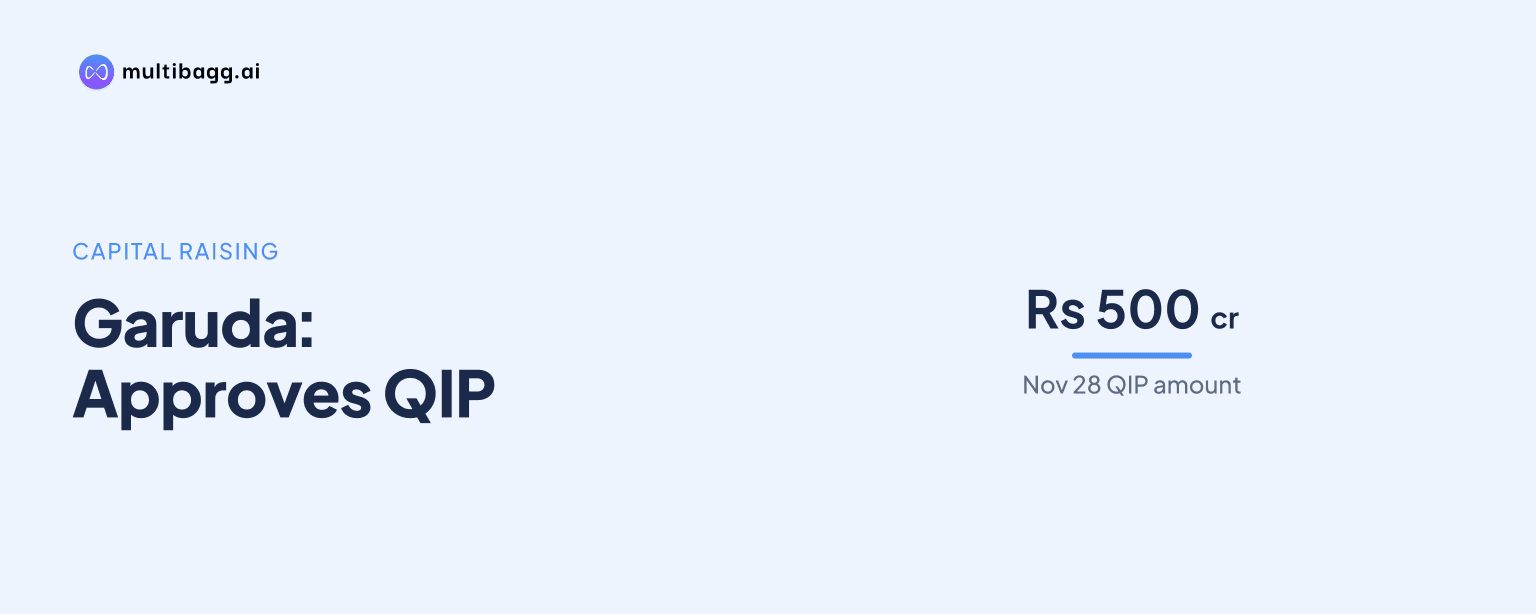
Garuda Construction approved a proposed qualified institutions placement of up to ₹500 crore on November 28, 2026, with the fund raise subject to shareholder approval through an Extraordinary General Meeting and required regulatory approvals. The board also formed a QIP Committee to manage the proposed process.
Know Garuda Construction and Engineering inside out
Results, valuation, peers and who's buying, in one view.
What did Garuda Construction approve on November 28?
Garuda Construction approved a proposal to raise up to ₹500 crore through a qualified institutions placement, or QIP. The proposal allows the company to issue equity shares to qualified institutional buyers, subject to the approvals and process stated in the filing.
The board's decision is not the completion of a capital raise. The filing makes clear that the proposed QIP requires shareholder approval through an Extraordinary General Meeting, or EGM, as well as regulatory approvals. The final timing, issue terms and amount raised have not been disclosed in the supplied filing details.
A QIP is a route through which a listed company can issue securities to eligible institutional investors. In this case, the approved upper limit is ₹500 crore. The filing does not state that any securities have been issued or that funds have already been received.
Why is an EGM required for the proposed QIP?
Garuda Construction will seek shareholder approval for the proposed fund raise at an EGM because the QIP needs such approval before it can move ahead. The company has not provided an EGM date in the information supplied for this filing.
Shareholder approval is a key step because the proposed placement may involve issuing equity shares to qualified institutional buyers. Investors will need to wait for the EGM notice and resolution details to assess the precise terms placed before shareholders, including any issue-related conditions that may be disclosed at that stage.
The filing also refers to regulatory approvals. It does not identify a specific approval, provide a timetable for receiving approvals or disclose a closing date for the transaction. Therefore, the ₹500 crore figure should be treated as the maximum approved fundraising capacity, rather than a confirmed amount raised.
What role will the QIP Committee play?
Garuda Construction formed a QIP Committee to handle the proposed fundraising process. The committee's formation follows the board's decision to pursue a QIP of up to ₹500 crore, subject to the required approvals.
The supplied information does not list the committee members, its detailed powers or a schedule for subsequent meetings. It does, however, establish that the company has created a board-level structure to manage the QIP process while shareholder and regulatory steps are pending.
For investors, the committee is relevant because future disclosures may come through actions taken under the authority granted for the QIP. Such disclosures could cover the EGM process, the issue structure or other transaction-related decisions, but none of these details are confirmed in the current filing.
Got a follow-up? Ask IRIS
What are the key facts from the filing?
Garuda Construction's filing records a board-approved QIP proposal with an upper fundraising limit of ₹500 crore. It also records the creation of a QIP Committee and the company's plan to obtain shareholder approval at an EGM.
The company has not disclosed the intended use of proceeds in the material provided. It has also not stated the number of shares to be issued, a floor price, the proposed issue price, or the likely dilution for existing shareholders. These details are material for evaluating the final economic effect of any QIP.
How does the proposed QIP matter to investors?
The proposed QIP gives Garuda Construction the option to raise up to ₹500 crore from institutional investors after the required approvals are obtained. Until then, it remains a proposed capital-raising exercise rather than a completed transaction.
A future equity issue can affect existing shareholders because it may increase the number of shares outstanding, depending on the final structure and pricing. However, the filing does not provide enough information to quantify any potential dilution. It also does not state how much of the ₹500 crore capacity, if any, will eventually be used.
The supplied context includes references to fundraising-related developments from 2025, including an EGM held on December 1, 2025. Those references are historical items in the available material. The November 28, 2026 filing should be assessed on its own stated terms: a proposed fresh QIP requiring shareholder and regulatory approvals.
Conclusion
Garuda Construction has approved a proposed QIP of up to ₹500 crore and established a QIP Committee, marking the start of a formal fundraising process. The proposal is conditional, with shareholder approval through an EGM and regulatory approvals still required before any issue can be completed.
Investors should watch for the EGM notice, the shareholder resolution, regulatory updates and any disclosure on pricing, the number of securities, use of proceeds and final fundraising amount. The filing does not disclose dates for these next steps or confirm when the QIP may close.

