










Hinduja Global Solutions cuts Q2 FY27 loss to ₹12.43 crore
Key highlights
- HGS reported Q2 FY27 consolidated revenue from operations of ₹1,076.2 crore, down 1.36% year-on-year.
- The consolidated net loss narrowed to ₹12.43 crore from ₹66.26 crore in Q1 FY27.
- Total EBITDA rose 36.5% quarter-on-quarter to ₹158.8 crore, with a 13.1% margin.
- Standalone Q2 FY27 revenue was ₹453.23 crore, compared with consolidated revenue of ₹1,076.15 crore.
powered by IRIS
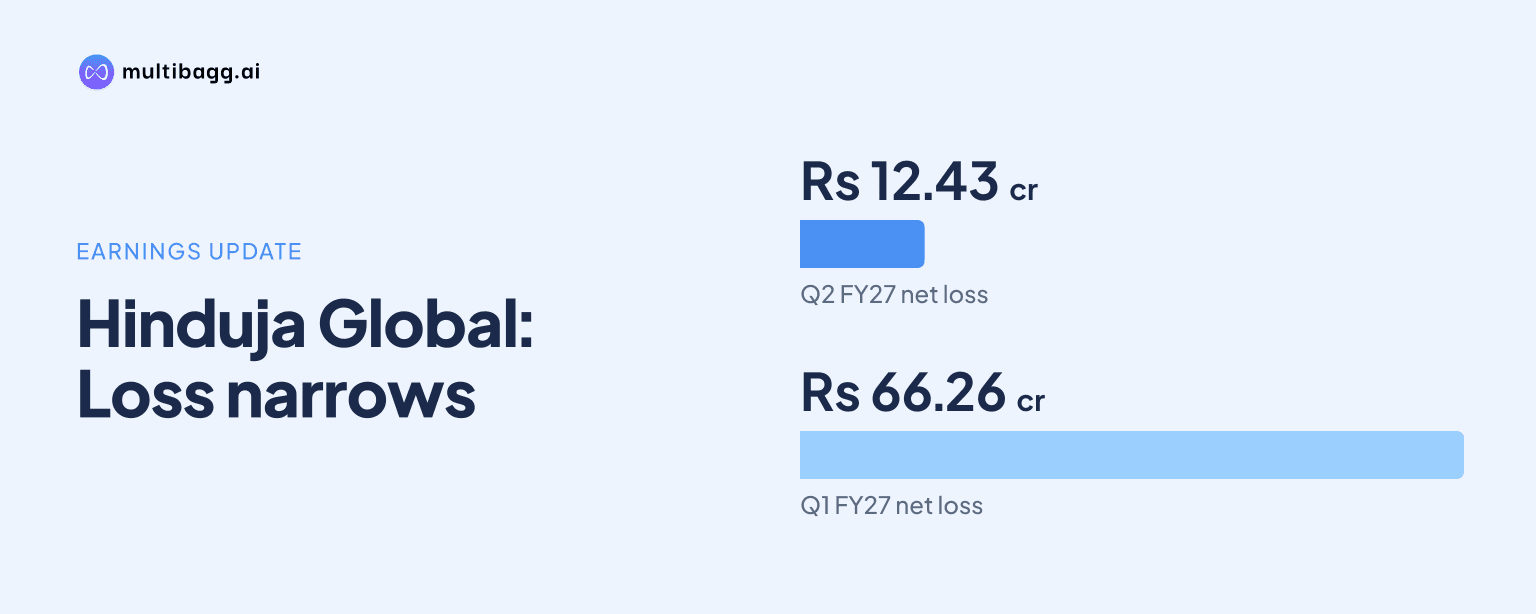
Hinduja Global Solutions Limited reported a consolidated net loss of ₹12.43 crore in Q2 FY27, narrowing from ₹66.26 crore in the preceding quarter, while revenue from operations stood at ₹1,076.2 crore and total EBITDA rose 36.5% sequentially to ₹158.8 crore.
Know Hinduja Global Solutions inside out
Results, valuation, peers and who's buying, in one view.
What did Hinduja Global Solutions report in Q2 FY27?
Hinduja Global Solutions reported unaudited consolidated revenue from operations of ₹1,076.2 crore for the quarter ended September 30, 2026, down 1.36% from ₹1,091.0 crore in Q2 FY26. Total income was ₹1,214.5 crore, compared with ₹1,201.2 crore in Q1 FY27 and ₹1,222.9 crore a year earlier.
The company recorded a consolidated loss after tax of ₹12.43 crore from continuing operations, compared with a loss of ₹66.26 crore in the June 2026 quarter and ₹26.99 crore in the corresponding quarter last year. The sequential reduction in loss came alongside a rise in total income and EBITDA, although revenue remained marginally lower year-on-year.
HGS announced the results on November 12, 2026, following approval by its Board of Directors. The statutory auditors, Haribhakti & Co. LLP, issued unmodified review reports for the unaudited standalone and consolidated financial results, according to the information provided with the results.
How did HGS's profitability change from the previous quarter?
HGS's total EBITDA increased 36.5% quarter-on-quarter to ₹158.8 crore, lifting its total EBITDA margin to 13.1% from the first quarter's level. For the first half of FY27, total EBITDA was ₹275.1 crore and the margin was 11.4% on total income of ₹2,415.6 crore.
On a measure excluding other income, operating profit was ₹20.46 crore in Q2 FY27, lower than ₹26.06 crore in Q2 FY26. This represented an operating margin of 1.9%, compared with 2.4% a year earlier. The difference between this operating-profit measure and total EBITDA reflects the presentation of other income in the results summary.
Loss before tax narrowed to ₹9.62 crore in Q2 FY27 from ₹52.8 crore in Q1 FY27. The quarterly loss per share in the supplied consolidated summary was ₹0.62. For the first half, HGS reported continuing-operations revenue of ₹2,126.5 crore and a net loss of ₹78.69 crore from continuing operations.
Why do the standalone and consolidated revenue figures differ?
The standalone and consolidated figures differ because they cover different reporting scopes. HGS reported standalone revenue from operations of ₹453.23 crore for Q2 FY27, while the consolidated statement, which includes the BPM and Digital Media businesses, reported revenue from operations of ₹1,076.15 crore.
Standalone net loss was ₹23.91 crore for the September 2026 quarter, against a ₹27.09 crore loss in the year-earlier period. The standalone revenue figure was lower than ₹468.74 crore in Q2 FY26. For the first half, standalone revenue was ₹901.59 crore and the standalone net loss was ₹85.96 crore.
The consolidated result includes operations beyond the standalone entity. Investors comparing quarterly figures should therefore use the same basis consistently. The ₹1,076.2 crore consolidated revenue and ₹12.43 crore continuing-operations net loss are the relevant figures for assessing the group's overall reported quarterly performance.
Got a follow-up? Ask IRIS
What businesses supported HGS's reported scale?
HGS reported its financial performance across its BPM and Digital Media businesses. Its Digital Media business covers 4,500 pin codes through two lakh kilometres of owned and partner fibre networks, along with more than 125 owned-and-operated NXTHUBs across India.
The company's NXTDIGITAL division provides satellite, digital cable and broadband services to more than 4.8 million customers across 1,500 cities and towns. This operating footprint explains why consolidated income is materially larger than the standalone revenue reported by the parent entity.
The September-quarter results also included a ₹57.49 crore profit from discontinued operations for the first half of FY27. This item is separate from the reported ₹78.69 crore first-half loss from continuing operations, making the distinction important when reading the half-year figures.
What does the Q2 FY27 result mean for investors?
The Q2 FY27 result shows a marked sequential narrowing of HGS's consolidated loss, with the loss after tax falling from ₹66.26 crore in Q1 FY27 to ₹12.43 crore. Total income increased 1.1% quarter-on-quarter, while total EBITDA rose 36.5%, indicating better quarter-on-quarter profitability on the company's total-income measure.
However, the year-on-year picture remained mixed. Revenue from operations declined 1.36% from Q2 FY26, operating profit fell 21.49% to ₹20.46 crore, and the company remained loss-making on a consolidated continuing-operations basis. The results therefore provide evidence of sequential improvement but do not establish a return to quarterly net profitability.
For market participants, the key reported indicators are the pace of revenue movement, the sustainability of EBITDA margins, and the trend in losses from continuing operations. The disclosed numbers also underline the need to distinguish between standalone and consolidated data, particularly where the Digital Media business contributes to the group scale.
Conclusion
HGS closed Q2 FY27 with consolidated revenue from operations of ₹1,076.2 crore and a net loss of ₹12.43 crore. Although revenue was slightly lower than a year earlier, the reduction in loss from the preceding quarter and the 36.5% increase in total EBITDA were the principal changes in the reported quarterly performance.
The next reported reference point is the company's subsequent quarterly disclosure, which will show whether the Q2 improvement in total income, EBITDA margin and continuing-operations loss can be sustained. Investors will also be able to compare the group-level performance with the standalone business and the reported Digital Media operating footprint.