










India Nippon Electricals Q2 FY27 Revenue May Reach ₹310 Crore
Key highlights
- India Nippon Electricals is expected to report Q2 FY27 revenue of ₹295-310 crore.
- The expected revenue range implies 20-28% year-on-year growth from about ₹234 crore in Q2 FY26.
- Q2 FY27 profit after tax is estimated at ₹30-32 crore, compared with ₹27 crore in Q1 FY27.
- The board is scheduled to approve Q2 and H1 FY27 unaudited standalone results on November 12, 2026.
powered by IRIS
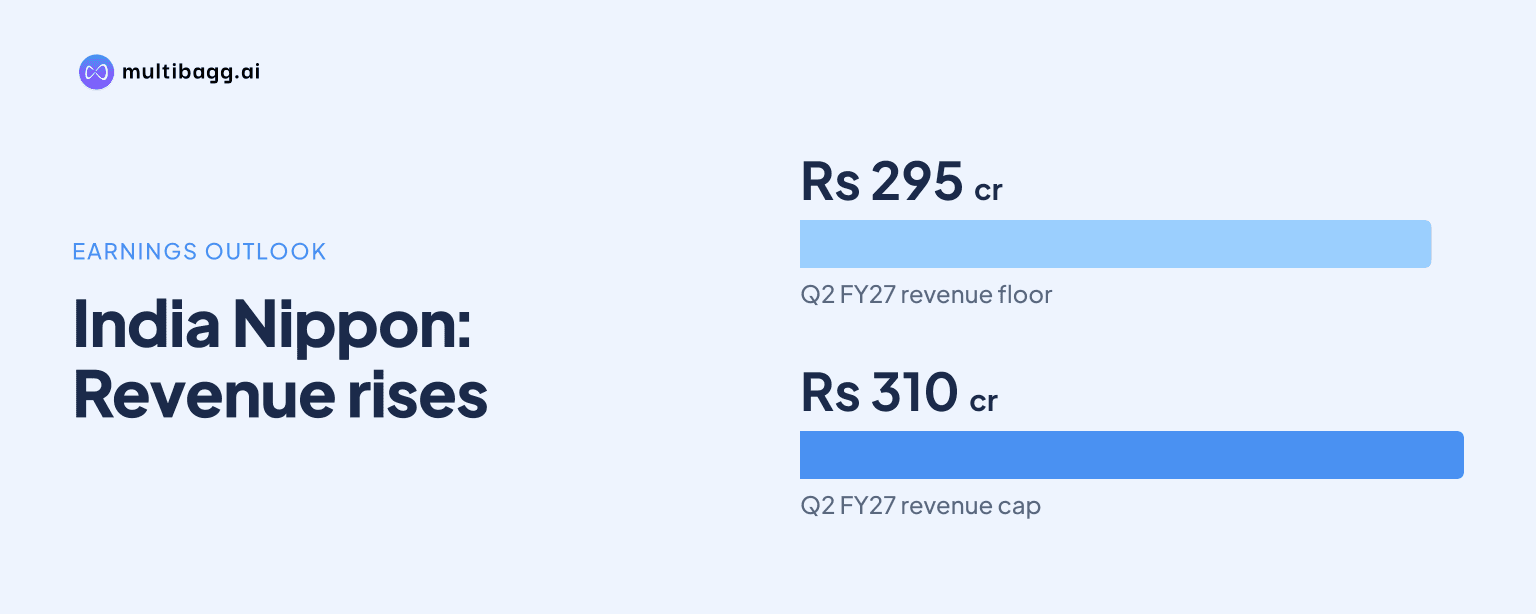
India Nippon Electricals Ltd is expected to report Q2 FY27 revenue of about ₹295-310 crore, representing 20-28% year-on-year growth against approximately ₹234 crore in Q2 FY26. The board is scheduled to consider the unaudited standalone results for the quarter ended September 30, 2026, on November 12.
Know India Nippon Electricals inside out
Results, valuation, peers and who's buying, in one view.
When will India Nippon Electricals announce Q2 FY27 results?
India Nippon Electricals will consider and approve its unaudited standalone financial results for Q2 FY27 at its board meeting on November 12, 2026. The results cover the quarter and half-year ended September 30, 2026, and will be considered along with the Statutory Auditors' Limited Review Report.
The company informed the NSE about the meeting on November 6. Its filing said the board would review the financial statements prepared under Indian Accounting Standards, or Ind AS. The disclosure relates to standalone results, so the scheduled announcement will provide the financial performance of the listed entity on that basis.
The company also closed its trading window for insiders from October 1, 2026. The window is to remain closed until 48 hours after publication of the results, in line with the stated disclosure process.
What revenue and profit are expected in Q2 FY27?
India Nippon Electricals is expected to post revenue of about ₹295-310 crore and profit after tax of roughly ₹30-32 crore for Q2 FY27. These are pre-results expectations, not company-reported financial results, and the final figures will be known after the board's approval and disclosure.
The suggested revenue range implies year-on-year growth of 20-28% from about ₹234 crore reported for Q2 FY26. This would represent moderation from the 35.5% growth recorded in Q1 FY27, while still indicating double-digit expansion in the September quarter.
The estimated profit range compares with a profit after tax of ₹27 crore in Q1 FY27. The expectation is described as being aligned with 15-20% FY27 profit growth guidance. Results-day disclosures will show whether revenue conversion, expenses and other operating factors supported that trajectory.
Why are cash flow and working capital important for the results?
Cash flow and working-capital trends will be important indicators of whether India Nippon Electricals can sustain its margins as revenue grows. The supplied expectations specifically identify these disclosures, alongside the profit and loss statement, as areas to monitor when the results are released.
Revenue and profit figures show the reported scale of quarterly operations, but cash flow can provide a different view of how earnings are translating into funds generated or used during the period. Working-capital movements can also affect the timing of cash flows even when reported revenue and profit rise.
The company is expected to release unaudited standalone results rather than audited annual accounts. The accompanying limited review by statutory auditors is therefore a relevant part of the scheduled board agenda. Investors will be able to compare the reported numbers with the stated expectation band once the filing is available.
Got a follow-up? Ask IRIS
How does Q2 FY27 compare with recent reporting milestones?
India Nippon Electricals reported Q1 FY27 results after a board meeting held on August 7, 2026, while its Q2 FY27 board meeting is set for November 12, 2026. The June-quarter investor presentation referred to an unaudited result for the quarter ended June 30, 2026.
Earlier, the company considered audited standalone and consolidated financial results for the quarter and year ended March 31, 2026, at a board meeting on May 28, 2026. This places the November meeting within the company's regular sequence of quarterly and annual reporting events.
The Q2 meeting will also cover half-year results through September 30. That wider reporting period may help investors assess whether the Q1 growth rate and the expected Q2 performance are consistent across the first half of FY27, although the actual conclusion will depend on the figures filed by the company.
What should investors assess when the Q2 filing is released?
Investors should assess the reported revenue, profit after tax, cash-flow trends and working-capital movement against the stated Q2 FY27 expectations. Revenue near the ₹295-310 crore range and profit near ₹30-32 crore would be the direct numerical comparison points from the pre-results assessment.
The pace of revenue growth also matters because the expected 20-28% range is below Q1 FY27's 35.5% growth. A change in growth rate does not by itself establish a change in business conditions, but it will be a clear comparison for readers of the quarterly statement.
The results may also clarify the relationship between revenue growth and profitability. The available information provides a FY27 profit growth guidance range of 15-20%, while the Q2 profit expectation is ₹30-32 crore. The reported cash and working-capital data will add context to those income-statement figures.
Conclusion
India Nippon Electricals enters its Q2 FY27 results meeting with an expected revenue range of ₹295-310 crore and an estimated profit after tax of ₹30-32 crore. The key comparison will be with approximately ₹234 crore of Q2 FY26 revenue, Q1 FY27's 35.5% growth, and the company's stated 15-20% FY27 profit growth guidance.
The next item to watch is the board-approved unaudited standalone filing for the quarter and half-year ended September 30, 2026, together with the Statutory Auditors' Limited Review Report. Cash-flow and working-capital trends disclosed with the results will be relevant for assessing margin sustainability.