










EAAA India Alternatives bonus provision reached 89% of VAR
Key highlights
- EAAA India Alternatives’ bonus and VAR-related provision reached 89.00% of VAR in fiscal 2024.
- EAAA’s provision rose from Rs 84.162 crore in fiscal 2024 to Rs 161.087 crore in fiscal 2026.
- VAR increased from Rs 94.566 crore in fiscal 2024 to Rs 290.472 crore in fiscal 2026.
- The combined provision represented 42.21% of EAAA’s Rs 381.646 crore employee benefits expense in fiscal 2026.
powered by IRIS
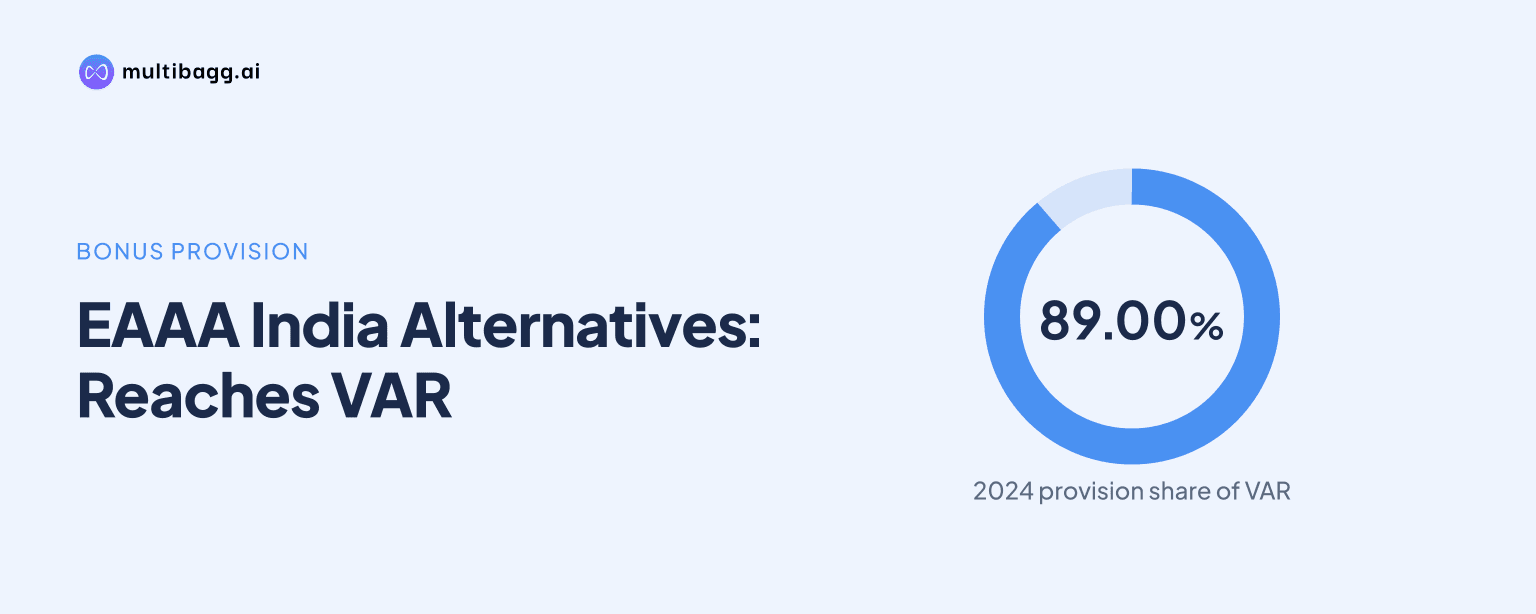
EAAA India Alternatives provided for bonuses, including Variable Additional Return-linked bonuses, equal to 89.00% of Variable Additional Return, or VAR, in fiscal 2024. VAR is the company’s net gain or loss on fair-value changes. The ratio declined to 55.46% in fiscal 2026, while the provision rose to Rs 161.087 crore as VAR reached Rs 290.472 crore.
How much of VAR did EAAA allocate to bonuses?
EAAA’s bonus provision reached its highest disclosed share of VAR in fiscal 2024, at 89.00%. The prospectus defines VAR as net gain or loss on fair-value changes and includes the combined bonus provision within salaries, wages and bonus expenses. In fiscal 2024, EAAA recorded Rs 84.162 crore of bonus and VAR-related bonus provision against Rs 94.566 crore of VAR.
The percentage fell in each of the following two fiscal years, from 89.00% in fiscal 2024 to 68.75% in fiscal 2025 and 55.46% in fiscal 2026. The rupee provision nevertheless increased, from Rs 84.162 crore in fiscal 2024 to Rs 131.131 crore in fiscal 2025 and Rs 161.087 crore in fiscal 2026. VAR grew faster, increasing from Rs 94.566 crore in fiscal 2024 to Rs 290.472 crore in fiscal 2026.
What does the EAAA bonus provision include?
EAAA’s disclosed measure combines “provision of bonus” and “Variable Additional Return related bonus,” rather than identifying a single incentive pool. EAAA records the combined amount in salaries, wages and bonus expenses. In fiscal 2026, the combined provision was Rs 161.087 crore, while total employee benefits expense was Rs 381.646 crore.
The provision represented 42.21% of EAAA’s employee benefits expense in fiscal 2026, compared with 43.40% in fiscal 2025 and 38.33% in fiscal 2024. This differs from the provision’s share of VAR, which declined over the three fiscal years. The comparison shows that the combined bonus provision remained between 38.33% and 43.40% of employee benefits expense despite the change in its share of VAR.
The allocation also varied in the shorter reporting periods disclosed by EAAA. For the three months ended June 30, 2026, EAAA provided Rs 82.503 crore for the combined bonus measure, equal to 75.72% of Rs 108.953 crore of VAR and 60.17% of Rs 137.120 crore of employee benefits expense. For the three months ended June 30, 2025, the respective figures were Rs 13.152 crore, 22.56% and 18.80%.
Why does the EAAA bonus provision affect profitability?
EAAA states that a significant portion of the additional bonus is paid when its funds generate VAR. A rise in VAR therefore does not translate one-for-one into profit after employee compensation, because the portion allocated through bonuses is included in employee benefits expense. In fiscal 2026, the Rs 161.087 crore provision equalled more than half of the Rs 290.472 crore reported VAR.
The company identifies a compensation-policy trade-off. EAAA says that providing a larger share of VAR to employees would increase compensation expense and could adversely affect overall profitability. Fiscal 2024 shows the scale of this disclosed exposure: the Rs 84.162 crore provision was equivalent to 89.00% of the Rs 94.566 crore VAR.
EAAA also says a policy change perceived as unfavourable by employees, including a reduction in their additional-bonus share, could make talent retention more difficult. The company links higher employee turnover to possible effects on performance, operational efficiency, and its ability to raise and manage new funds. These outcomes would affect the fund-management activities through which EAAA generates fees and VAR.
Got a follow-up? Ask IRIS
How did EAAA’s bonus provision change from fiscal 2024 to fiscal 2026?
EAAA’s VAR increased faster than its bonus provision between fiscal 2024 and fiscal 2026. VAR rose from Rs 94.566 crore to Rs 290.472 crore, while the combined provision rose from Rs 84.162 crore to Rs 161.087 crore. The provision-to-VAR ratio consequently declined by 33.54 percentage points, from 89.00% to 55.46%.
Employee benefits expense followed a different pattern. Total employee benefits expense increased from Rs 216.720 crore in fiscal 2024 to Rs 302.113 crore in fiscal 2025 and Rs 381.646 crore in fiscal 2026. The combined provision’s share of that expense rose by 5.07 percentage points to 43.40% in fiscal 2025, before declining by 1.19 percentage points to 42.21% in fiscal 2026.
What must happen for EAAA’s lower bonus-sharing ratio to continue?
A lower proportion of VAR allocated to the disclosed bonus provision would require VAR to continue growing without a comparable increase in the employee allocation. EAAA reported a 55.46% provision-to-VAR ratio in fiscal 2026, but reported a higher 75.72% ratio for the three months ended June 30, 2026. The quarterly result shows that the fiscal-year ratio is not a fixed allocation rate.
VAR is also exposed to fund performance and market conditions identified by EAAA. The company says higher interest rates can increase portfolio borrowing costs and affect fund profitability, potentially affecting VAR, while falling rates can reduce the returns from private-credit products. EAAA also disclosed that a 5% increase or decrease in foreign-currency rates would affect profit before tax by Rs 12.645 crore, based on VAR of Rs 313.032 crore as of June 30, 2026.
Conclusion
EAAA’s disclosures show that VAR-linked bonuses are a material employee-benefit cost associated with performance-linked returns. The provision equalled 89.00% of VAR in fiscal 2024, but VAR growth outpaced the provision by fiscal 2026, reducing the ratio to 55.46% while the provision increased to Rs 161.087 crore.
Future disclosures on the provision-to-VAR ratio and compensation policy will indicate whether the fiscal-2026 ratio persists. EAAA has not disclosed a fixed future allocation rate and says that a larger employee share could affect profitability, while a smaller share could affect retention; the 75.72% ratio for the three months ended June 30, 2026 illustrates that the allocation can vary.