










Johnsoncab profit surge tracked Unit-II ramp-up and lower COGS
Key highlights
- Johnsoncab’s Fiscal 2026 profit after tax rose 145.58% to Rs 13.4195 crore from Rs 5.4644 crore.
- Revenue from operations increased 50.56% to Rs 210.4741 crore in Fiscal 2026, while EBITDA rose 98.30% to Rs 24.0632 crore.
- Unit-II contributed Rs 62.5328 crore, or 29.71% of operating revenue, in Fiscal 2026, compared with 6.75% in Fiscal 2025.
- COGS declined to 85.12% of operating revenue from 88.25%, while net cash used in operating activities reached Rs 19.7006 crore.
powered by IRIS
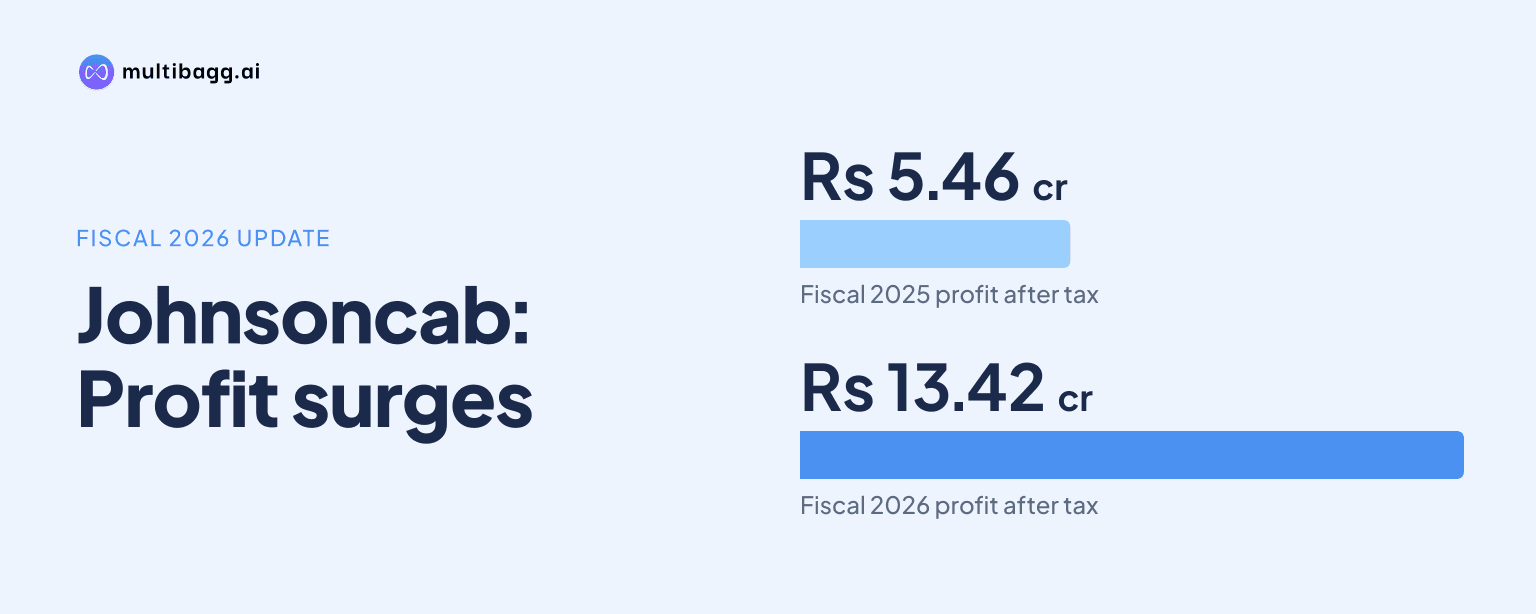
Johnsoncab Electricals Limited’s Fiscal 2026 profit after tax rose 145.58% to Rs 13.4195 crore from Rs 5.4644 crore in Fiscal 2025. Johnsoncab linked the increase to Unit-II operating for the full year, 79.39% production growth and a 3.13-percentage-point decline in cost of goods sold, or COGS, as a share of revenue.
Why did Johnsoncab’s profit surge in Fiscal 2026?
Johnsoncab’s Fiscal 2026 profit surge followed revenue growth, higher production and lower cost intensity rather than other income alone. Revenue from operations increased 50.56% to Rs 210.4741 crore in Fiscal 2026 from Rs 139.7913 crore in Fiscal 2025, while profit before tax increased 143.30% to Rs 17.9399 crore from Rs 7.3735 crore. No exceptional items were reported in either fiscal year.
Earnings before interest, taxes, depreciation and amortisation, or EBITDA, rose 98.30% to Rs 24.0632 crore in Fiscal 2026 from Rs 12.135 crore in Fiscal 2025. EBITDA margin, calculated as EBITDA divided by revenue from operations, increased to 11.43% from 8.68%, while profit after tax margin increased to 6.38% from 3.91%.
The income statement shows that total expenses declined as a proportion of total income even as absolute expenditure increased. Total expenses represented 91.51% of total income in Fiscal 2026, compared with 94.73% in Fiscal 2025, and profit before tax represented 8.49%, compared with 5.27%. The improvement therefore depended on the company maintaining volume, realisations and operating-cost absorption as it expanded.
How much did Unit-II change Johnsoncab’s revenue base?
Unit-II changed Johnsoncab’s revenue base because it operated throughout Fiscal 2026. Unit-II contributed Rs 62.5328 crore, or 29.71% of revenue from operations, in Fiscal 2026, compared with Rs 9.4347 crore, or 6.75%, in Fiscal 2025. The unit’s revenue increased Rs 53.0981 crore, or 562.80%, over the comparison.
Unit-I contributed Rs 146.8805 crore, or 69.79% of Fiscal 2026 operating revenue, compared with Rs 130.3566 crore, or 93.25%, in Fiscal 2025. The unit mix therefore shifted from Unit-II supplying less than one-tenth of operating revenue in Fiscal 2025 to nearly three-tenths in Fiscal 2026. Johnsoncab said full-year Unit-II operations expanded manufacturing capacity and enabled it to meet higher customer demand.
Johnsoncab said Unit-II was started to support demand for LT XLPE armoured and unarmoured power and control cables. The company also reported a greater focus on project-based products including welding cables, submersible cables and photovoltaic solar direct-current cables. Management identified product mix, increased manufacturing contribution and better sales realisation as additional contributors to Fiscal 2026 operating profitability.
How did capacity and modern machinery lift production?
Johnsoncab’s installed capacity increased 66.91% to 79,950 kilometres in Fiscal 2026 from 47,900 kilometres in Fiscal 2025, while actual production rose 79.39% to 63,659 kilometres from 36,090 kilometres. Raj Techno Essential, an independent chartered engineer, certified the capacity and production data in a certificate dated September 15, 2026.
The company attributed higher production to automatic modern wire-drawing machinery and allied equipment that became operational at the end of 2024. Johnsoncab said its previous wire-drawing and coating equipment used conventional or manual processes and older technology. It invested Rs 14.2525 crore in advanced plant and machinery during Fiscal 2026, stating that the additions lifted capacity, raised output and reduced manufacturing bottlenecks.
The machinery investment also increased depreciation and financing requirements. Depreciation and amortisation rose to Rs 2.2045 crore in Fiscal 2026 from Rs 1.2639 crore in Fiscal 2025, following fixed-asset additions of Rs 16.2898 crore. Finance costs rose 36.28% to Rs 5.2094 crore from Rs 3.8227 crore as borrowings were used for expansion and working-capital requirements.
Got a follow-up? Ask IRIS
What does Johnsoncab’s lower COGS ratio show about margins?
Johnsoncab reported that COGS declined to 85.12% of revenue from operations in Fiscal 2026 from 88.25% in Fiscal 2025. The company calculated the 3.13-percentage-point reduction as Rs 6.5878 crore of savings relative to Fiscal 2026 operating revenue of Rs 210.4741 crore. Its COGS analysis defines the measure as cost of materials consumed in the restated financial statements.
The Fiscal 2026 improvement followed a two-year reduction in COGS intensity. COGS represented 90.50% of revenue from operations in Fiscal 2024, 88.25% in Fiscal 2025 and 85.12% in Fiscal 2026. Johnsoncab attributed the Fiscal 2025 change to higher production, better fixed-cost absorption and improved average realisations, while citing Unit-II, volumes, product mix and operational efficiencies for Fiscal 2026.
Raw-material costs remain material to whether the lower ratio persists. Cost of materials consumed increased 50.53% to Rs 165.7775 crore in Fiscal 2026 from Rs 110.1309 crore in Fiscal 2025 as production expanded. Johnsoncab depends on copper, aluminium, insulating materials, consumables and packaging, has no long-term raw-material supply agreements, and says inflation, foreign-exchange movements, tariffs and environmental rules can affect prices.
What working-capital demands accompanied Johnsoncab’s expansion?
Johnsoncab’s expansion required additional working capital in Fiscal 2026, resulting in cash used in operations despite higher reported profit. Net cash used in operating activities was Rs 19.7006 crore in Fiscal 2026, against profit before tax of Rs 17.9399 crore. The company attributed the outflow mainly to inventory increasing by Rs 26.5421 crore and trade receivables increasing by Rs 16.0345 crore, partly offset by trade payables increasing Rs 4.9769 crore.
Inventory increased to Rs 51.1534 crore at March 31, 2026 from Rs 24.6113 crore a year earlier, while trade receivables rose to Rs 37.3574 crore from Rs 21.3229 crore. Johnsoncab linked inventory growth to expanded operations and higher holdings of copper rods, aluminium rods and galvanised iron strips. Short-term borrowings rose 141.27% to Rs 53.6315 crore, and the working-capital gap increased 100.10% to Rs 77.7381 crore.
Conclusion
Johnsoncab’s Fiscal 2026 profit expansion combined a 50.56% increase in operating revenue with a substantial change in manufacturing scale. Unit-II’s contribution rose from 6.75% to 29.71% of operating revenue, production reached 63,659 kilometres and COGS intensity declined from 88.25% to 85.12%, helping EBITDA increase 98.30% and profit after tax rise 145.58%.
The next measure to watch is Johnsoncab’s disclosed plan to construct an additional factory shed and install additional machinery at Unit-II beyond the 79,950-kilometre capacity reported at March 31, 2026. The company identifies procurement, labour, equipment, approvals, financing and working-capital needs as execution risks, while raw-material prices and receivable collections will affect future cost and cash-flow outcomes.