










ITC Ltd Q2 profit falls 18.5% as cigarette earnings weaken
Key highlights
- ITC's Q2 FY27 consolidated net profit fell 18.5% to Rs 4,229 crore from Rs 5,187 crore.
- ITC's consolidated net revenue rose 5% to Rs 20,454 crore in the September quarter.
- ITC's cigarette segment profit declined 27.2% to Rs 3,813 crore, while net cigarette revenue fell 21%.
- ITC's gross cigarette revenue rose 78.1% to Rs 15,536 crore, reflecting higher taxes included in gross sales.
powered by IRIS
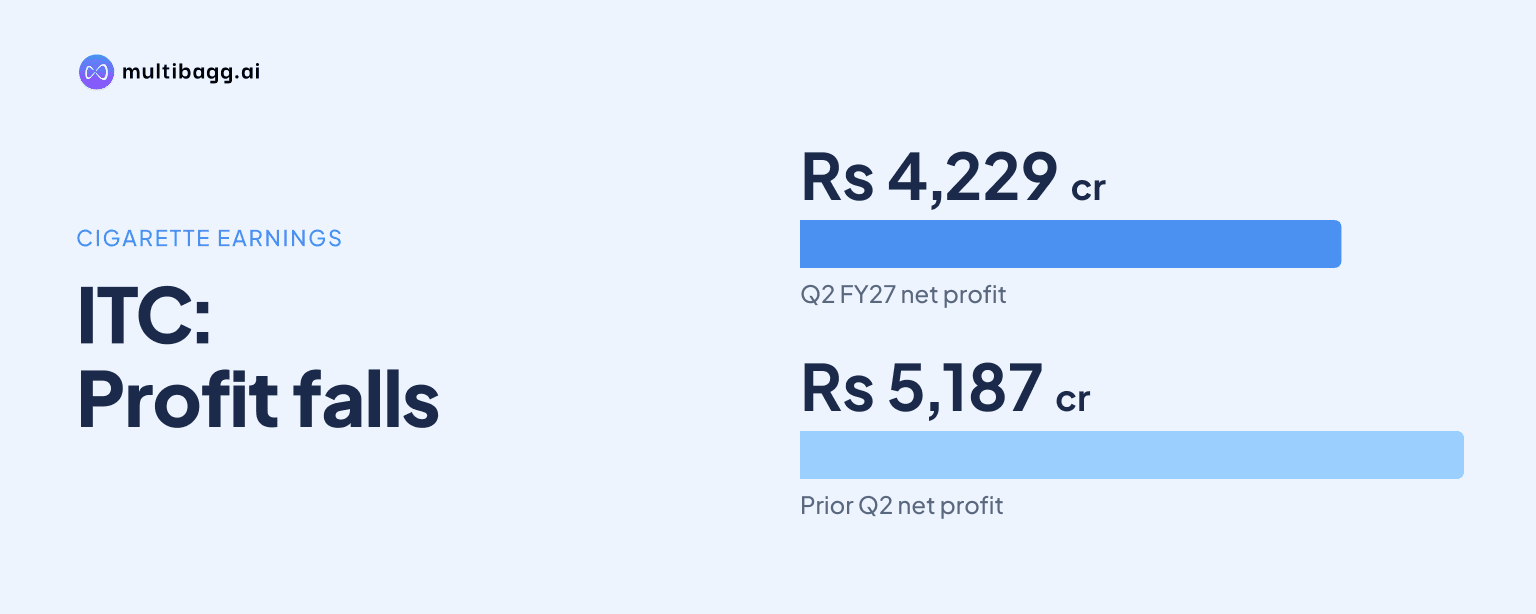
ITC Ltd reported Q2 FY27 consolidated net profit of Rs 4,229 crore, down 18.5% from Rs 5,187 crore a year earlier, as cigarette segment profit fell 27.2% to Rs 3,813 crore after an unprecedented increase in cigarette taxes pressured legal-industry volumes.
Why did ITC's Q2 FY27 profit fall?
ITC's Q2 FY27 consolidated profit fell chiefly because its cigarette business, a key contributor to earnings, recorded a steep decline in segment profit. The segment's profit decreased to Rs 3,813 crore from Rs 5,241 crore in the corresponding quarter last year. Net cigarette revenue fell 21% year-on-year.
The company said the unprecedented increase in cigarette taxes continued to weigh on legal-industry volumes. Higher taxation and the resulting price increases affected demand, leaving the segment unable to sustain earnings despite the company's efforts to manage the impact through its product portfolio and pricing response.
What were ITC's Q2 FY27 revenue and profit figures?
ITC reported consolidated net revenue of Rs 20,454 crore for the September quarter, up 5% from Rs 19,455 crore a year earlier, while consolidated net profit fell to Rs 4,229 crore. The differing direction of revenue and profit reflects the pressure from the cigarette business even as other operations expanded.
Gross cigarette revenue rose 78.1% to Rs 15,536 crore. However, this increase reflected higher taxes included in gross sales and should not be read as a direct improvement in underlying cigarette demand or profitability. Changes in cigarette taxation affect both reported revenue and expenses, making gross-sales comparisons less straightforward.
How did higher cigarette taxes affect ITC's business?
Higher cigarette taxes put pressure on ITC's legal cigarette volumes and reduced segment profitability despite price increases. The company said it was taking a strategic and calibrated response intended to balance stakeholder interests while limiting the risk of consumers shifting to illicit trade.
ITC also noted that enforcement agencies had reported a sharp rise in seizures of smuggled cigarette consignments across the country. This points to the wider tax arbitrage created by higher levies. The company introduced new variants and strengthened its portfolio to protect market share and counter competition from illicit and smuggled cigarettes.
Got a follow-up? Ask IRIS
Which ITC businesses supported growth outside cigarettes?
ITC said its non-cigarette FMCG, agriculture and paper businesses recorded strong growth, providing support to revenue during the quarter. Non-cigarette FMCG revenue rose about 18-19%, while the paper and packaging business grew 35.9%, according to the reported discussion around the results.
The company described growth across non-cigarette business segments as robust and said it had recorded a fourth consecutive quarter of double-digit revenue growth in these businesses. It also reported a 50-basis-point year-on-year expansion in EBITDA margin despite inflationary pressures. These gains, however, did not fully offset the earnings decline in cigarettes.
What does ITC say about inflation and operating conditions?
ITC cited intensified global inflationary pressures from higher energy and food prices, elevated sovereign bond yields and tighter financial conditions. It also said Indian headline inflation had increased because of a broad-based rise in food, fuel and core components.
These conditions add to the operating challenge for a diversified company with FMCG, agriculture and paper businesses alongside cigarettes. The September-quarter outcome shows that growth in the non-cigarette portfolio supported revenue, but the scale of the cigarette earnings decline remained the larger factor for consolidated profit.
Conclusion
ITC's Q2 FY27 result was shaped by a sharp fall in cigarette profitability, with consolidated net profit declining 18.5% to Rs 4,229 crore even as net revenue rose 5%. Higher cigarette taxes affected legal-industry volumes and net segment revenue, while stronger non-cigarette FMCG, agriculture, paper and packaging performance offered only a partial offset.
Investors will watch whether ITC's calibrated response, new variants and portfolio actions help stabilise cigarette volumes and market share. The next key signals are the persistence of tax-related pressure, the risk of illicit-trade substitution, and whether growth in non-cigarette businesses continues to support earnings.