










Reliance Industries shares rise 7% after record Q2 profit
Key highlights
- RIL shares rose as much as 7.12% to ₹1,246.45 after the Q2 FY27 results.
- Q2 FY27 consolidated profit rose 33.8% year-on-year to a record ₹29,550 crore.
- O2C EBITDA increased 67.9% year-on-year to ₹25,203 crore.
- Jio Platforms revenue grew 11.3% year-on-year to ₹47,485 crore.
powered by IRIS
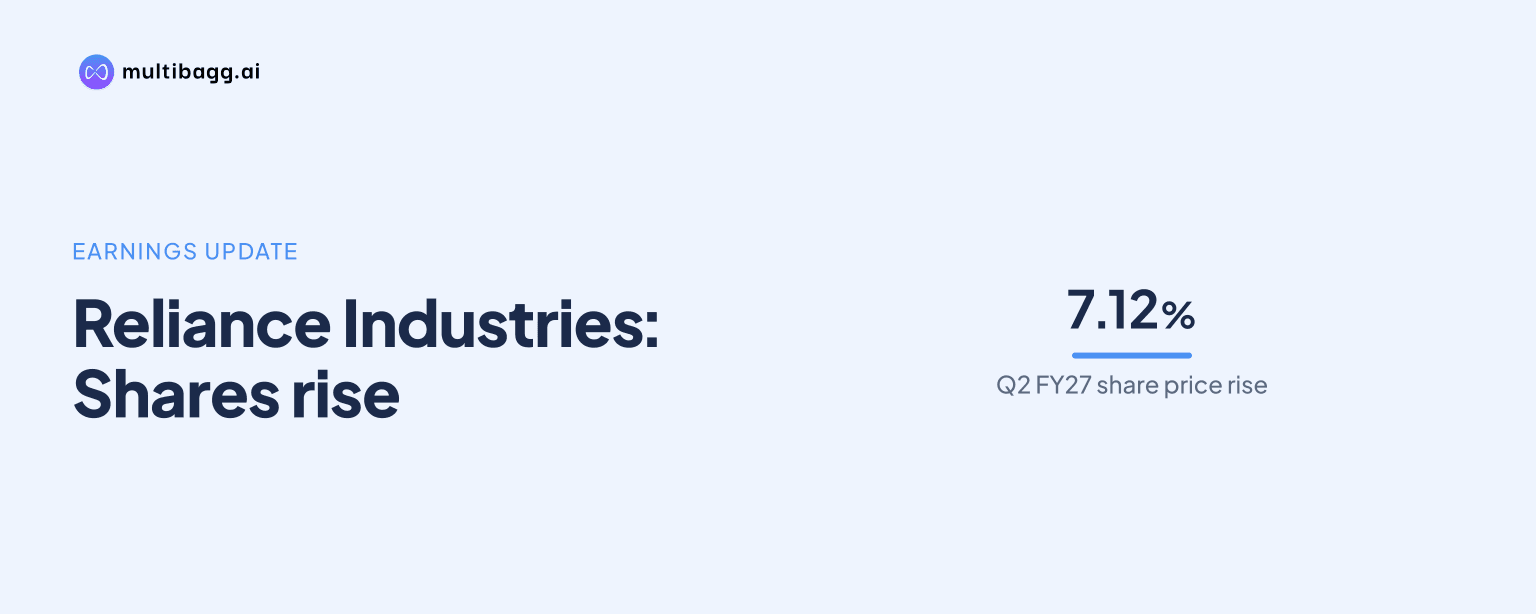
Reliance Industries Limited shares rose as much as 7.12% to ₹1,246.45 on 2 November after RIL reported record Q2 FY27 consolidated profit of ₹29,550 crore, up 33.8% year-on-year. The market reaction reflected a sharp recovery in oil-to-chemicals earnings and continued growth in digital services, despite concerns around retail and refining-margin trends.
Why did RIL shares rise after Q2 FY27 results?
RIL shares rose because its September-quarter earnings exceeded expectations, led by the oil-to-chemicals, or O2C, business. The stock opened at ₹1,228.10 on the NSE against a previous close of ₹1,164.90 and climbed to ₹1,244 on the exchange. It also reached ₹1,246.45 on the BSE, making it the top gainer among the Nifty 50 and Sensex constituents in early trade.
The rally came after a difficult stretch for the stock. Available performance data showed RIL down 26.07% year to date and 21.63% over one year, compared with declines of 11.11% and 9.64%, respectively, for the Nifty 50. The sharp single-day move was described as the stock's strongest intraday rally in nearly three years, with 42.59 million shares traded across the NSE and BSE.
How strong were RIL's September-quarter earnings?
RIL reported its strongest quarterly performance for the July-September 2026 period, with consolidated revenue rising 27.8% year-on-year to ₹3.62 lakh crore and EBITDA increasing 23.9% to a record ₹62,409 crore. Profit after tax, including the share of associates and joint ventures, rose 33.8% to ₹29,550 crore.
Net profit attributable to owners increased 40% to ₹25,548 crore. Other reported figures showed profit before tax up 32.6% to ₹38,613 crore. The results beat consensus expectations, according to market reports, while Jefferies said consolidated EBITDA of ₹566 billion was 6% ahead of its estimate. Goldman Sachs said Q2 EBITDA was 9% above its expectation.
What drove RIL's earnings growth?
RIL's O2C unit was the largest contributor to the earnings improvement, with segment EBITDA rising 67.9% year-on-year to ₹25,203 crore. Segment revenue increased 44.2% to ₹2.32 lakh crore, supported by stronger transportation-fuel refining margins and improved petrochemical margins amid global supply disruptions.
Jefferies attributed the O2C performance to record crude processing, flexible sourcing and a shift towards higher-value fuel exports. Digital services also added to the result: Jio Platforms revenue grew 11.3% year-on-year to ₹47,485 crore, while EBITDA rose 16.6% to ₹21,879 crore. These divisions offset relatively weaker retail performance in the quarter.
Got a follow-up? Ask IRIS
What are brokerages saying about RIL shares?
Brokerages retained positive recommendations on RIL after the results, citing the O2C recovery and steady telecom growth. Jefferies maintained a buy rating with a ₹1,710 target price, Kotak retained a positive view with a ₹1,500 target, and JPMorgan's target was ₹1,675. Goldman Sachs and Nomura also retained buy ratings.
Goldman Sachs set a ₹1,840 target price and said the target implied about 58% upside from the ₹1,164.90 Friday closing price cited in the market update. Emkay Global raised its estimates, pointing to the O2C recovery and improving Jio profitability. Target prices represent brokerage assessments, not assured future market prices.
What risks remain after RIL's share-price rally?
RIL still faces risks from potentially moderating refining margins and the weaker trend at retail. Goldman Sachs expects refining margins to moderate in the December quarter because of higher very large crude carrier freight costs, though processing discounted heavy crude could partly offset that pressure.
Retail was also flagged as relatively weak, amid a shift in festive demand and investments in digital commerce. The share price has also remained below its reported 52-week high of ₹1,611.80, while the 52-week low was ₹1,152.20. The market's next assessment will depend on whether O2C profitability, Jio growth and retail trends sustain the September-quarter momentum.
Conclusion
RIL's rally followed a record Q2 FY27, in which consolidated profit rose 33.8% to ₹29,550 crore and EBITDA increased 23.9% to ₹62,409 crore. The market response focused on the 67.9% increase in O2C EBITDA and continued expansion at Jio, while positive brokerage commentary reinforced the earnings-driven reaction.
Investors will next watch the December-quarter trajectory for refining margins, especially the impact of higher freight costs, alongside retail demand and digital-commerce investment. Sustained O2C performance and Jio profitability will be key to judging whether the September-quarter earnings strength can continue.