










Jhandewalas Foods Limited Reports ₹4.9 Crore H1 FY27 Net Loss
Key highlights
- Jhandewalas Foods reported H1 FY27 revenue from operations of ₹50.54 crore, down 32.6% year-on-year.
- Jhandewalas Foods recorded a net loss of ₹4.93 crore in H1 FY27 versus a ₹3.1 crore net profit in H1 FY26.
- The H1 FY27 operating margin was negative 9.9%, compared with 4.3% in H1 FY26.
- The auditor flagged property title deeds worth ₹5.76 crore and unspent CSR of ₹5,61,651.
powered by IRIS
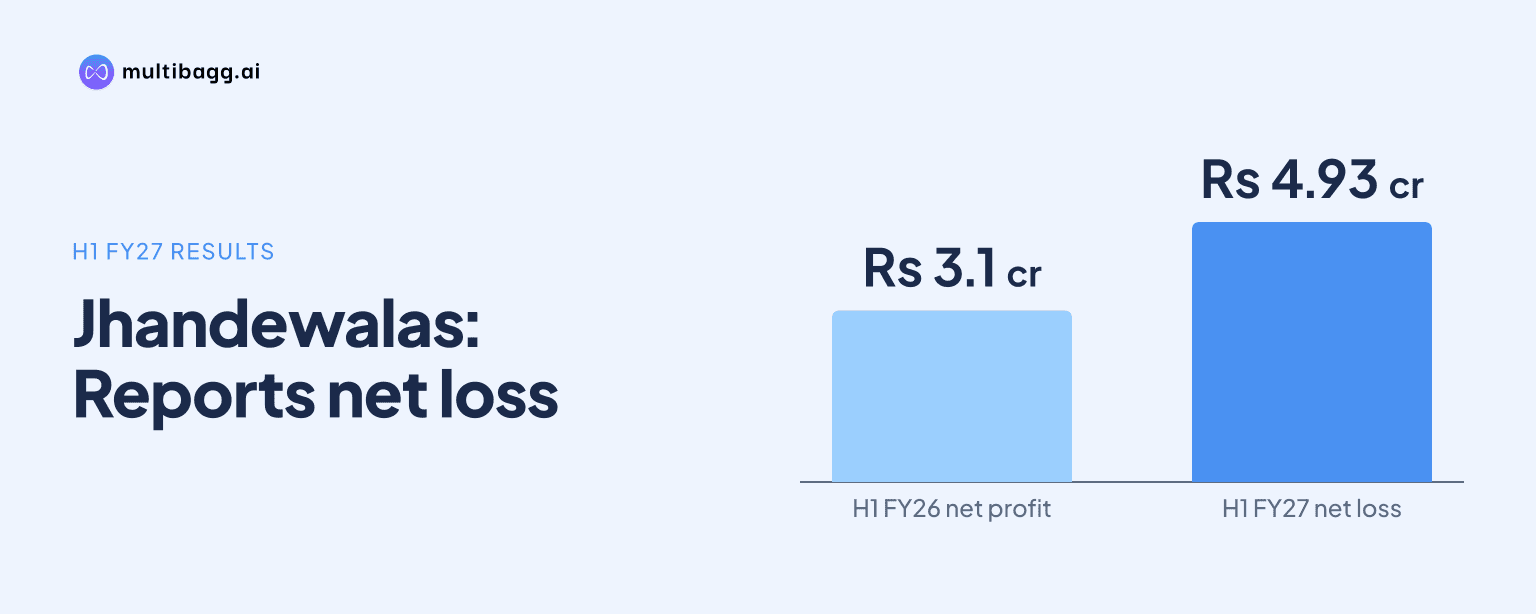
Jhandewalas Foods Limited reported a net loss of ₹4.93 crore for H1 FY27, compared with a net profit of ₹3.1 crore a year earlier, as revenue from operations declined 32.6% year-on-year to ₹50.54 crore for the half-year ended September 30, 2026.
Know Jhandewalas Foods inside out
Results, valuation, peers and who's buying, in one view.
What did Jhandewalas Foods report for H1 FY27?
Jhandewalas Foods Limited reported unaudited standalone revenue from operations of ₹50.54 crore for the six months ended September 30, 2026. Total income was ₹50.55 crore, while total expenses stood at ₹55.54 crore, resulting in a loss before tax of ₹5.0 crore and a net loss of ₹4.93 crore.
The comparable H1 FY26 period had revenue from operations of ₹74.9 crore, total income of ₹76.4 crore and a net profit of ₹3.1 crore. The shift from profit to loss came alongside a reduction in revenue and a negative operating margin of 9.9%, compared with a positive operating margin of 4.3% in the previous-year period.
When were the half-yearly results approved?
Jhandewalas Foods approved its unaudited standalone financial results for H1 FY27 at a Board of Directors meeting held on November 12, 2026. The company submitted the results and the limited review report in line with its listing-related disclosure requirements.
The disclosed outcome also noted the statutory auditor's resignation and the Board's recommendation for a replacement. The financial results were accompanied by a Limited Review Report from independent auditor Jain Chowdhary & Co., which issued a qualified conclusion rather than an unmodified conclusion.
A qualified conclusion means the auditor identified matters that may be material to the financial statements, while not necessarily concluding that the statements as a whole are misstated. For investors, the qualification makes the underlying financial and compliance issues an important part of the H1 FY27 disclosure, alongside the reported loss.
Why did the auditor issue a qualified conclusion?
The auditor issued a qualified conclusion after drawing attention to defaults in repayments to financial creditors, some accounts being classified as non-performing assets, property-title matters, unspent CSR obligations and balances awaiting confirmation or reconciliation. The report said settlement agreements had been entered into with certain financial creditors, but further instalments remain payable.
According to the review report, the waiver of remaining dues under the settlements is conditional on timely payment of instalments. Jhandewalas Foods has not provided for potential future interest liabilities connected with these matters. The report did not quantify the financial effect of that potential interest on the half-yearly statements.
The auditors also said balances relating to loans, sundry debtors, loans and advances, and current liabilities are subject to confirmation and reconciliation. Their possible impact on the financial statements has not been quantified. In addition, restrictions arising from Corporate Insolvency Resolution Process proceedings prevented access to the company's Income Tax portal, limiting independent verification of income-tax compliance.
Got a follow-up? Ask IRIS
What property and CSR issues were flagged?
The review report said title deeds for immovable properties aggregating ₹5.76 crore were not held in the name of Jhandewalas Foods. This issue raises a question over the legal documentation supporting ownership of the properties disclosed by the company.
The auditors also noted that an unspent corporate social responsibility amount of ₹0.06 crore, or ₹5,61,651, relating to the year ended March 31, 2026, had not been transferred as required under Section 135 of the Companies Act, 2013. No provision had been made for potential penalties connected with the matter.
These observations do not provide a quantified adjustment to H1 FY27 profit or loss. However, they form part of the basis for the qualified conclusion and point to matters that require resolution through documentation, compliance action, creditor settlements or reconciliation of account balances.
How does the disclosure affect investors and operations?
The immediate financial position shown in the results is weaker than the corresponding prior-year period. Revenue from operations fell by ₹24.36 crore from H1 FY26, while the company moved from a ₹3.1 crore net profit to a ₹4.93 crore net loss. The reported operating result before exceptional items and tax was a loss of ₹5.0 crore, versus a profit of ₹3.3 crore a year earlier.
For investors, the qualified conclusion is relevant because it covers creditor repayments, NPA classifications, potential interest exposure, asset-title documentation, CSR compliance and unverified balances. The filing does not quantify the aggregate financial impact of all these matters, so the reported numbers should be read with the detailed audit observations.
The company also underwent CIRP proceedings during the period, with various creditors submitting claims, according to the report. The disclosure does not state the resolution or outcome of those claims. It does, however, indicate that creditor-related matters remained material to the company's financial reporting environment during H1 FY27.
Conclusion
Jhandewalas Foods reported lower H1 FY27 revenue and a ₹4.93 crore net loss, reversing the profit recorded in H1 FY26. The half-yearly filing is also significant because the auditor's qualified conclusion identifies unresolved matters involving financial-creditor defaults, NPA classifications, property titles, CSR compliance and account reconciliations.
Investors will watch for progress on settlement instalments and any waiver of remaining creditor dues, the resolution of title-deed and CSR matters, confirmation of outstanding balances, and developments arising from CIRP-related creditor claims. The company has also disclosed that a replacement for the resigning statutory auditor has been recommended.