










Jindal Poly Films Ltd posts ₹85.2 crore Q2 FY27 net loss
Key highlights
- Jindal Poly Films reported Q2 FY27 consolidated revenue of ₹738.1 crore, up 26.5% year on year.
- Jindal Poly Films posted a consolidated net loss of ₹85.2 crore, versus ₹107.2 crore profit in Q1 FY27.
- The reported Q2 FY27 operating margin was negative 10.9%, compared with positive 10.6% in Q1 FY27.
- The standalone results included a ₹292 crore subsidiary-loan provision and a ₹350 crore net loss.
powered by IRIS
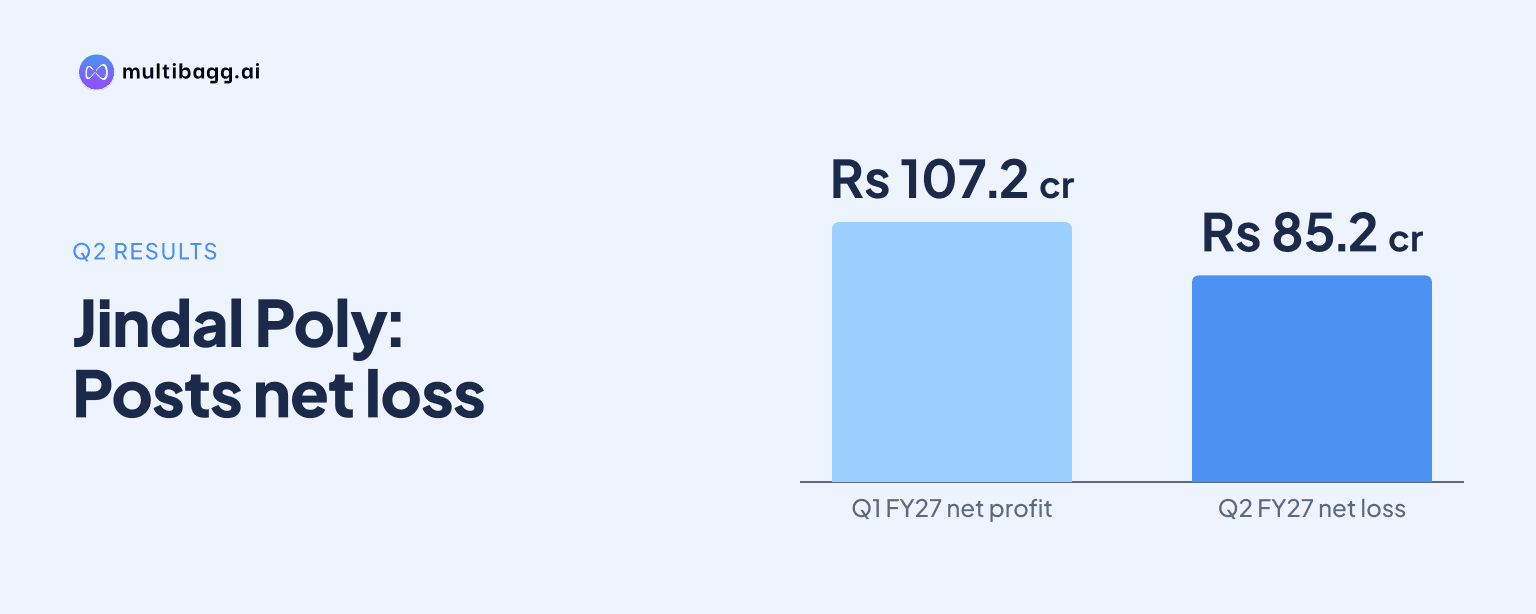
Jindal Poly Films Ltd reported a consolidated net loss of ₹85.2 crore for Q2 FY27, compared with a ₹107.2 crore profit in the preceding quarter, even as revenue from operations rose 26.5% year on year to ₹738.1 crore. The results also carried a qualified consolidated limited-review conclusion linked to a fire-affected subsidiary.
Know Jindal Poly Films inside out
Results, valuation, peers and who's buying, in one view.
What did Jindal Poly Films report for Q2 FY27?
Jindal Poly Films reported consolidated revenue from operations of ₹738.1 crore in the quarter ended September 30, 2026. Revenue increased 6.1% from ₹695.8 crore in Q1 FY27 and 26.5% from ₹583.4 crore in Q2 FY26. However, the revenue increase did not translate into a quarterly profit.
The company posted a consolidated net loss of ₹85.2 crore, against a loss of ₹13.4 crore in the year-earlier quarter. This was also a sharp reversal from the ₹107.2 crore consolidated net profit reported in Q1 FY27. Total income was ₹772.5 crore, lower than ₹817.4 crore in the prior quarter because other income fell to ₹34.5 crore from ₹121.6 crore.
Why did the quarterly result reverse from profit to loss?
The consolidated profit before exceptional items and tax was a loss of ₹84.2 crore in Q2 FY27, compared with a profit of ₹86.9 crore in Q1 FY27. The reported operating margin was negative 10.9%, versus a positive 10.6% in the preceding quarter and negative 4.5% a year earlier.
The filing does not provide a detailed segment-wise explanation for the quarter-on-quarter movement in profitability within the supplied information. But the figures show that the decline in other income coincided with the shift from profit to loss, while the operating result also moved into negative territory. Investors therefore have to assess the revenue growth alongside the deterioration in the reported margin and pre-tax result.
What were the key consolidated financial figures?
Jindal Poly Films generated ₹1,433.9 crore of consolidated revenue from operations in the first half of FY27. The company’s Q2 revenue was above both the preceding quarter and the corresponding quarter of FY26, but its bottom-line performance remained negative.
The following table summarises the reported quarterly consolidated figures. All amounts are in ₹ crore except margins.
What did the auditors flag in the consolidated review?
The auditor issued a qualified limited-review conclusion on the consolidated financial results. The qualification related to the auditor’s inability to verify inventory quantities at a subsidiary affected by a fire. Any adjustment arising from the inventory matter remains undetermined in the information provided.
The filings also refer to uncertainty over interest income linked to the affected subsidiary. The company said the recovery position was uncertain, and the review report noted unrecorded interest amounts. Separately, the filing referred to an arbitration notice concerning a ₹292 crore loan from the holding company to the subsidiary. These matters are relevant because they affect the reliability and recoverability assessment of balances included in the consolidated accounts.
Got a follow-up? Ask IRIS
How did the standalone accounts differ from the consolidated results?
The standalone financial results included a ₹292 crore provision against a loan to a subsidiary. Related interest income was not recognised because of uncertainty over recovery, according to the filing. Jindal Poly Films reported a standalone net loss of ₹350 crore for the quarter.
In contrast with the consolidated review, the standalone limited-review conclusion was unmodified. The company also disclosed that ₹37.5 crore had been raised through a preferential issue in November 2025. Of this, ₹22.63 crore had been utilised and ₹14.87 crore remained unutilised and was held in fixed deposits. The Audit Committee reported no deviation or variation in the use of those funds.
How do these results affect investors and business stakeholders?
The Q2 result places attention on earnings quality rather than revenue growth alone. Revenue rose by more than one-fourth from the year-earlier quarter, but the company reported a wider year-on-year loss and a reversal from Q1 profitability. The negative operating margin also indicates that the quarter’s operating performance was weaker than in the preceding period.
The qualified consolidated review introduces an additional accounting issue for investors to monitor. The final financial effect of the inventory verification matter at the fire-affected subsidiary is not determined in the provided disclosures. The subsidiary-loan provision, non-recognition of related interest, and arbitration notice are also material considerations in understanding the standalone loss and consolidated review observations.
Conclusion
Jindal Poly Films recorded higher Q2 FY27 revenue of ₹738.1 crore but moved to a consolidated loss of ₹85.2 crore from a ₹107.2 crore profit in Q1. The quarter was marked by negative operating margins, lower other income than in Q1, and a qualified consolidated review connected with inventory at a fire-affected subsidiary.
The next key disclosures will be any update on the inventory verification and resulting accounting adjustment, the recovery and arbitration process related to the ₹292 crore subsidiary loan, and the use of the ₹14.87 crore preferential-issue proceeds that remained unutilised at the reporting date.