








Kama Holdings Proposes ₹350 Crore Buyback at ₹2,500
MAX Plan at ₹4,999/yr

Find your next multibaggerBe a Pro Investor
Research stocks and track your picks on the go. Download the app.
Key highlights
- Kama Holdings has proposed a buyback of up to 14 lakh equity shares at ₹2,500 per share.
- The proposed buyback has a maximum aggregate consideration of ₹350 crore.
- The proposed repurchase covers up to 4.36% of paid-up equity share capital as of September 30, 2026.
- Shareholder approval through a postal-ballot special resolution is pending.
powered by IRIS
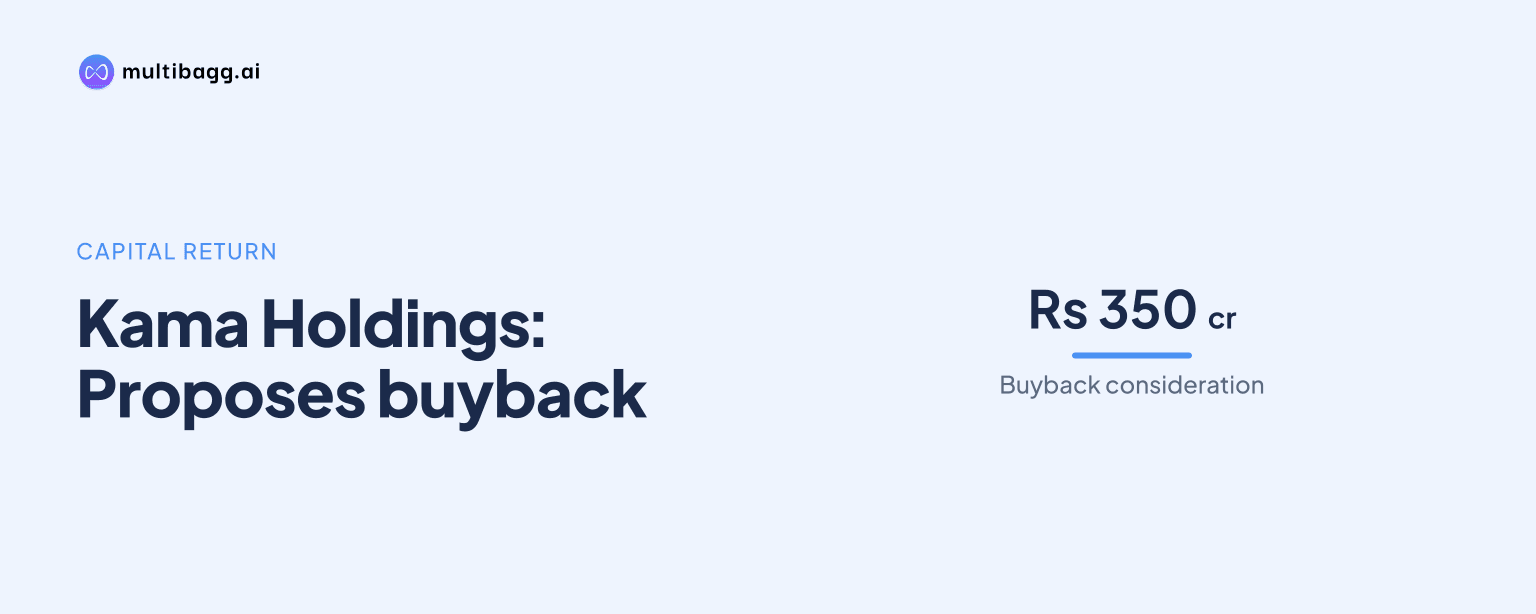
Kama Holdings Limited has proposed a buyback of up to 14 lakh equity shares at ₹2,500 per share, with a maximum outlay of ₹350 crore. The proposed tender offer covers up to 4.36% of its paid-up equity share capital as of September 30, 2026, and requires shareholder approval.
Know Kama Holdings inside out
Results, valuation, peers and who's buying, in one view.
What has Kama Holdings proposed in the buyback?
Kama Holdings has proposed to repurchase up to 14,00,000 fully paid-up equity shares of face value ₹10 each through the tender offer route. The board approved the proposal at its November 20, 2026 meeting, according to the disclosed board outcome.
The purchase price has been set at ₹2,500 per equity share, payable in cash. At the proposed maximum number of shares, the total consideration will not exceed ₹350 crore. The company said the proposed repurchase represents up to 4.36% of its total paid-up equity share capital as at September 30, 2026.
A buyback enables a company to repurchase shares from eligible shareholders under the applicable legal and regulatory framework. In this case, the final number of shares accepted from an individual shareholder will depend on the offer process and the acceptance terms disclosed after the required approvals.
Why does the Kama Holdings proposal need shareholder approval?
Kama Holdings requires shareholder approval because the proposed buyback is subject to a special resolution through a postal ballot. The board approval allows the company to take the proposal to shareholders, but it does not itself complete the buyback.
The company has stated that the process, record date and detailed timelines will be set out through the public announcement and letter of offer, in accordance with the applicable SEBI buyback regulations. As of the disclosed proposal, no record date has been announced.
The tender offer structure will identify eligible shareholders based on the eventual record date. Shareholders will then have the opportunity to tender shares subject to the terms in the offer documents and the regulatory process.
How will the Kama Holdings tender offer work?
Kama Holdings intends to conduct the proposed repurchase through a tender offer, which is a mechanism under which eligible shareholders can offer shares back to the company at the stated buyback price. The disclosed fixed price is ₹2,500 per share.
The company has capped both the number of shares and the aggregate expenditure. It may buy back up to 14 lakh shares, but cannot spend more than ₹350 crore under the proposal. These two limits align mathematically at the announced price of ₹2,500 per share.
The filing does not provide individual shareholder entitlement ratios, acceptance ratios or the final number of shares that may be tendered by each investor. Such operational details are ordinarily addressed in the subsequent public announcement and letter of offer referenced by the company.
Got a follow-up? Ask IRIS
What does the proposal mean for Kama Holdings shareholders?
Kama Holdings shareholders will need to wait for the postal-ballot outcome and subsequent offer documents before the tender process can begin. The proposal offers a stated cash price of ₹2,500 per share, but participation and acceptance will be governed by the terms ultimately released by the company.
The filing confirms a proposed capital outlay of up to ₹350 crore, which is the key financial commitment associated with the transaction. It does not disclose a share-price reaction, a market price comparison, earnings impact, or a revised capital allocation plan beyond the proposed buyback.
For investors, the relevant near-term disclosures are the shareholder voting result, the record date, the public announcement and the letter of offer. These documents will clarify the timetable and the conditions under which shareholders can tender shares.
Why is the 4.36% share capital figure relevant?
The 4.36% figure shows the maximum portion of Kama Holdings' paid-up equity share capital that the proposed buyback could cover. It is calculated with reference to the company's paid-up equity share capital as of September 30, 2026.
This measure helps shareholders assess the scale of the proposed reduction in outstanding shares if the buyback is approved and completed at its maximum size. However, the filing describes a proposal with defined upper limits, and the actual completion will remain subject to shareholder approval and the disclosed offer process.
The proposal was considered under applicable provisions of the Companies Act, 2013, SEBI Buy-back of Securities Regulations, 2018, as amended, and other applicable laws, as cited in the company's disclosures. The regulatory framework requires formal disclosures and procedural steps before completion.
Conclusion
Kama Holdings has placed a defined buyback proposal before shareholders: up to 14 lakh equity shares at ₹2,500 each, for a maximum consideration of ₹350 crore. The proposal uses the tender offer route and represents up to 4.36% of the company's paid-up equity share capital as of September 30, 2026.
The next items to watch are the postal-ballot result, which will determine whether shareholders approve the special resolution, and the public announcement that will provide the record date and detailed offer timetable. The company has indicated that these terms will be disclosed in the public announcement and letter of offer.

