










Kati Patang Lifestyle Limited FY25 Loss Widens to ₹4.80 Crore
Key highlights
- Kati Patang Lifestyle reported a consolidated FY25 net loss of ₹4.80 crore, compared with a ₹2.41 crore loss in FY24.
- Consolidated total income increased to ₹18.37 crore in FY25 from ₹5.14 crore in FY24.
- FY25 consolidated expenses rose to ₹23.30 crore from ₹7.55 crore a year earlier.
- The company closed a rights issue of 1,02,56,651 partly paid-up equity shares at ₹20 per share.
powered by IRIS
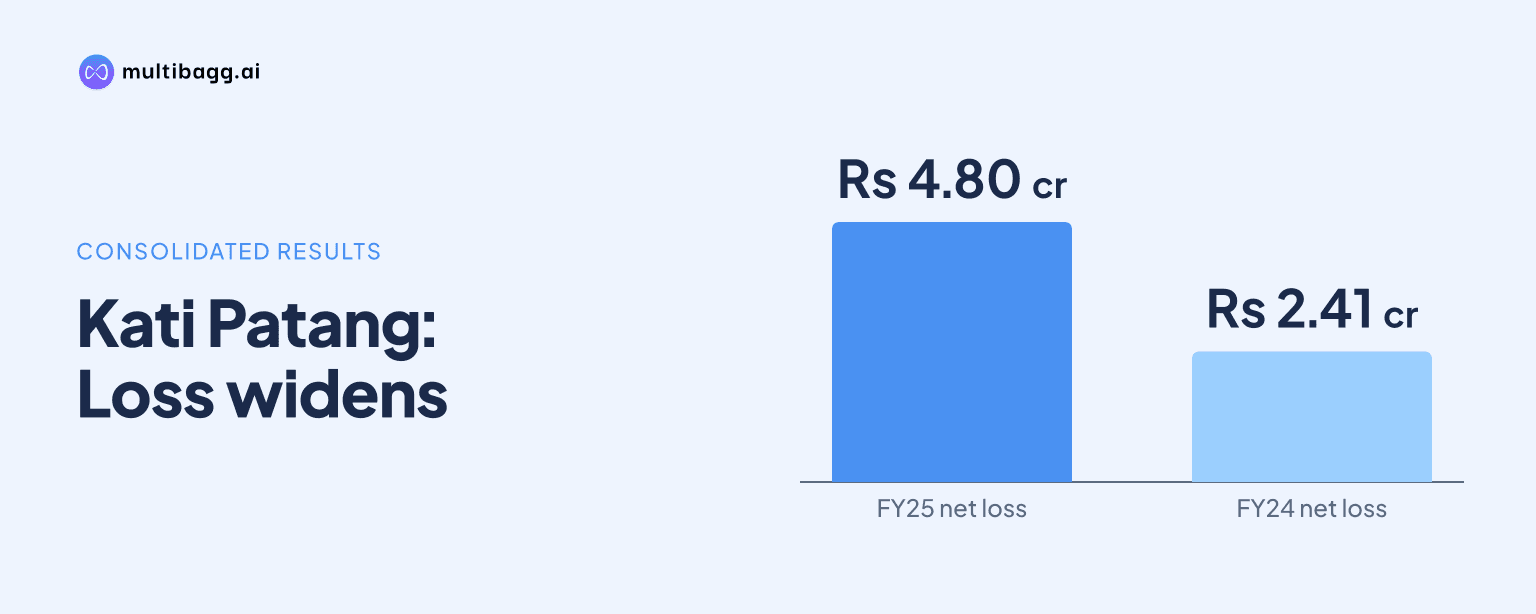
Kati Patang Lifestyle Limited reported a consolidated net loss of ₹4.80 crore for FY25, compared with a loss of ₹2.41 crore in FY24, as total expenses increased to ₹23.30 crore despite total income rising to ₹18.37 crore. The annual-report figures show a wider consolidated loss and a narrower standalone loss for the year ended March 31, 2025.
Know Kati Patang Life Style Ltd Partly Paidup inside out
Results, valuation, peers and who's buying, in one view.
What did Kati Patang Lifestyle report for FY25?
Kati Patang Lifestyle reported consolidated total income of ₹18.37 crore in FY25, up from ₹5.14 crore in FY24. Consolidated expenses, including depreciation and amortisation, increased to ₹23.30 crore from ₹7.55 crore. As a result, the consolidated loss before tax widened to ₹4.93 crore from ₹2.41 crore.
The consolidated loss for the year stood at ₹4.80 crore, against a loss of ₹2.41 crore in the preceding year. Basic earnings per share were negative ₹1.31, compared with negative ₹1.87 in FY24. Diluted earnings per share were negative ₹1.24, compared with negative ₹1.87 a year earlier.
On a standalone basis, the reported position moved differently. Total income increased to ₹1.66 crore from ₹1.39 crore, while expenses marginally declined to ₹2.49 crore from ₹2.51 crore. The standalone loss narrowed to ₹0.83 crore from ₹1.11 crore.
How did the FY25 financial figures compare with FY24?
The FY25 comparison shows that Kati Patang Lifestyle recorded substantial growth in consolidated income, but its expense base grew by a larger absolute amount. Consolidated income increased by ₹13.23 crore year on year, while expenses increased by ₹15.76 crore. This difference resulted in a higher consolidated loss for the year.
The standalone business reported a smaller loss because the increase in income was accompanied by a slight fall in expenses. Standalone basic EPS improved to negative ₹0.33 from negative ₹1.08. However, the annual report's consolidated results remained loss-making after accounting for the group-level financial performance.
What changes occurred in Kati Patang Lifestyle's share capital?
Kati Patang Lifestyle closed a rights issue of 1,02,56,651 partly paid-up equity shares with a face value of ₹10 each. The rights shares were issued at ₹20 per share, including a premium of ₹10 per share. The company disclosed that these were partly paid-up shares.
As of March 31, 2025, paid-up share capital was ₹35.90 crore, divided into 3,58,98,280 equity shares of ₹10 each. At the date of signing the directors' report, paid-up share capital was stated at ₹41.03 crore. This comprised 3,58,98,280 fully paid equity shares and 1,02,56,651 partly paid equity shares with ₹5 paid up on each share.
The difference between the March 31 figure and the figure at the report-signing date reflects the impact of the partly paid rights shares on paid-up capital. Investors assessing the share structure need to distinguish between the number of fully paid shares and the partly paid shares disclosed by the company.
Got a follow-up? Ask IRIS
Why do the results and capital structure matter to investors?
The FY25 results indicate that the company's consolidated income increased sharply, but operating costs and other expenses remained higher than income. The consolidated loss widened by ₹2.39 crore from FY24. For shareholders, this keeps the focus on whether future revenue growth can be accompanied by improved cost control and a reduction in losses.
The rights issue is also relevant because it changed the capital structure and added partly paid equity shares. Partly paid shares require attention because subsequent call money can alter the fully paid share count and paid-up capital. The directors' report provides the share-capital position but does not state a future earnings target or a timetable for reaching profitability.
Corporate governance disclosures and a certificate on compliance were included as part of the annual report, according to the directors' report. These disclosures provide the formal governance context for the financial statements and capital-related actions reported for the year.
What is the latest disclosed financial and board-meeting context?
Kati Patang Lifestyle has scheduled a board meeting on November 14, 2026, to consider and approve unaudited standalone and consolidated results for the quarter and half-year ended September 30, 2026. The announcement indicates that the board meeting concerns the July to September 2026 quarter, but the supplied information does not include the outcome of that meeting.
For the June 2026 quarter, the company reported a consolidated net loss of ₹1.36 crore, compared with a loss of ₹1.23 crore in the June 2025 quarter. Sales were reported at ₹4.44 crore, up from ₹1.76 crore a year earlier. Separately, the company disclosed in October 2026 that 12,07,842 partly paid shares were converted into fully paid shares after receipt of call money, with an equity capital inflow of about ₹1.21 crore.
These later disclosures show that the company continued to report losses while recording higher sales and completing capital-related actions. They should not be treated as a replacement for the FY25 annual-report figures, which cover the financial year ended March 31, 2025.
Conclusion
Kati Patang Lifestyle's FY25 annual-report data shows a mixed financial picture. Consolidated income rose to ₹18.37 crore, but expenses of ₹23.30 crore led to a consolidated net loss of ₹4.80 crore, higher than the ₹2.41 crore loss reported in FY24. The standalone loss narrowed, while the rights issue changed the company's paid-up capital structure through partly paid shares.
The next disclosed event to watch is the board's consideration of unaudited results for the quarter and half-year ended September 30, 2026. Investors can also monitor further conversion of partly paid shares, changes in paid-up capital, and whether higher reported sales are accompanied by a narrowing of losses.