










Krishna Institute of Medical Sciences Reports 39.9% Q2 Growth
Key highlights
- KIMS Hospitals reported Q2 FY27 total income of ₹1,363 crore, up 39.9% year-on-year.
- Q2 FY27 EBITDA increased 34.0% year-on-year to ₹278.9 crore, with a 20.5% margin.
- Inpatient volume rose 27.0% to 81,668 and outpatient volume increased 23.3% to 731,010.
- KIMS Hospitals allotted ₹600 crore of preferential warrants to promoters and received ₹150 crore upfront.
powered by IRIS
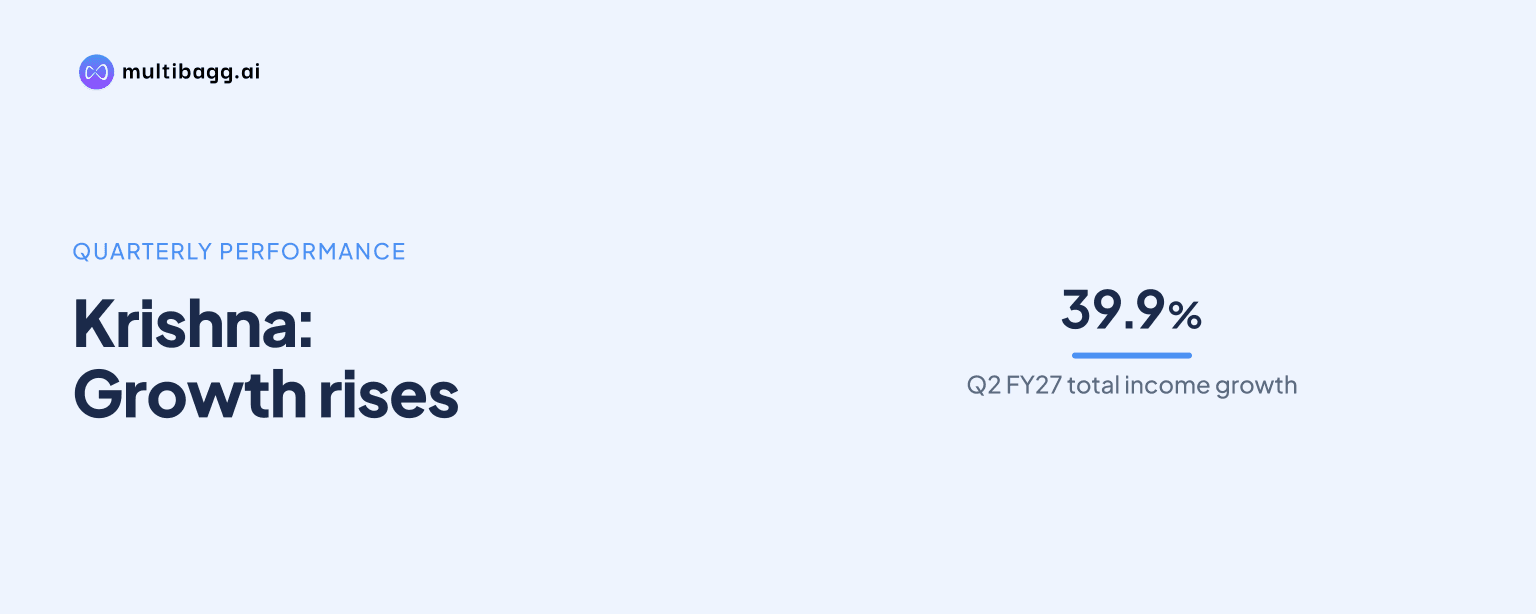
Krishna Institute of Medical Sciences Limited reported Q2 FY27 total income of ₹1,363 crore, up 39.9% year-on-year, while EBITDA increased 34.0% to ₹278.9 crore for the quarter ended September 30, 2026. The result reflects continued expansion in patient volumes and revenue per bed, although expenses grew faster than income during the period.
Know Krishna Institute of Medical Sciences inside out
Results, valuation, peers and who's buying, in one view.
What did KIMS Hospitals report for Q2 FY27?
KIMS Hospitals reported consolidated total income of ₹1,363 crore for Q2 FY27, compared with ₹964.9 crore in the year-earlier quarter. Revenue from operations was ₹1,344.4 crore, according to the disclosed results. EBITDA rose to ₹278.9 crore from ₹208.2 crore, and the EBITDA margin was 20.5%.
Profit after tax in the financial-results statement was ₹74.6 crore for the quarter, while profit before tax stood at ₹105.5 crore. Total expenses were ₹1,270.3 crore, up from the comparable prior-year level as the hospital operator continued to add capacity and scale operations. The company also reported total income of ₹2,558.9 crore and profit after tax of ₹112 crore for the first half of FY27.
How did the Q2 FY27 results unfold?
The Board of Directors approved the unaudited standalone and consolidated financial results for the quarter and half-year ended September 30, 2026, at its meeting on November 4, 2026. The results were accompanied by the statutory auditors' limited review reports, as disclosed by the company.
KIMS Hospitals had earlier informed exchanges that its board would consider the quarterly and half-yearly results at this meeting. The trading window for designated persons had remained closed from October 1, 2026 until 48 hours after the public announcement of results, in line with the company's insider-trading compliance process.
The company reported growth in both inpatient and outpatient activity. Inpatient volume increased 27.0% year-on-year to 81,668 during Q2 FY27, while outpatient volume rose 23.3% to 731,010. These volume gains contributed to the rise in revenue from operations.
Operating indicators also showed higher monetisation. Average revenue per operating bed rose 14.9% year-on-year to ₹48,277, while average revenue per patient increased 9.9% to ₹165,577. Occupancy was 54.3% in the quarter, indicating that KIMS Hospitals was operating with available room for further utilisation of its installed and expanding capacity.
Got a follow-up? Ask IRIS
Why did profit growth lag revenue growth at KIMS Hospitals?
Profit growth lagged revenue growth because total expenses increased 46% year-on-year, faster than the reported growth in income. The disclosed analysis said core profit before tax, excluding exceptional items, declined 4.5% year-on-year, pointing to cost pressure during a period of rapid expansion.
The reported profit was also supported by a ₹13.2 crore exceptional gain from the valuation of call options under hospital management agreements. This item was non-recurring in nature. As a result, the quarterly profit figure should be viewed alongside the increase in expenses and the movement in underlying operating profitability.
The margin trend is relevant after KIMS Hospitals reported EBITDA growth of 34.0%, which was below the 39.9% increase in total income. An EBITDA margin of 20.5% shows that the business remained profitable at the operating level, but expansion-related costs limited the conversion of revenue growth into profit growth in the reported quarter.
For comparison, KIMS Hospitals had reported revenue of ₹1,179.5 crore and net profit of ₹41.5 crore in Q1 FY27. The company had said Q1 revenue rose 35.3% year-on-year, while net profit declined from the prior-year quarter. The Q2 figures therefore continue the pattern of strong top-line growth alongside uneven profitability.
What corporate actions did KIMS Hospitals approve?
KIMS Hospitals approved the merger of its wholly owned subsidiary, KIMS Hospitals Private Limited, with the holding company. The disclosed proposal is a corporate restructuring measure involving an entity already fully owned by the listed company.
The board also recommended the reappointment of Dr. Abhinay Bollineni as Director and Chief Executive Officer and Dr. Bhaskara Rao Bollineni as Chairman and Managing Director. Each proposed term is for five years, subject to the applicable approval process.
The company had raised capital in recent periods to support its plans. In the previous quarter, it completed a qualified institutions placement aggregating ₹1,500 crore. During Q2 FY27, it allotted preferential convertible warrants to promoters aggregating ₹600 crore and received ₹150 crore upfront.
These actions are important for investors because hospital expansion generally requires sustained investment in facilities, equipment, medical teams and working capital. The disclosed capital raising adds financial resources, while the merger proposal may simplify the group's corporate structure. The results, however, show that cost control remains a material factor as KIMS Hospitals deploys capital and grows its network.
Conclusion
KIMS Hospitals delivered a 39.9% year-on-year rise in Q2 FY27 total income to ₹1,363 crore, supported by higher inpatient and outpatient volumes and improved revenue per bed and per patient. EBITDA also increased to ₹278.9 crore, but expenses grew faster than income and the disclosed exceptional gain supported reported profitability.
Investors will watch whether higher patient volumes and occupancy translate into improved operating leverage in subsequent quarters. The company has also disclosed a subsidiary merger, leadership reappointments and recent capital raising, making the execution of its expansion plans and the progression of these corporate actions key areas to track.