










Magellanic Cloud says MCRAY premises ready, rollout phased
Key highlights
- Magellanic Cloud said MCRAY’s UAV facility premises were ready on November 3, 2026.
- Magellanic Cloud holds a 60% equity stake in MCRAY.
- Production, testing and commercial operations are planned to roll out in phases.
- MCRAY’s planned portfolio includes five platforms: Wolverine, Scorpio 500, Scorpio 1000, XTENDER and Honey Badger.
powered by IRIS
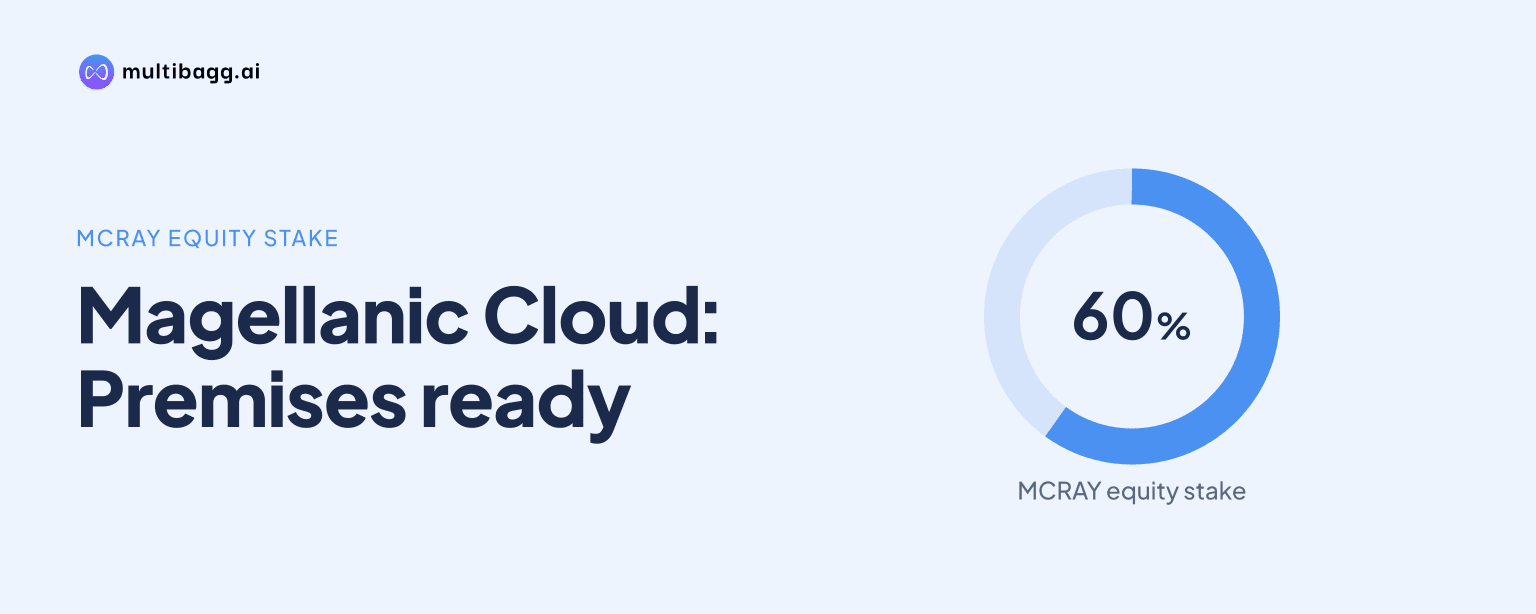
Magellanic Cloud Limited said on November 3, 2026 that premises for MCRAY’s advanced unmanned aerial vehicle facility are ready, while production, testing and commercial operations will be deployed progressively. Magellanic Cloud holds 60% of MCRAY, whose planned Indian operations cover tactical-drone manufacturing, integration, testing and distribution using select XTEND-enabled platforms.
Know Magellanic Cloud inside out
Results, valuation, peers and who's buying, in one view.
What is ready at Magellanic Cloud’s MCRAY facility?
Magellanic Cloud says the physical premises for the MCRAY XTEND INDIA PRIVATE LIMITED facility were ready as of its November 3, 2026 announcement. The site is intended to house manufacturing, calibration, system integration and flight-testing capabilities under one roof, although the release does not state that every capability has been installed or activated.
The November 2026 update moves beyond the joint venture announcement made in April 2026, when Magellanic Cloud announced the arrangement with Rayonix Tech in collaboration with XTEND. The disclosed change is premises readiness; production and testing capability deployment, as well as the start of commercial operations, remain planned phases.
The distinction is material because Magellanic Cloud reports a premises milestone, not a production start. Its release says capability deployment and commercial operations will be aligned with Indian defence and security requirements, without providing a fixed commissioning date.
How will Magellanic Cloud deploy MCRAY operations?
Magellanic Cloud says MCRAY will deploy production and testing capabilities in phases, with commercial operations intended to start progressively. The planned scope includes manufacturing, assembly, system integration, testing and distribution of tactical drone systems, rather than only the assembly of one named product.
The November 3 release does not disclose an initial production volume, installed capacity, commissioning date, customer order, revenue target or contract value. It therefore does not establish that commercial manufacturing, flight testing or sales had begun when the premises were reported ready.
Magellanic Cloud says the phased approach is designed to address procurement needs of Indian defence and security agencies after operations begin. Its safe-harbour statement identifies regulatory approvals, operational timelines, changes in defence procurement policies and market conditions as factors that could alter expected commercial commencement and product rollouts.
What ownership and technology does Magellanic Cloud bring to MCRAY?
Magellanic Cloud holds a 60% equity stake in MCRAY, the joint venture established with Rayonix Tech in collaboration with Israel-based XTEND. MCRAY is positioned as the exclusive manufacturing and distribution partner in India for select platforms running on XTEND’s proprietary XOS operating system.
Magellanic Cloud describes XOS as providing artificial-intelligence-assisted human-guided autonomy, autonomous navigation and unified multi-domain robotic control. XTEND is described in the release as a defence and robotics company focused on artificial-intelligence-powered unmanned aerial vehicles and autonomous software, including artificial-intelligence-driven navigation and human-guided robotic operations.
The proposed MCRAY model extends beyond platform assembly. Magellanic Cloud says it may combine tactical-platform sales with potential software licensing, local maintenance, repair and overhaul, known as MRO, and lifecycle support services, but the filing does not report revenue from any of these activities.
Got a follow-up? Ask IRIS
Which tactical drones could the MCRAY facility support?
Magellanic Cloud says the facility is structured to support the assembly and rollout of Wolverine, Scorpio 500, Scorpio 1000, XTENDER and Honey Badger tactical platforms. The announcement does not identify the first platform to enter assembly or disclose quantities, production timing, contract values or delivery schedules for any of the five named platforms.
Wolverine is listed for artificial-intelligence-assisted tactical and combat operations. Scorpio 500 and Scorpio 1000 are described as platforms for precision-strike capabilities and extended-range reconnaissance, while XTENDER is intended for micro intelligence, surveillance and reconnaissance, known as ISR, indoors and outdoors in global positioning system, or GPS, denied environments.
Honey Badger is described as suited to rugged operations in harsh and mission-critical environments. These are intended applications rather than evidence of completed manufacture, facility testing, delivery to a customer or approval for procurement at the November 3, 2026 premises-readiness stage.
How does MCRAY fit Magellanic Cloud’s defence plans and what remains unresolved?
Magellanic Cloud says MCRAY is intended to build local capabilities in advanced autonomous systems and pursue opportunities serving India’s evolving defence and security requirements. Chairman and Managing Director Joseph Sudheer Reddy Thumma described the November 2026 premises readiness as an important step in strengthening Magellanic Cloud’s defence-technology capabilities under the April 2026 joint venture.
The company says the planned unmanned aerial vehicle platforms and autonomous software architecture may complement its iVIS artificial-intelligence surveillance ecosystem and Scandron drone capabilities. That linkage remains prospective because the filing does not disclose an integrated MCRAY-iVIS or MCRAY-Scandron product, a customer deployment or a financial contribution from MCRAY.
Magellanic Cloud also places the project within Make in India and Aatmanirbhar Bharat objectives and says the collaboration may support export opportunities, subject to approvals, regulatory requirements and market conditions. No capital expenditure, plant size, MCRAY employee count, order backlog, procurement award or output target is disclosed, despite Magellanic Cloud reporting a broader workforce of more than 1,600 professionals.
Conclusion
Magellanic Cloud has advanced the MCRAY venture from its April 2026 announcement to a physical infrastructure milestone, reporting the premises ready on November 3, 2026. The release nevertheless draws a clear boundary between ready premises and operations: manufacturing, calibration, integration, flight testing and commercial activity are all still subject to phased deployment.
The next developments to watch are installation of production and testing capabilities and the progressive commencement of commercial operations under the planned rollout. Magellanic Cloud says those plans remain exposed to regulatory approvals, operational timelines, defence procurement policy changes and market conditions, while any future exports would require applicable approvals.