










Mercury EV-Tech explores 150 electric buses in Lilongwe
Key highlights
- Mercury EV-Tech signed the Lilongwe City Council MoU on November 17, 2026.
- The MoU explores deployment of 150 electric buses for public transport in Lilongwe.
- A Lilongwe electric-bus assembly facility remains subject to feasibility assessments and regulatory approvals.
- Mercury EV-Tech says its current operations are anchored by an 18-acre facility near Por, Vadodara.
powered by IRIS
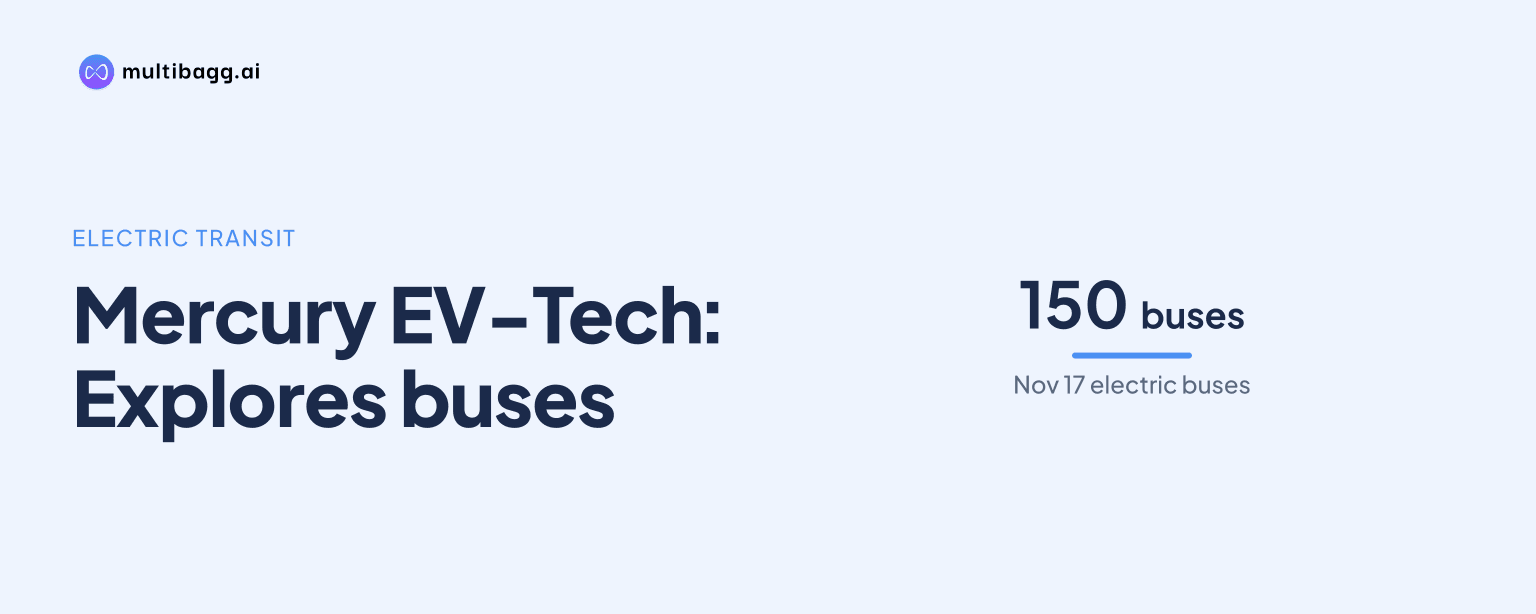
Mercury EV-Tech Limited signed a November 17, 2026 memorandum of understanding with Lilongwe City Council to explore deployment of 150 electric buses and a local assembly plant in Lilongwe, Malawi. The proposal is not a final supply contract because feasibility, regulatory approvals, commercial terms and definitive arrangements remain outstanding.
Know Mercury EV-Tech inside out
Results, valuation, peers and who's buying, in one view.
What does Mercury EV-Tech’s Lilongwe MoU cover?
Mercury EV-Tech’s memorandum of understanding, or MoU, sets out potential cooperation with Lilongwe City Council on 150 electric buses and a local electric bus assembly facility in Lilongwe. The company announced the MoU on November 17, 2026, identifying the proposed buses as support for public transport within the city.
Lilongwe City Council said the proposed electric buses fit its “Clean and Green City” mandate. Mercury EV-Tech described the agreement as a strategic initiative to explore African electric-mobility opportunities and expand its international business, rather than as a confirmed sale or operational project.
The signing ceremony included Yogesh Kumar Singh, Mercury EV-Tech’s Head of Sales and International Business, and Clement Stambuli, Lilongwe City Council’s chief executive officer. The announcement does not disclose a bus model, order value, funding source, charging plan, delivery period or proposed route network for the 150 buses.
Is Mercury EV-Tech required to supply 150 buses?
No, Mercury EV-Tech has disclosed a framework to explore and facilitate cooperation on 150 electric buses, not a binding supply commitment. The company said commercial terms, a project implementation schedule and other definitive arrangements, if any, would be finalised separately with Lilongwe City Council.
The November 17, 2026 announcement does not state a price per bus, total contract value, advance payment, minimum purchase obligation or revenue-recognition timetable. Compared with a definitive vehicle order, the MoU leaves the principal commercial conditions unresolved, including when deployment could start and on what terms it would proceed.
Mercury EV-Tech said all proposed activities must follow mutually agreed terms and conditions, applicable laws and necessary regulatory approvals. Chairman and Managing Director Jayesh Thakkar said the company intended to take discussions forward with the council, while noting the continuing requirements for agreement, feasibility assessment and approvals.
The release also contains a forward-looking statements disclaimer covering risks including government actions, local political or economic developments and technological risks. Mercury EV-Tech said these factors could cause actual outcomes to differ materially from the statements in the release and said it did not undertake to update those statements after subsequent events.
What would Mercury EV-Tech’s Lilongwe assembly plant involve?
The proposed Lilongwe facility would assemble electric buses locally, but Mercury EV-Tech has not committed to construct it or disclosed a capacity, location, cost, ownership structure, workforce requirement or construction date. Its development remains subject to mutual discussions, feasibility assessments and applicable regulatory approvals.
The MoU also allows the parties to explore technology transfer, technical support, capacity building and development of local electric-mobility capabilities. The November 17 release does not set out licensing terms, local-content requirements, component sourcing, financing responsibility or the division of roles between Mercury EV-Tech and Lilongwe City Council.
The plant proposal is disclosed alongside the potential 150-bus deployment, but the company does not say that one depends on the other. It also does not state whether any initial buses would be assembled in Lilongwe, supplied from India or sourced through another production arrangement.
Lilongwe City Council’s stated objectives include reducing carbon emissions and promoting clean, efficient and sustainable public transport infrastructure. However, neither party disclosed an emissions target, planned charging infrastructure, service operator, maintenance arrangement or timetable for putting the 150 proposed buses into service.
Got a follow-up? Ask IRIS
What manufacturing capabilities does Mercury EV-Tech disclose?
Mercury EV-Tech says its operations are anchored by an 18-acre manufacturing facility near Por in Vadodara, Gujarat. The company says this facility supports electric-mobility development, but the announcement provides no annual production capacity for buses, complete vehicles, batteries or chargers.
The company identifies capabilities across electric two-wheelers, three-wheelers and commercial four-wheelers. Those current product categories differ from the proposed Lilongwe electric-bus project: Mercury EV-Tech has not identified an existing bus platform or confirmed that any present vehicle line would be used for the proposed 150 buses.
Mercury EV-Tech also says it manufactures electric-vehicle batteries, chassis, commercial chargers and electric-vehicle chargers in-house. It cites its Cathodic Electro Deposition, or CED, coating plant as one of Gujarat’s largest, without providing its output, utilisation or potential allocation to an African project.
The company says in-house manufacturing gives it greater control over quality and costs while reducing reliance on third-party vendors. That description relates to its existing Indian operations and does not confirm that its manufacturing processes, components or facilities will be transferred to, replicated at or supply a future Lilongwe assembly plant.
Why does the Lilongwe MoU matter for Mercury EV-Tech?
The MoU gives Mercury EV-Tech a defined opportunity to discuss an electric public-transport project in Malawi involving 150 buses, local assembly and technical collaboration. It is also the company’s disclosed step toward exploring Africa’s electric-mobility market through an arrangement with Lilongwe City Council.
For Lilongwe City Council, the proposal is directed at public transport within the city under its Clean and Green City mandate. For Mercury EV-Tech, the strategic value disclosed is international-market exploration, not a reported contract value, booked revenue figure or committed export volume.
The agreement is not a related-party transaction, according to Mercury EV-Tech, because Lilongwe City Council is not related to the company’s promoters, promoter group or group companies. This disclosure clarifies the parties’ relationship but does not alter the need for future commercial agreements and approvals.
Conclusion
The November 17, 2026 MoU establishes a discussion framework for Mercury EV-Tech and Lilongwe City Council covering a potential 150-bus public-transport deployment, a local assembly facility and technical cooperation. Its commercial effect remains uncertain because no price, financing plan, delivery date, final contract or production commitment has been disclosed.
The next matters to watch are the feasibility assessments, mutually agreed commercial terms, regulatory approvals and any definitive arrangements that the parties may sign. A later announcement could clarify whether the 150-bus proposal advances to a binding order and whether a Lilongwe assembly facility receives a capacity, investment or implementation timetable.