










NCC seeks approval to add data centres and digital services
Key highlights
- NCC proposes MoA clauses covering edge, colocation, hyperscale and AI-enabled data centres.
- NCC reported a consolidated order book of Rs 80,167 crore as of September 30, 2026.
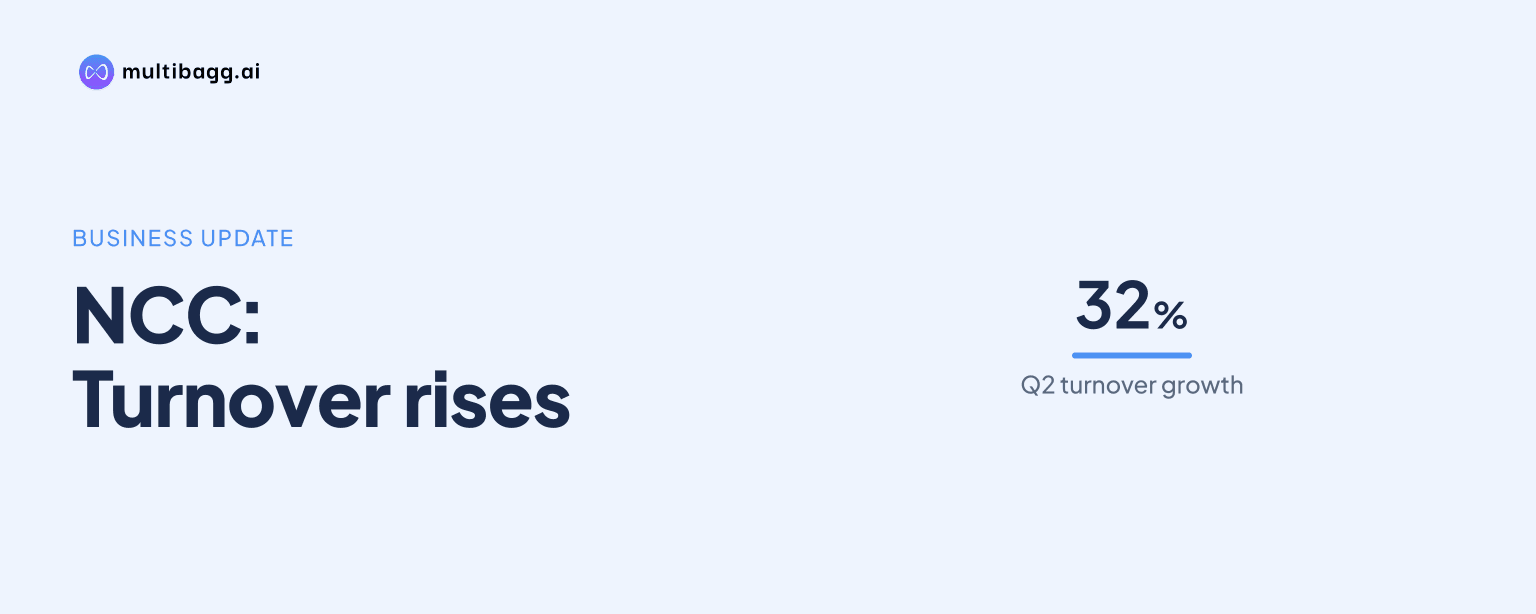
- Consolidated Q2 turnover including other income increased 32% to Rs 6,041.68 crore.
- NCC secured orders aggregating to Rs 4,838 crore during the six months ended September 30, 2026.
powered by IRIS
NCC Limited is seeking shareholder approval to revise its Memorandum of Association, or MoA, to allow data centres, cloud, telecommunications, artificial intelligence and electronics activities, while its consolidated order book stood at Rs 80,167 crore on September 30, 2026. The proposal creates corporate authority to assess these businesses, not a disclosed project or investment.
Know NCC inside out
Results, valuation, peers and who's buying, in one view.
What approval is NCC seeking for digital infrastructure?
NCC is proposing to alter its Objects Clause and adopt a revised MoA to expand into technology-enabled infrastructure and allied sectors. The company says the changes are intended to broaden existing clauses, insert new objects and align the MoA with the Companies Act, 2013 format, including deletion of the former Clause III(C).
The proposal is enabling rather than an operating commitment. NCC says the amendments would allow it to consider the feasibility of new objects in future, subject to applicable laws, regulatory approvals and internal approval processes. The filing does not disclose a data-centre location, capacity, customer, capital-expenditure amount, funding plan or execution date.
NCC's existing main objects already include construction of buildings, roads, railways, waterways, ports, airports, electrical works, tunnels, canals, water works and power houses. Revised Clause 2 retains that engineering scope while adding a broader definition of public works that includes telephonic, telegraphic and power-supply works.
NCC reported these consolidated second-quarter figures in its November 5, 2026 release. The financial results provide context for the proposed expansion, but the filing does not attribute any turnover, EBITDA or shareholder profit to data centres, cloud services or the proposed technology objects.
Which data-centre businesses could NCC pursue?
NCC's proposed Clause 15 would permit it to survey, plan, design, develop, engineer, procure, construct, install, integrate, test, commission, operate, maintain, manage, own, lease, hire, license, trade in and supply information technology, telecommunications and digital infrastructure. The clause expressly includes edge, colocation, hyperscale and artificial-intelligence-enabled data centres.
The proposed object covers the associated land, buildings, power facilities, cooling systems, cyber security and connectivity infrastructure. It also includes computing, storage, servers, high-performance computing and graphics-processing infrastructure, alongside cloud, hosting, colocation and managed services.
NCC would also have authority to deal in optical fibre, copper, wireless, mobile, satellite, submarine and subsea communication networks. The list extends to cable landing stations, teleports, earth stations, towers, poles, ducts, rights of way and passive telecommunications infrastructure, with NCC able to act as a developer, owner, operator, concessionaire, systems integrator, EPC contractor or service provider.
Proposed Clause 16 adds software, platforms, applications, databases, operating systems, artificial intelligence, machine learning, data analytics, video analytics, digital twins, modelling and simulation systems. It also covers cyber-security solutions, security operations centres, network operations centres, managed detection and response, e-governance and digital platforms for healthcare, education and utilities.
How would NCC's smart-city scope change?
NCC's proposed smart-city object would expand beyond construction of townships and markets to planning, designing, developing, engineering, procuring, constructing, operating and managing smart-city and smart-service projects. The clause specifically permits digital-infrastructure projects and positions NCC for roles including developer, EPC contractor, systems integrator, concessionaire, operator, consultant and joint-venture partner.
The technologies named in Clause 4 include toll management systems, closed-circuit television, drone systems, video surveillance, security and monitoring systems, perimeter intrusion detection systems, radars, jammers and integrated command-and-control centres. It also covers intelligent traffic and transport management, vehicle and asset tracking, smart parking, smart lighting, sensors and Internet of Things, or IoT, monitoring systems.
The proposed scope includes solid-waste management, water and utility management, energy management, renewable energy, electric-vehicle charging stations and artificial-intelligence-based facilities. NCC could participate in tenders, bids, contracts, concessions and projects issued by central and state governments, municipalities, urban local bodies, development authorities, public-sector undertakings and private entities.
The MoA revision would additionally broaden NCC's energy and resource language. Proposed Clause 10 adds pumped-storage power projects, battery energy storage systems, or BESS, brown hydrogen, ammonia and coal gasification, while the minerals clause adds coal, copper, lithium, nickel, cobalt and rare-earth elements. Neither amendment identifies an asset, tender or transaction.
Got a follow-up? Ask IRIS
What electronics manufacturing authority would NCC gain?
NCC's proposed Clause 17 would allow it to design, develop, manufacture, fabricate, assemble, procure, package, test, integrate, supply, install, commission, operate and maintain electrical, electromechanical and electronic products. The list includes printed circuit boards, displays, semiconductors, integrated circuits, chips and electronic-system-design products.
For data-centre-related equipment, the proposed object specifically names server racks, enclosures, cabinets, power-distribution units, uninterruptible power supplies, inverters, converters, switchgear, control and automation panels, busbars, connectors, cabling and wiring products. It would permit fabrication, assembly, testing, marking and packaging facilities and electronics-manufacturing clusters.
NCC could undertake original-equipment manufacturing, original-design manufacturing, private-label, white-label, licensed and contract manufacturing, under its own brand or another entity's brand. The proposed scope also includes defence, aerospace, space, homeland-security and strategic electronic systems, as well as energy storage, smart batteries, battery-management systems and electric-vehicle charging infrastructure.
These clauses do not establish that NCC has entered electronics manufacturing. The filing presents the new objects as a means to consider future feasibility and conditions execution on applicable laws, regulatory permissions and internal approvals. It provides no plant location, technology partner, product launch, manufacturing capacity or investment figure.
How does the proposal compare with NCC's reported performance?
NCC reported consolidated turnover including other income of Rs 11,884.16 crore for the six months ended September 30, 2026, against Rs 9,792.99 crore in the corresponding previous six months. Consolidated EBITDA was Rs 1,073.58 crore and profit attributable to shareholders was Rs 400.69 crore, while basic and diluted earnings per share were Rs 6.38 versus Rs 5.52 a year earlier.
On a standalone basis, NCC reported six-month turnover including other income of Rs 9,909.16 crore for the period ended September 30, 2026. Standalone EBITDA increased to Rs 859.50 crore from Rs 672.27 crore, while net profit increased to Rs 350.48 crore from Rs 291.87 crore in the corresponding prior-year six-month period.
NCC said it secured orders aggregating to Rs 4,838 crore during the six months ended September 30, 2026, and its consolidated order book was Rs 80,167 crore at that date. The filing does not provide a segment-wise split of orders or backlog, so it does not establish whether any part relates to digital infrastructure.
The revised MoA would retain and widen mechanisms for collaboration, joint ventures, strategic alliances, acquisitions, leases and arrangements with government bodies. Those provisions could support future activity under Clauses 15, 16 and 17, but NCC has not identified a counterparty, transaction structure or initial project.
Conclusion
NCC is seeking a substantial expansion of its permitted corporate objects, from established construction and infrastructure activities into potential data centres, digital networks, cloud and managed services, smart-city systems, cyber security, energy storage and electronics manufacturing. Its consolidated turnover reached Rs 11,884.16 crore in the six months ended September 30, 2026, but the filing does not connect that performance to the proposed new businesses.
The next point to watch is the shareholder decision on the revised MoA. After that, any disclosed feasibility study, regulatory approval, partnership, tender, order, investment commitment or operating project would show whether NCC moves from corporate authority to activity in the new sectors.