










Osel Devices H1 FY27 Revenue Rises 31.8%, PAT Gains 19.1%
Key highlights
- Osel Devices' H1 FY27 consolidated revenue rose 31.8% year-on-year to ₹193.63 crore.
- Consolidated PAT increased 19.1% year-on-year to ₹18.08 crore in H1 FY27.
- Standalone revenue and net profit for the September 2026-ended period were ₹183.23 crore and ₹17.93 crore, respectively.
- Harsh Garg will become CFO and Key Managerial Personnel from November 19, 2026.
powered by IRIS
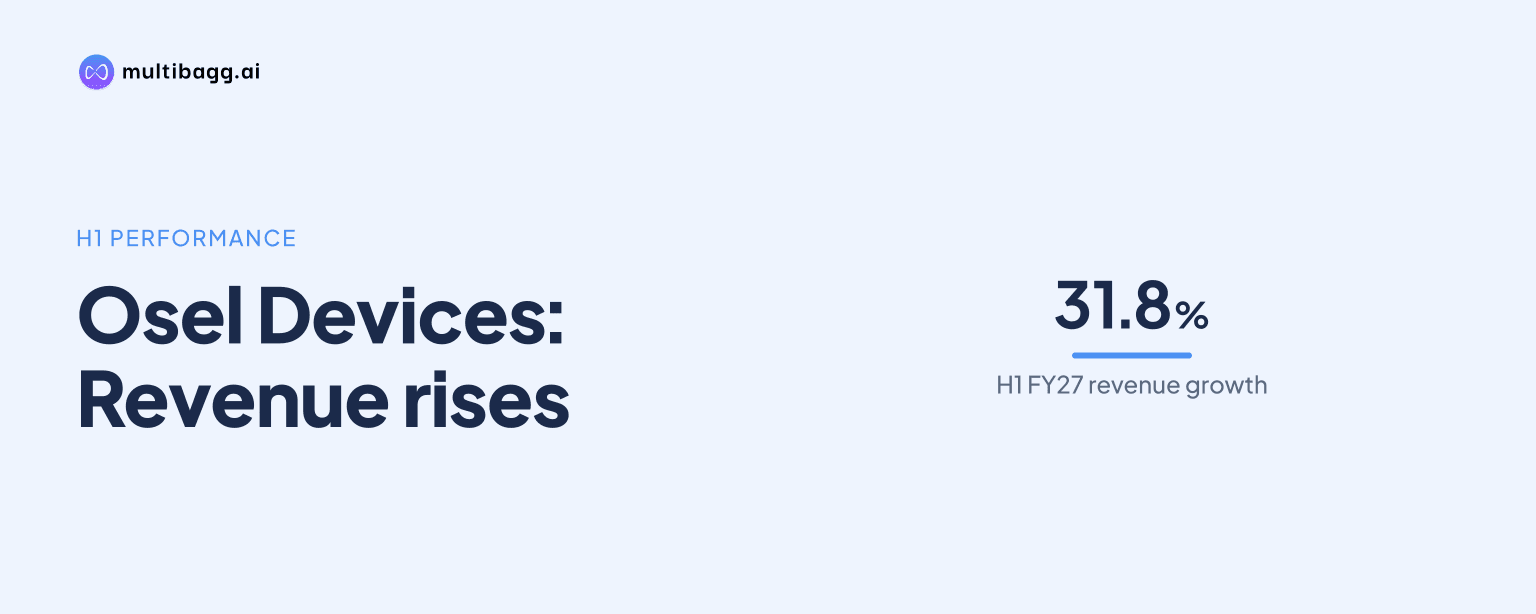
Osel Devices Limited reported consolidated H1 FY27 revenue of ₹193.63 crore for the six months ended September 2026, up 31.8% year-on-year, while profit after tax rose 19.1% to ₹18.08 crore. The figures show that sales expanded faster than earnings during the period, making cost management and margin trends relevant for investors.
Know OSEL Devices inside out
Results, valuation, peers and who's buying, in one view.
What did Osel Devices report for H1 FY27?
Osel Devices reported revenue from sales and services of ₹193.63 crore for the half year ended September 30, 2026, compared with ₹146.86 crore in the corresponding period of FY26. The 31.8% year-on-year increase added ₹46.77 crore to consolidated revenue.
Consolidated profit after tax, or PAT, was ₹18.08 crore, against ₹15.19 crore a year earlier. This represented 19.1% growth, below the pace of revenue growth. Basic earnings per share rose to ₹10.17 from ₹9.27, while diluted EPS was reported at ₹9.96.
The board approved the unaudited financial results at its November 12, 2026 meeting. The company submitted the results to the stock exchange as part of its disclosure requirements for the period ended September 30, 2026.
How did standalone performance compare with consolidated results?
Osel Devices reported standalone revenue of ₹183.23 crore and standalone net profit of ₹17.93 crore for the period ended September 2026. The standalone net profit margin, calculated from these disclosed figures, was 9.8%.
The difference between the standalone and consolidated revenue figures was ₹10.40 crore, while the gap in profit was ₹0.15 crore. The reported material describes the ₹183.23 crore revenue and ₹17.93 crore profit figures as standalone results, whereas the H1 year-on-year comparison is based on consolidated results.
Some supplied quarterly commentary also cited a 25.7% sequential revenue increase and stated that profit before tax grew 5%, with employee expenses more than doubling and interest costs rising sharply. However, the company’s disclosed H1 consolidated results show the clearer year-on-year comparison of 31.8% revenue growth and 19.1% PAT growth.
Why did profit grow slower than revenue?
Osel Devices’ reported H1 figures indicate that profit growth trailed sales growth, with consolidated revenue rising 31.8% and PAT increasing 19.1%. This means the incremental revenue did not translate into profit at the same rate during the half year.
The supplied results commentary attributes pressure in the September-period comparison to higher employee costs and increased interest expenses. It states that employee costs more than doubled and interest expenses rose sharply, while profit before tax grew 5%. No absolute expense amounts were provided in the available information, so the scale of these cost movements cannot be quantified further from the disclosed data.
For investors, the difference in sales and profit growth is relevant because margins determine how much of revenue becomes earnings. The disclosed standalone margin of 9.8% provides a reference point for the September-ended period, but a comparable prior-period standalone margin was not included in the source material.
Got a follow-up? Ask IRIS
What is the wider financial context for Osel Devices?
Osel Devices reported FY26 revenue of ₹292.7 crore and profit after tax of ₹29.2 crore, with an EBITDA margin of 18.2%. Its FY26 revenue mix was stated to include hearing aids at roughly 42%, LED displays at roughly 40%, and Philips-branded mobile phones at roughly 19%.
The H1 FY27 consolidated revenue of ₹193.63 crore represents about two-thirds of FY26 revenue, although half-year and full-year figures are not directly comparable because they cover different periods. The company’s recent results will be assessed against this prior-year base, its product mix, and any expense movement associated with scaling operations.
The company had also disclosed no deviation in the utilisation of IPO and warrant proceeds for the half year ended September 30, 2026. This is a compliance disclosure rather than an operating performance measure, but it provides an update on the use of funds raised.
How do the results affect investors and company oversight?
The results provide investors with two separate signals: revenue continued to grow above 30% year-on-year on a consolidated H1 basis, while PAT growth was lower at 19.1%. That gap makes future disclosures on employee expenses, finance costs and profitability important for evaluating whether earnings growth can move closer to sales growth.
Osel Devices also approved the appointment of Harsh Garg, a Chartered Accountant, as Chief Financial Officer and Key Managerial Personnel, effective November 19, 2026. The appointment follows the board meeting that approved the September-ended results and formalises the finance leadership position.
An earnings call for the half year ended September 30, 2026 was scheduled for November 16, 2026 at 4:00 pm. The call is a relevant forum for management to address the reported cost movements, the difference between standalone and consolidated performance, and the operating conditions behind the H1 results.
Conclusion
Osel Devices delivered consolidated H1 FY27 revenue growth of 31.8% to ₹193.63 crore and PAT growth of 19.1% to ₹18.08 crore. The lower rate of profit growth, alongside commentary on higher employee and interest costs, indicates that expenses rose as the business expanded, even as earnings and EPS increased year-on-year.
Investors will watch the November 16 earnings call for management’s comments on cost trends and profitability, as well as Harsh Garg’s appointment as CFO from November 19, 2026. The next financial disclosures should clarify whether revenue growth is accompanied by improved conversion into profit.