










Sadbhav Engineering Limited Reports Q2 Loss, Auditor Resigns
Key highlights
- Sadbhav Engineering reported a standalone Q2 FY27 net loss of ₹8.60 lakh.
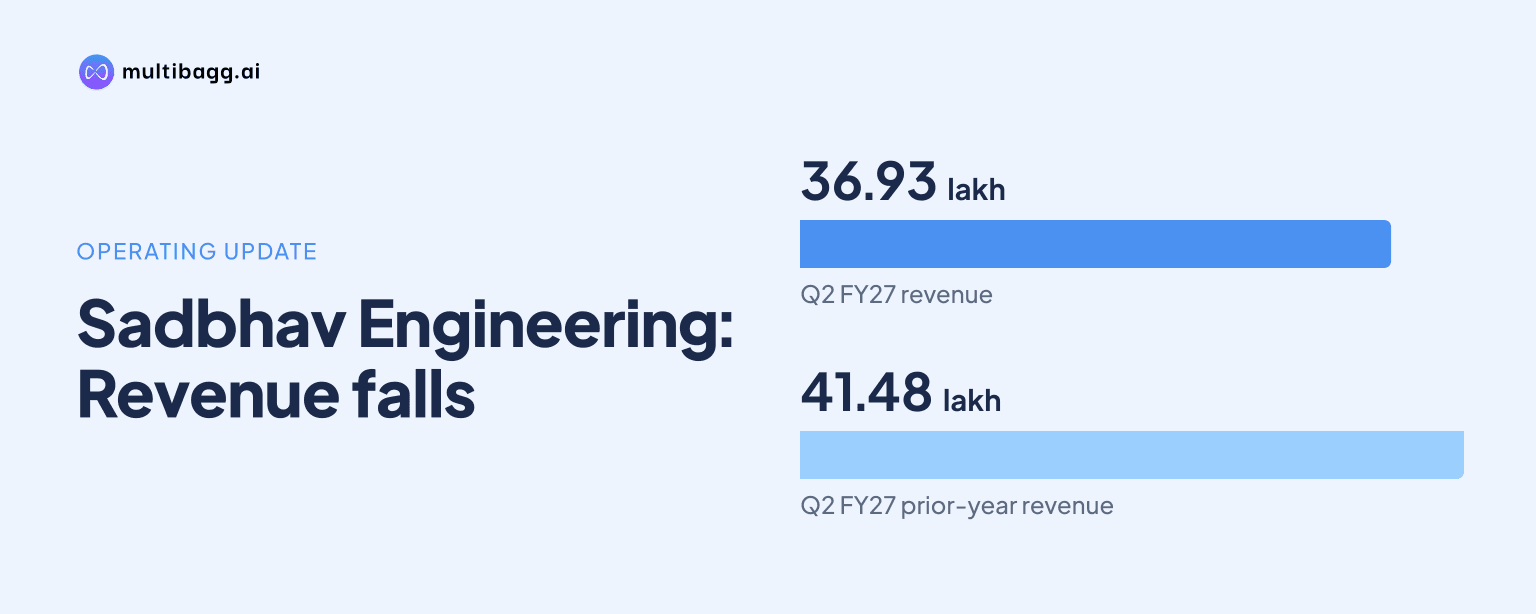
- Q2 FY27 standalone revenue from operations fell to ₹36.93 lakh from ₹41.48 lakh a year earlier.
- Manubhai & Shah LLP resigned as statutory auditor effective November 4, 2026, citing reduced operations.
- The BSE price snapshot showed Sadbhav Engineering at ₹7.06, up 3.34%.
powered by IRIS
Sadbhav Engineering Limited reported a standalone net loss of ₹8.60 lakh for the quarter ended September 30, 2026, while revenue from operations declined to ₹36.93 lakh and statutory auditor Manubhai & Shah LLP resigned on November 4, 2026. The disclosures also drew attention to a qualified conclusion and going-concern uncertainties.
Know Sadbhav Engineering inside out
Results, valuation, peers and who's buying, in one view.
What did Sadbhav Engineering report for Q2 FY27?
Sadbhav Engineering reported a standalone net loss of ₹8.60 lakh in Q2 FY27, compared with operating revenue of ₹36.93 lakh for the quarter. Revenue was lower than ₹41.48 lakh reported in the corresponding quarter of the previous year, a decline of about 11% based on the figures disclosed.
The Ahmedabad-based construction company filed its unaudited standalone and consolidated financial results for the quarter and half year ended September 30, 2026. The board approved the results on November 4, alongside decisions relating to the company’s statutory audit arrangements.
The figures point to a reduced operating base during the period. The company did not provide additional operational revenue details, project-level updates, or a quantified outlook in the material provided. Accordingly, the reported loss and revenue trend are the key disclosed indicators of its Q2 FY27 standalone performance.
Why did Manubhai & Shah LLP resign as statutory auditor?
Manubhai & Shah LLP resigned as Sadbhav Engineering’s statutory auditor with effect from the close of business hours on November 4, 2026, citing a significant reduction in the company’s operational activities. The board accepted the resignation on the same date.
The auditor said its client acceptance and continuance policy did not permit it to continue in view of the company’s current operational status and qualified opinions issued on earlier financial statements. It also confirmed that there were no other material reasons for its resignation beyond the reasons stated in its letter.
Manubhai & Shah LLP had been appointed at the annual general meeting held on September 30, 2019. The filing states that the appointment was for five consecutive financial years from FY21 to FY25, while also noting that the firm’s term had been scheduled to conclude at the AGM for FY30.
An auditor resignation is significant because statutory auditors review a company’s financial reporting and internal financial information. Sadbhav Engineering said the auditor change would be handled in accordance with applicable SEBI requirements, but the supplied disclosures do not name a successor audit firm.
Got a follow-up? Ask IRIS
What did the qualified conclusion identify?
The qualified conclusion on Sadbhav Engineering’s financial results highlighted material uncertainty about the company’s ability to continue as a going concern. The disclosure also referred to uncertainty around recovery of loans from subsidiary RPTPL and contingent liabilities linked to pending litigation.
A qualified conclusion means the auditor has identified specific matters affecting its conclusion on the financial statements or financial results. It is distinct from a clean or unqualified conclusion, and it requires investors to consider the matters described in the audit-related disclosures alongside the reported financial numbers.
The company’s reduced operational activity is central to this context. The revenue decline in Q2 FY27 and the auditor’s stated reason for resigning both indicate that operating scale was a material consideration in the latest announcements.
The filings do not provide a recovery estimate for loans due from RPTPL, a value for the contingent liabilities, or a timetable for resolution of the pending litigation. Those matters therefore remain areas for investors to track through future financial statements and exchange disclosures.
How could the disclosures affect investors and operations?
The disclosures place attention on Sadbhav Engineering’s financial reporting continuity, operating activity, and the issues identified in the qualified conclusion. For investors, the immediate factual markers are the ₹8.60 lakh standalone quarterly loss, the fall in revenue to ₹36.93 lakh, and the departure of the statutory auditor.
The BSE price snapshot included with the announcements showed Sadbhav Engineering at ₹7.06, up 3.34%. The supplied material does not establish that this movement was caused by the quarterly results or auditor resignation, and no specific trading time was provided alongside that price snapshot.
For customers, suppliers, employees, and other counterparties, the company’s operating position and financial disclosures are relevant because they help indicate the scale of ongoing activity. However, the filings provided do not identify affected projects, workforce changes, customer contracts, or any operational disruption.
The next regulatory and reporting steps will be important for market confidence. A formal disclosure on the appointment of a new statutory auditor, along with subsequent financial filings, would provide further information on the continuity of the company’s audit process and the status of the matters raised in the qualified conclusion.
Conclusion
Sadbhav Engineering’s November 4 disclosures combined weaker standalone quarterly revenue, a ₹8.60 lakh Q2 FY27 loss, and the resignation of Manubhai & Shah LLP. The auditor’s reference to reduced operations, together with the qualified conclusion on going-concern uncertainty, subsidiary loan recoveries, and litigation-related contingent liabilities, makes the financial reporting context especially relevant.
Investors should watch for the formal appointment of a successor statutory auditor under the applicable SEBI process and future exchange filings on RPTPL loan recoveries, pending litigation, and operating activity. These remain unresolved matters in the information disclosed by the company.