










Sandhar Technologies Limited Set to Report Q2 FY27 on November 5
Key highlights
- Sandhar Technologies reported record Q1 FY27 consolidated revenue of ₹1,381.89 crore, up 26.77% year-on-year.
- India business revenue reached ₹1,253 crore in Q1 FY27, rising 29.57% year-on-year.
- India business EBITDA margin declined to 9.08% from 10.81%, with higher wage and energy costs cited.
- FY27 consensus revenue forecast increased to ₹5,550 crore, while the EPS estimate fell to ₹32.75.
powered by IRIS
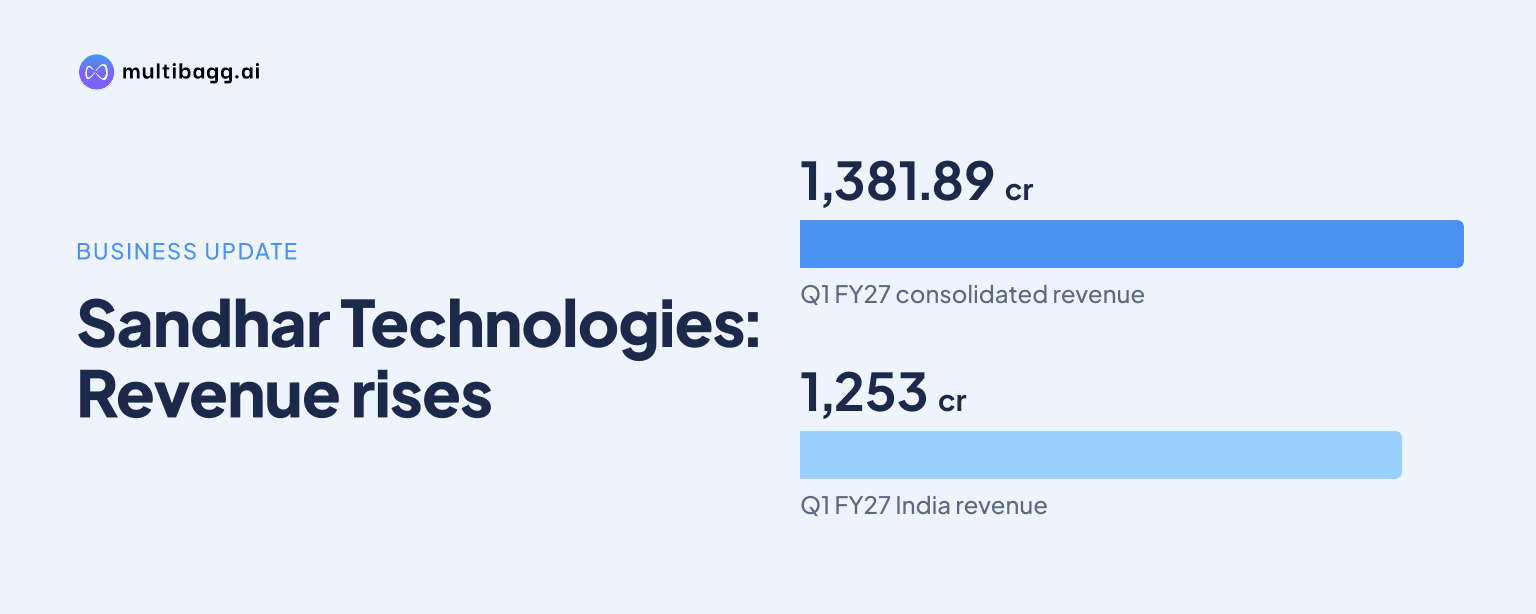
Sandhar Technologies Limited is set to report its Q2 FY27 results on November 5, 2026, following record Q1 FY27 consolidated revenue of ₹1,381.89 crore, up 26.77% year-on-year. The update matters because the company entered the second quarter with strong revenue growth but lower India business EBITDA margin amid higher wage and energy costs.
Know Sandhar Technologies inside out
Results, valuation, peers and who's buying, in one view.
When will Sandhar Technologies report Q2 FY27 results?
Sandhar Technologies has announced that it will report Q2 FY27 results on November 5, 2026. The provided information also lists November 16, 2026 as an upcoming earnings date, creating a difference between the stated reporting announcement and the separate earnings-calendar entry.
Investors should therefore refer to the company’s formal exchange filings for the final results-release and investor-update schedule. The available material identifies Q2 FY26-27 as the relevant reporting period and separately states that the company reported Q2 FY26-27 revenue of ₹1,381 crore and net profit of ₹35 crore, without providing further details on the basis of those figures.
The scheduled quarterly update follows the approval of unaudited standalone and consolidated financial results for the quarter ended June 30, 2026. Statutory auditors issued unmodified limited review reports for those results, according to the information provided.
What did Sandhar Technologies report in Q1 FY27?
Sandhar Technologies reported record consolidated revenue of ₹1,381.89 crore in Q1 FY27, an increase of 26.77% from the corresponding quarter a year earlier. Another reported presentation places first-quarter revenue at ₹1,390 crore, net income at ₹37.28 crore and earnings per share at ₹6.19, compared with EPS of ₹4.65 in Q1 FY26.
India business revenue rose 29.57% year-on-year to ₹1,253 crore in the first quarter. The figures indicate that the domestic business was the principal contributor to the company’s reported quarterly growth.
The source material also refers to a Q2 performance update in which consolidated revenue increased 29% year-on-year to ₹1,153 crore. India business reportedly grew 33%, while overseas operations increased 2%. However, the material does not clearly reconcile that Q2 update with the separately listed Q2 reporting dates and financial-data entries.
Why did Sandhar Technologies' Q1 margin decline?
Sandhar Technologies’ India business EBITDA margin, excluding new projects, was 9.08% in Q1 FY27, down from 10.81% in Q1 FY26. The company attributed the pressure to higher minimum-wage costs of ₹5.84 crore and higher energy costs of ₹7.50 crore.
This margin movement is important because revenue expansion does not automatically translate into a similar increase in operating profitability. The reported Q1 numbers show that cost inflation affected the India business even as revenue rose at a faster pace than the company’s overall year-on-year growth rate.
The available information does not provide a consolidated EBITDA figure, a margin target, or a detailed breakdown of offsetting cost actions. As a result, the Q2 result will be relevant for assessing whether the higher wage and energy expenses continued to weigh on operating performance.
Got a follow-up? Ask IRIS
What are the updated FY27 forecasts for Sandhar Technologies?
The consensus FY27 revenue forecast for Sandhar Technologies has increased to ₹5,550 crore from ₹5,380 crore. At the same time, the consensus EPS estimate has declined to ₹32.75 from ₹37.75, indicating that higher expected revenue has not resulted in a higher per-share earnings forecast.
The forecast changes are consistent with the reported first-quarter pattern of healthy revenue growth alongside cost and margin pressure. Consensus also expects net income to decline 0.8% in the next year, compared with a 20% growth forecast for India’s auto components industry.
The consensus price target was raised to ₹779 from ₹737. These estimates are external forecasts rather than company guidance, and the provided information does not specify the number of analysts contributing to the consensus or the assumptions behind the revisions.
How do new projects and overseas operations affect Sandhar Technologies?
The updated investment thesis cited in the material places greater emphasis on electric-vehicle revenue, new capacity rollout and overseas margin trends. It also notes that these factors are not yet fully visible in the consolidated financial results described in the source.
Overseas operations recorded 2% growth in the reported Q2 update, compared with 33% growth for the India business. This difference shows why segment-level disclosures, including revenue and profitability trends, may be important in evaluating the company’s operating mix.
Sandhar Technologies has also declared a dividend of ₹4.00 on September 11, 2026, according to the supplied information. The material does not state the record date, payment date, dividend yield, or whether this declaration relates to a particular financial year.
Conclusion
Sandhar Technologies enters its Q2 FY27 reporting update after a first quarter marked by record consolidated revenue of ₹1,381.89 crore and higher EPS, but also by a 173-basis-point decline in India business EBITDA margin. The reported rise in wage and energy costs provides the main disclosed explanation for the margin pressure.
The next item to watch is the company’s formal Q2 FY27 filing and confirmed release schedule, particularly because the provided material cites both November 5 and November 16, 2026. Investors will also look for changes in India and overseas growth, margin performance, and the basis for the revised FY27 revenue and EPS consensus estimates.