










Shah Investor’s Home Q2 FY27 PAT reaches ₹4.21 crore
Key highlights
- Shah Investor’s Home reported standalone Q2 FY27 profit after tax of ₹4.21 crore.
- Consolidated total assets rose to ₹360.82 crore at September 30, 2026, from ₹304.44 crore at March 31, 2026.
- Standalone operating activities used ₹40.60 crore of cash in H1 FY27, while financing activities generated ₹73.66 crore.
- The Board approved the unaudited Q2 and H1 FY27 results on November 14, 2026.
powered by IRIS
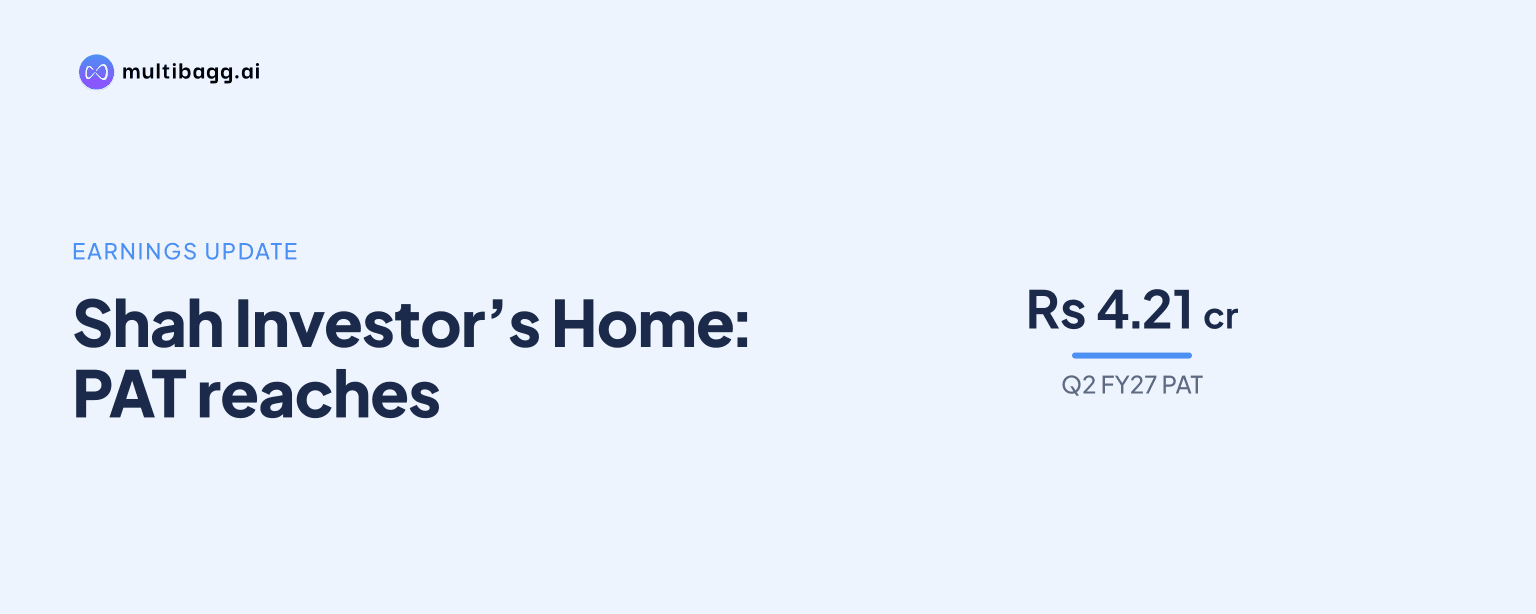
Shah Investor’s Home Limited reported standalone profit after tax of ₹4.21 crore for the quarter ended September 30, 2026, while its consolidated assets increased to ₹360.82 crore from ₹304.44 crore at March 31, 2026. The Board approved the unaudited Q2 and half-year FY27 results on November 14, 2026.
Know Shah Investors Home inside out
Results, valuation, peers and who's buying, in one view.
What did Shah Investor’s Home report for Q2 FY27?
Shah Investor’s Home reported standalone profit after tax of ₹4.21 crore for the July-September 2026 quarter and ₹5.57 crore for the half-year ended September 30, 2026. On a consolidated basis, profit after tax was ₹3.59 crore for the quarter and ₹4.93 crore for the half-year, according to the disclosed results.
The company also reported standalone other comprehensive loss of ₹0.34 crore for both the quarter and half-year. Consequently, standalone total comprehensive income was ₹3.87 crore for the quarter and ₹5.57 crore for the half-year. Consolidated total comprehensive income stood at ₹6.98 crore for the quarter and ₹4.93 crore for the half-year.
The reported figures are unaudited and were accompanied by a limited review report in the exchange filing. The disclosure covers both standalone and consolidated financial statements for the quarter and six months ended September 30, 2026.
When did the board approve the financial results?
The Board of Directors approved Shah Investor’s Home’s unaudited Q2 and first-half FY27 results at its meeting on November 14, 2026. The meeting began at 4:00 p.m. and concluded at 4:24 p.m., according to the company’s filing.
The approval came 45 days after the September quarter ended. The company submitted the unaudited standalone and consolidated results to the exchange along with the limited review report. The filing also referred to compliance with the trading-window restrictions applicable around the declaration of financial results.
The announcement formalises the company’s financial disclosure for the July-September period. No earnings-call transcript or management guidance for the quarter was included in the supplied information, so the available assessment is limited to the reported statements and board-approved figures.
How did Shah Investor’s Home’s asset base change?
Shah Investor’s Home’s standalone total assets rose to ₹340.27 crore as of September 30, 2026, from ₹278.96 crore as of March 31, 2026. This represents an increase of ₹61.31 crore over the six-month period.
On a consolidated basis, total assets stood at ₹360.82 crore at the end of September, compared with ₹304.44 crore at the end of March. The consolidated asset base therefore increased by ₹56.38 crore. In both statements, total liabilities and equity matched total assets, as required by the balance-sheet format.
The balance-sheet expansion is a key data point for investors because it shows that the company’s reported asset base was higher at the half-year mark than at the preceding financial year-end. The filing does not provide a detailed explanation in the supplied material for the composition of this movement.
Got a follow-up? Ask IRIS
What does the cash flow statement show?
Shah Investor’s Home reported net cash used in standalone operating activities of ₹40.60 crore for the half-year ended September 30, 2026. Its consolidated operating cash outflow was ₹37.14 crore for the same period.
Financing activities provided net standalone cash inflow of ₹73.66 crore during the half-year. Consolidated financing cash inflow was ₹62.10 crore. These financing inflows were higher than the respective reported operating cash outflows during the six-month period.
Cash flow and profit are separate measures. The company reported profits for the quarter and half-year, while the cash flow statement showed that operating activities used cash over the six months. The financing cash inflow is therefore relevant when assessing the reported movement in cash and the funding of operations during the period.
Why do these results matter to investors?
The Q2 filing provides the first half-year financial position of Shah Investor’s Home for FY27 following its October 6, 2026 listing, which raised ₹90.17 crore through an initial public offering. It also provides updated standalone and consolidated balance-sheet figures after the March 2026 year-end.
The company had earlier disclosed a proposed cash acquisition of 71,857 equity shares, representing a 6.25% stake, in Ficus Food Lab Private Limited at ₹835 per share, or approximately ₹6.00 crore. That disclosed transaction forms part of the recent corporate context, although the supplied Q2 result details do not state its effect on the September-period financial statements.
For market participants, the relevant disclosed indicators are the ₹4.21 crore standalone quarterly profit, the growth in assets, and the operating cash outflow alongside financing inflows. The results do not include management forecasts, and the filing does not provide enough information to establish the drivers of the asset increase or to project subsequent performance.
Conclusion
Shah Investor’s Home closed the September 2026 quarter with standalone profit after tax of ₹4.21 crore and consolidated assets of ₹360.82 crore. Its balance sheet was larger than at March 31, while the half-year cash flow statements showed operating outflows offset by substantial financing inflows.
Investors can watch for the company’s next financial disclosure for additional clarity on operating cash generation, the composition of asset growth and any impact from the disclosed Ficus Food Lab investment. The current filing confirms board approval of the September-quarter results but does not provide forward guidance.