










Tribhovandas Bhimji Zaveri Becomes GRT Subsidiary After 74% Sale
Key highlights
- GRT completed the acquisition of 4,94,59,775 TBZ shares, equal to 74.12%, on October 30, 2026.
- The maximum value of GRT’s purchase of the TBZ promoter stake was Rs 1,033.71 crore at up to Rs 209 per share.
- The mandatory open offer covers 25.88% of TBZ at Rs 249.61 per share, with a maximum value of Rs 431.10 crore.
- GRT’s retail network expands to 106 stores after gaining access to TBZ’s 37-store network.
powered by IRIS
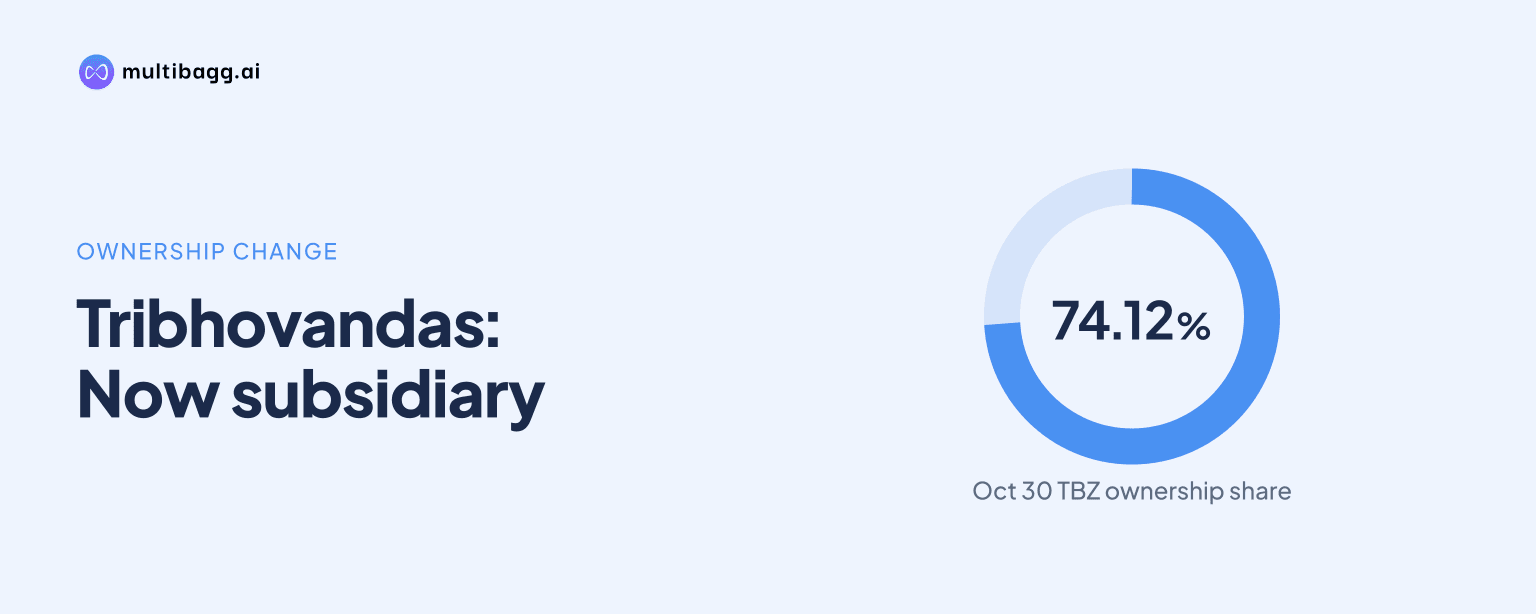
Tribhovandas Bhimji Zaveri Limited became a subsidiary of GRT Jewellers (India) Private Limited on October 30, 2026, after its promoter group transferred 4,94,59,775 shares representing 74.12% of its equity capital. The transaction shifts control of the listed jewellery retailer to GRT and ends the existing promoter group’s ownership.
Know Tribhovandas Bhimji Zaveri inside out
Results, valuation, peers and who's buying, in one view.
How did GRT take control of TBZ?
GRT took control of Tribhovandas Bhimji Zaveri Limited, referred to as TBZ, through the purchase of the entire 74.12% holding owned by the existing promoter group. The share transfer was completed on October 30, 2026, following a share purchase agreement signed on August 31, 2026.
The transferred holding comprised 4,94,59,775 equity shares and represented 74.12% of TBZ’s fully diluted paid-up equity share capital. With the completion of this transfer, TBZ became a subsidiary of GRT Jewellers (India) Private Limited, referred to as GRT.
The sellers included Shrikant Gopaldas Zaveri, Bindu Shrikant Zaveri, Binaisha Shrikant Zaveri, Raashi Shrikant Zaveri, Tribhovandas Bhimji Zaveri (TBZ) Private Limited and Tribhovandas Bhimji Zaveri Jewellers (Mumbai) Private Limited. The deal covered the promoter group’s entire stake, meaning the sellers ceased to hold equity following completion.
What were the terms and approvals for the TBZ acquisition?
GRT agreed to acquire the promoter stake at up to Rs 209 per share, placing the maximum consideration for the 74.12% holding at Rs 1,033.71 crore. The agreement also triggered a mandatory open offer to eligible public shareholders under Securities and Exchange Board of India regulations.
The proposed open offer covers the remaining 25.88% public shareholding at Rs 249.61 per share, for a maximum consideration of Rs 431.10 crore. The open-offer price is higher than the promoter-share purchase price, as the two elements were structured under different transaction requirements.
Competition Commission of India approval was received on October 13, 2026, clearing a significant regulatory condition for the change in control. The transaction was also subject to identified lender approvals and other customary closing conditions before the share transfer could be completed.
What changed at TBZ after the transfer of control?
TBZ recorded the exit of the entire Zaveri promoter group after the completion of the acquisition. The company’s board also noted the resignations of three Zaveri family directors as GRT assumed control.
Following the transaction, TBZ appointed three members of the Govindarajulu Rajendran family as directors, along with a deputy chief executive from GRT. These changes align the board with the new controlling shareholder and establish GRT’s representation in TBZ’s governance structure.
Before the transaction closed, the acquisition documents had stated that GRT would become TBZ’s promoter and obtain sole control after completion. They also indicated that existing sellers would be de-classified from the promoter and promoter-group category. Some promoters could enter employment or consultancy arrangements to support the transition, according to the disclosed transaction details.
Got a follow-up? Ask IRIS
Why does the acquisition matter for GRT and the jewellery retail sector?
The acquisition gives GRT access to TBZ’s network of 37 stores across India and expands GRT’s retail network to 106 stores. It brings a listed jewellery retailer and its established store base under the ownership of one of southern India’s large jewellery retail companies.
For TBZ shareholders, the key financial event was the transfer of control at the promoter level and the mandatory offer for public shareholders. The open offer was announced at Rs 249.61 per share, while TBZ stock was reported at Rs 423 on a Wednesday during the transaction period, above both the promoter transaction price and the stated offer price.
The difference between the market price and the disclosed acquisition and open-offer prices is a factual feature of the transaction, but it does not determine investor participation in the offer. Public shareholders must assess the offer terms, the applicable timetable and the disclosures issued under the relevant regulations.
What is the background to GRT’s purchase of TBZ?
TBZ is a 162-year-old jewellery brand and a listed retailer. Its ownership change follows GRT’s agreement with the Zaveri family and two promoter-group companies to purchase the promoter block in a single transaction.
The deal combines GRT’s southern India retail presence with TBZ’s store network in other parts of the country. The transaction was structured in two parts: the negotiated purchase of the promoter stake and the mandatory open offer for eligible public shareholders.
GRT’s purchase of the promoter stake was first announced through the August 31 agreement. The Competition Commission of India’s October 13 approval removed one of the stated regulatory conditions, and the October 30 transfer completed the change in control.
Conclusion
TBZ’s conversion into a GRT subsidiary formalises a major ownership transition in organised jewellery retail. GRT acquired the full 74.12% promoter block for up to Rs 1,033.71 crore, while the Zaveri promoter group exited its equity ownership and board representation changed to reflect the new controller.
The next disclosed matter for investors is the mandatory open offer for the 25.88% public shareholding at Rs 249.61 per share. Market participants can monitor the offer timetable, shareholder response and subsequent disclosures on promoter reclassification, board composition and TBZ’s operations under GRT.