










Tera Software seeks broader objects as software share nears 10%
Key highlights
- Tera Software says software represents about 20% of current project work and could decline to about 10% on upcoming projects.
- The board approved six proposed MOA sub-clauses on November 11, 2026, subject to shareholder approval.
- The proposed scope includes telecom networks, data centres, EPC, renewable energy, defence electronics, semiconductors and IoT ecosystems.
- Shareholders are scheduled to vote on the objects-clause amendment on December 11, 2026.
powered by IRIS
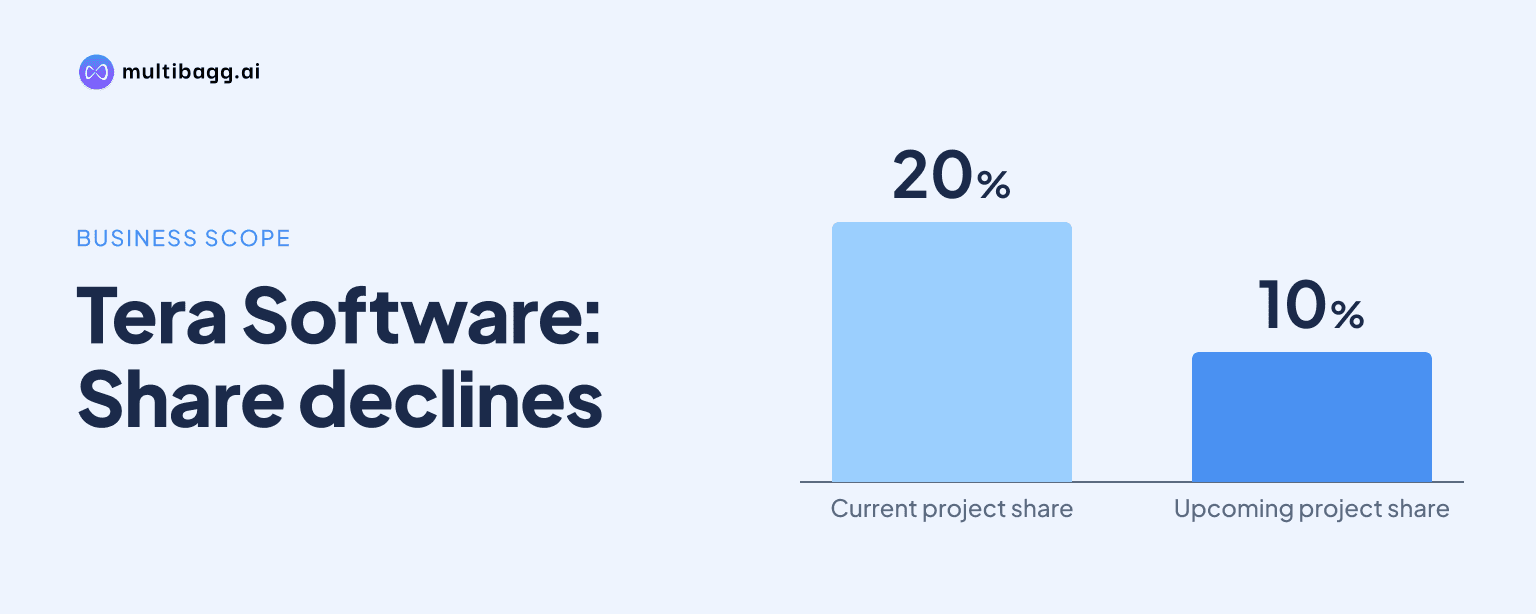
Tera Software Limited is seeking approval to add six business-object categories after saying software represents about 20% of current project work and could fall to about 10% on upcoming projects. The board approved the proposed Memorandum of Association amendment on November 11, 2026, subject to shareholder approval by special resolution.
Know Tera Software inside out
Results, valuation, peers and who's buying, in one view.
Why does Tera Software want to change its objects clause?
Tera Software wants to change its objects clause to reflect its telecom-infrastructure activity and permit planned work in additional sectors. The company said it began as a software company, but a large part of its business now comes from building and maintaining telecom infrastructure, including the Middle Mile Network under the BharatNet Programme awarded by Bharat Sanchar Nigam Limited.
The proposal would insert six new sub-clauses, numbered 6 to 11, into Clause III(A), the Main Objects section of Tera Software’s Memorandum of Association, or MOA. The board approved the proposal on November 11, 2026, but shareholders must approve Item No. 2 through a special resolution under Section 13 of the Companies Act, 2013.
The MOA specifies the businesses Tera Software is authorised to carry on. Tera Software said the additions are intended to describe its present activities more specifically and enable planned activities, rather than confirm that it has already entered every proposed sector.
Which new businesses would Tera Software be allowed to pursue?
Tera Software would be authorised to pursue telecom networks, data-centre and cloud facilities, engineering, procurement and construction, or EPC, energy, defence electronics and allied industrial projects if shareholders approve the six clauses. The proposed telecom clause covers towers, satellite terminals, optic fibre, broadband and middle-mile networks, extending beyond the BharatNet-related work identified in the notice.
The proposed data and digital-infrastructure clause covers data centres, cloud-server facilities, artificial intelligence, machine learning and data analytics solutions. Tera Software has not disclosed a capital-expenditure amount, project award, revenue target or implementation date for data-centre or cloud-facility activity.
A separate clause would cover turnkey infrastructure projects and EPC contracts across civil, electrical, mechanical, power and allied works. This matches Tera Software’s stated expectation that future work will require a larger share of civil, electrical, mechanical and installation activity.
The energy clause would include conventional and non-conventional energy, power plants, smart grids, energy storage and electric-vehicle charging infrastructure. The defence clause would cover defence electronics, aerospace and homeland-security systems, including unmanned aerial vehicles, anti-drone and surveillance systems and cybersecurity solutions, while excluding arms, weapons and ammunition and requiring necessary statutory approvals.
How is Tera Software’s project mix changing?
Tera Software says software represents about 20% of work on current projects and could decline to about 10% on upcoming projects. The expected 10-percentage-point change reflects management’s view that civil, electrical, mechanical and installation work will account for more of project delivery.
The comparison is between the present approximate 20% software share and the expected approximate 10% share on future projects, rather than between financial reporting periods. Tera Software did not disclose revenue, order-book, margin or asset figures dividing telecom infrastructure and software activity, so the statement describes project work rather than a reported financial segment.
The Middle Mile Network under Bharat Sanchar Nigam Limited’s BharatNet Programme is the specific telecom-infrastructure example cited by Tera Software. The notice does not provide the project’s value, geographic scope, execution stage or remaining duration.
Got a follow-up? Ask IRIS
What do the proposed clauses cover beyond telecom and energy?
Tera Software’s proposed sub-clause 11 would cover allied industrial, engineering, smart-city, transportation and space-technology projects, together with electronics, semiconductors and Internet of Things, or IoT, ecosystems. This proposed category is broader than the preceding clauses because it groups several adjacent project areas.
The six clauses span physical networks and digital systems: telecom infrastructure is in sub-clause 6, data centres and artificial intelligence in sub-clause 7, EPC in sub-clause 8, energy in sub-clause 9, defence electronics and aerospace in sub-clause 10, and allied projects in sub-clause 11. Tera Software has not disclosed separate subsidiaries, partnerships, licences, order wins or investment commitments for these planned areas.
Tera Software has also proposed changing its name to Tera Corp Limited under Item No. 3, stating that its present name suggests a software-only business. The Central Registration Centre of the Ministry of Corporate Affairs reserved the proposed name on November 11, 2026, though the change also requires shareholder, stock-exchange and Registrar of Companies approvals.
What must happen before Tera Software can implement the change?
Tera Software must obtain shareholder approval through a special resolution before altering its MOA. The Extra-Ordinary General Meeting is scheduled for December 11, 2026, at 4:00 p.m. Indian Standard Time, with the objects-clause proposal listed as Item No. 2.
Tera Software said it has no unspent money raised from the public through a prospectus. It therefore said the Section 13(8) requirements to publish the resolution in newspapers and offer an exit opportunity to shareholders voting against it do not apply to this amendment.
Tera Software said none of its directors, key managerial personnel or their relatives has a financial or other interest in Item No. 2, apart from their respective equity shareholding. The board has recommended the special resolution, but the notice provides no timetable for starting individual data-centre, energy, EPC or defence activities after approval.
Conclusion
Tera Software’s proposed amendment would broaden its authorised scope from its software origins to telecom networks, digital facilities, EPC, energy, defence electronics and allied projects. The company’s estimate that software’s project-work share could move from about 20% to about 10% identifies infrastructure-led execution work as the planned driver of that shift.
The next disclosed event is the December 11, 2026 Extra-Ordinary General Meeting, where shareholders will vote on the Item No. 2 special resolution. If members approve it, subsequent company disclosures on project awards, investment commitments and statutory approvals, particularly for defence and aerospace systems, will indicate how Tera Software pursues the expanded scope.