








Tipco plans Pune launch as LexaMix prices reach Rs 3 crore
MAX Plan at ₹4,999/yr

Find your next multibaggerBe a Pro Investor
Research stocks and track your picks on the go. Download the app.
Key highlights
- Tipco targets 1 March to begin operations at a leased Pune facility.
- Normal-size LexaMix systems are priced from about Rs 50 lakh to Rs 3 crore each.
- Tipco said LexaMix creation at Pune could take about two to three months after launch.
- Tipco said Sonipat is using about 70% of capacity and expects wider expansion to lift capacity by three to four times.
powered by IRIS
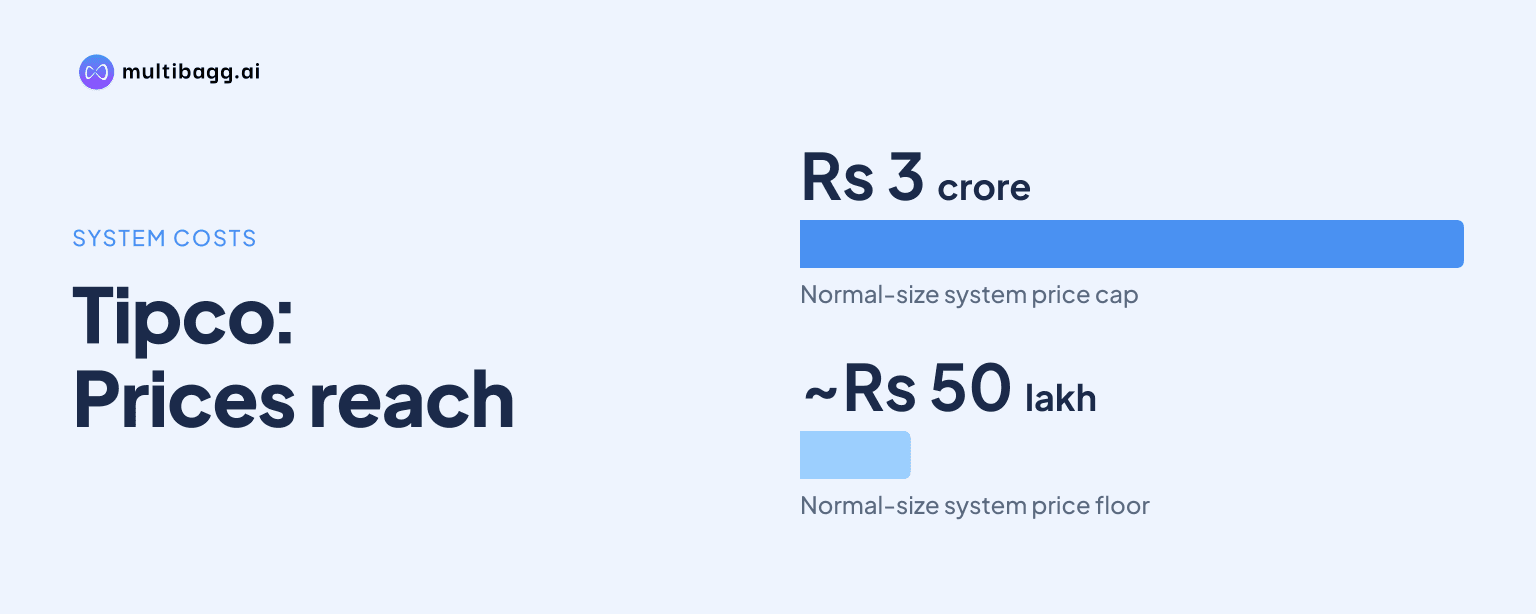
Tipco Engineering India Limited plans to begin operations at a leased Pune facility on 1 March, using it for critical equipment including LexaMix units that management said normally sell for about Rs 50 lakh to Rs 3 crore. The facility is intended to support higher-precision pharmaceutical and cosmetics applications while its new factory is finalised.
Know TIPCO Engineering India inside out
Results, valuation, peers and who's buying, in one view.
When will Tipco’s Pune facility start operations?
Tipco is targeting 1 March for the start of its leased Pune facility, according to Ritesh Sharma. Management said the leased location is an interim step because it does not want to lose market opportunities while its new factory is being finalised, and it plans to show the new products directly to prospective customers.
The initial site will handle bigger orders already under discussion as well as critical equipment. Sharma said the LexaMix programme would require about two to three months after the Pune operation starts because Tipco is already conducting research and development and working on product designs. He later said designs supplied to Tipco were already available at Sonipat and would be created at Pune.
What equipment will Tipco make at Pune?
Tipco will use Pune for more critical and precise equipment, with LexaMix forming part of that product range. Management described LexaMix machines as deeply engineered systems designed around heating and cooling sensitivities for cosmetics and pharmaceutical manufacturing, rather than as a standard extension of its existing output.
The company did not disclose a unit-production target for the leased facility. Sharma rejected machine counts such as 640 or 700 as a measure of capacity because larger systems can displace multiple smaller machines. He said the relevant measures are machine size, value and product type, and that Pune is being directed toward higher-value equipment rather than maximum unit volumes.
Tipco also linked the programme to greater engineering precision across its wider operations. In discussing pharmaceutical and cosmetics equipment, management said more precise engineering could support other parts of Tipco’s product portfolio; it also said trained personnel and equipment would both be required to execute the work.
How much will Tipco’s LexaMix equipment cost?
Tipco said a normal-size LexaMix unit will generally start at about Rs 50 lakh to Rs 60 lakh and can cost Rs 2 crore to Rs 3 crore per system. Sharma characterised those figures as approximate, noting that smaller laboratory versions may be cheaper than the normal-size units discussed on the call.
The Rs 50 lakh-to-Rs 3 crore range explains management’s emphasis on product mix rather than machine volumes. Sharma said one high-value system can create more value than several smaller systems, which is why Tipco does not assess manufacturing output only through the number of machines produced.
The ticket size also frames the company’s commercial challenge. Sharma said the products are critical and that the pool of buyers is limited, so Tipco needs to place them with the right customers. Management did not disclose signed LexaMix orders, an average selling price, or the number of systems it expects to produce after the initial two-to-three-month period.
Got a follow-up? Ask IRIS
How will Pune affect Tipco’s manufacturing capacity?
Tipco said its Sonipat operation is already using about 70% of capacity, with roughly 20% to 30% of space remaining under management’s description. The company has also installed one additional computer numerical control machine and is segregating production processes to raise output from the existing site.
Management expects Pune, a future new factory and Sonipat expansion to widen capacity by three to four times. That is an operational aim rather than a quantified production forecast: Sharma said actual capacity will depend on the product mix, and a facility focused on large, precise systems cannot be translated reliably into a fixed machine count.
At full capacity, management said the eventual final factory could support “three-digit” revenue, but it did not specify a period, currency denomination or whether that referred to Pune alone or a broader manufacturing footprint. It separately said the business could achieve two to three times its current output depending on the product mix, again without supplying a baseline revenue figure.
What growth and margin expectations has management disclosed?
Tipco management said it was looking for 30% to 40% growth in the business associated with the Pune opportunity when asked about revenue implications. It did not provide a revenue target for the leased operation, and the call did not identify how much of that potential growth would come from LexaMix versus other bigger orders routed through Pune from 1 March.
The company said the focus on precise equipment is intended to improve profitability, but it did not commit to a future margin figure. When an analyst referred to a 31% first-half margin, Sharma said Tipco would try to increase it, while adding that the outcome depended on how the Indian market accepted products compared with European alternatives.
The Pune plan sits alongside a wider investment plan. In response to an analyst’s estimate of Rs 250 crore to Rs 280 crore of capital investment over this year and the next 18 months, Sharma answered yes. Management also said export orders existed but did not quantify them, while stating that it was seeking export-market growth in the next year.
Conclusion
Tipco’s disclosed Pune launch is a near-term manufacturing move aimed at shifting part of its mix toward critical, high-ticket equipment. The key evidence is the 1 March leased-facility target and the Rs 50 lakh to Rs 3 crore normal-size LexaMix price range, while management’s capacity comments show why value and precision, rather than machine counts, are central to the plan.
The next items to watch are the two-to-three-month LexaMix creation timeline, the scale of bigger orders diverted to Pune, and progress on the new factory. Management has also linked future capacity to product mix and market acceptance, leaving revenue, margin and production-volume outcomes unresolved at this stage.

