


Forecasts
Financial Statements
AI Powered Summary
Discover detailed, AI-driven financial summaries that break down key metrics, trends, and insights—empowering you to make smarter investment decisions.
Ask AI
Standalone Quarterly Results (in ₹ Crores)
Standalone Profit Loss (in ₹ Crores)
Standalone Balance Sheet (in ₹ Crores)
Standalone Cash Flows (in ₹ Crores)
Projection
Documents
Investor Presentation
Q3 FY26
Investor Presentation
Q2 FY26
Investor Presentation
Q4 FY25
Available on Pro Plan
Unlock reports, presentations, and AI-powered insights.
Actions
AI Mode
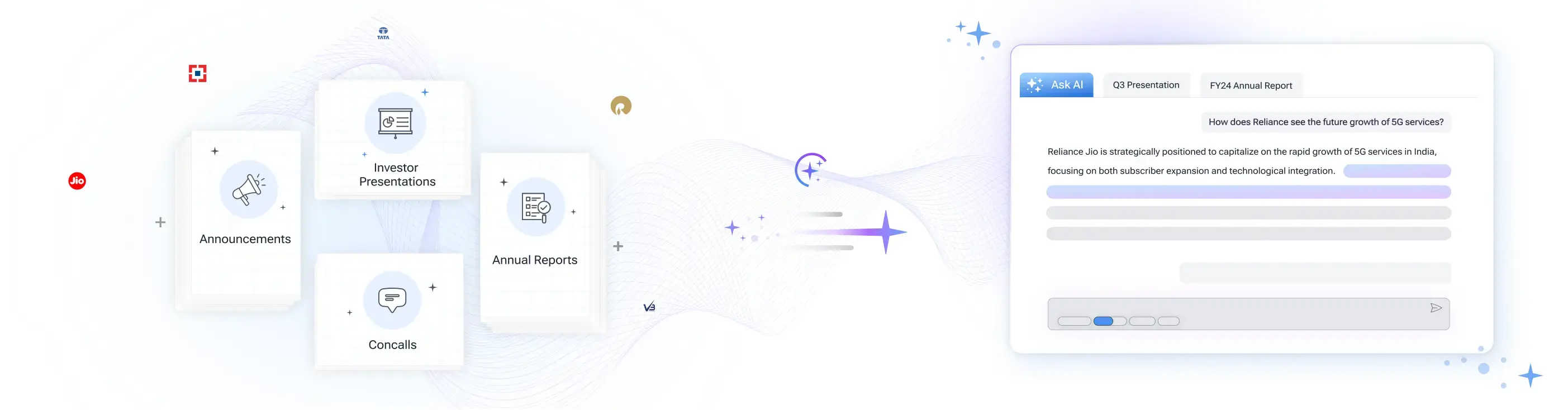
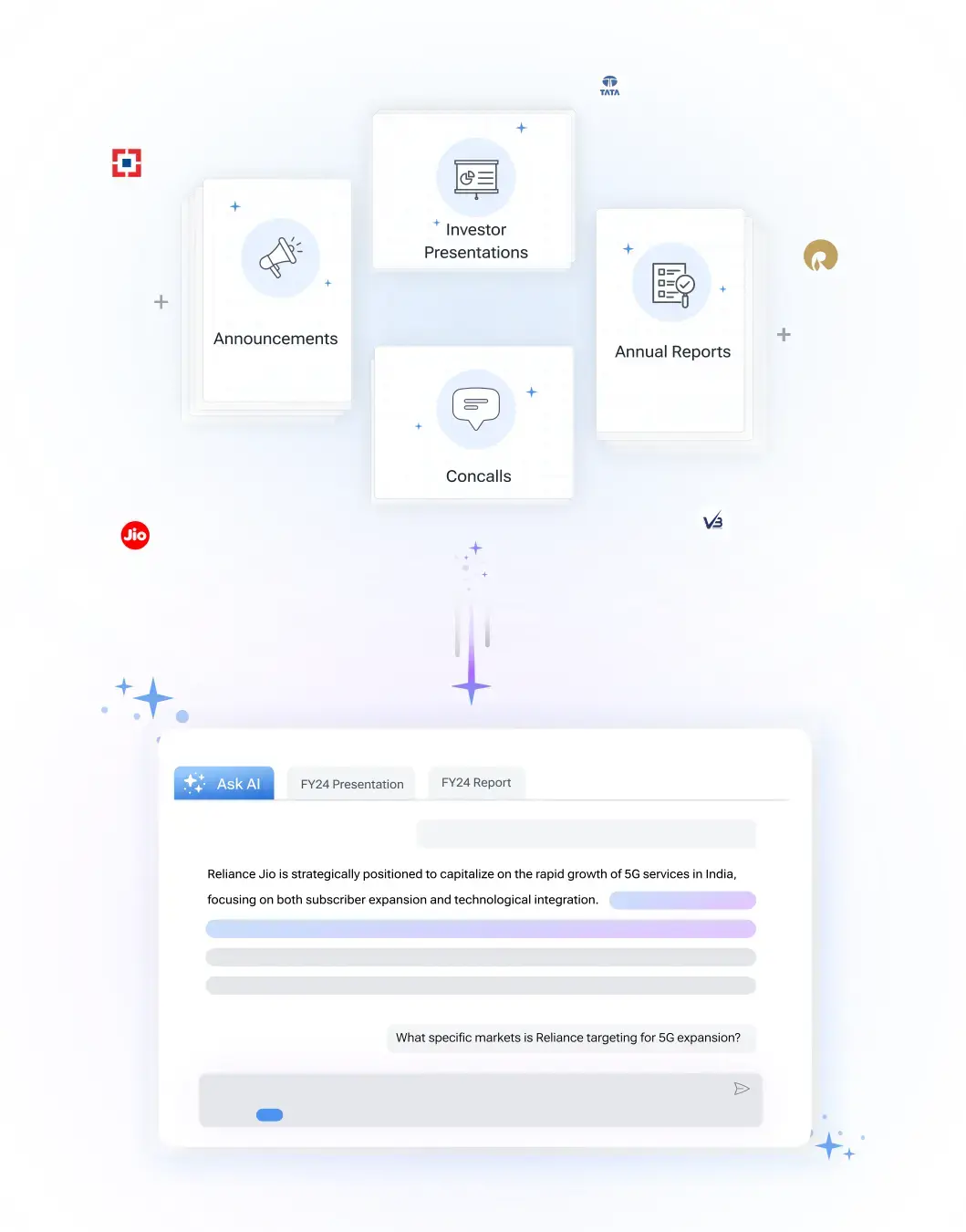
Get instant AI-powered insights about company performance, financials, and strategy. Ask questions about trends, competition, and developments while receiving responses backed by official documents and market data, with clear attribution to source documents.
Ask AI


Frequently Asked Questions about Dar Credit & Capital Ltd
Dar Credit & Capital Ltd (DCCL) is currently trading at 42.90 per share. Stock prices fluctuate during market hours on NSE and BSE based on demand, company updates, and overall market conditions. Refer to the live price chart above for the most recent price movement.
Dar Credit & Capital Limited is an RBI‑registered non‑deposit taking NBFC focused on retail and MSME lending, specialising in personal loans to municipal employees, unsecured MSME loans and secured MSME (micro LAP) products across six states via 35 branches and camp offices; the company is listed on NSE Emerge and carries a CARE BBB‑ (Stable) rating. DCCL reported strong Q3 FY26 and 9M FY26 profitability with Q3 total income of ₹12.61 crore and Q3 PAT of ₹2.52 crore, nine‑month PAT of ₹7.04 crore, a low GNPA of ~1.5% and high capital adequacy of 43.84%, signalling conservative provisioning and large capital headroom to support growth without immediate equity raises. Management has articulated an explicit growth roadmap to scale AUM to ₹300 crore+ by March 2027 through targeted geographic expansion (Bihar, Jharkhand, Rajasthan), increased focus on secured MSME lending, additional NCD issuance and bank borrowing, demonstrating both operational intent and identifiable funding levers for that expansion. Technology underpins operations: DCCL uses an in‑house LOS/LMS called ‘Vijay’ (Qbent Technologies) and a cloud personal loan platform RISEMONEY, is piloting an app, and uses AI/analytics for credit scoring and fraud detection, combining digital underwriting with persistent branch‑level personal sourcing for underserved customers.
Over the past 52 weeks, Dar Credit & Capital Ltd has traded between a low of ₹40.00 and a high of ₹66.00. The 52-week high and low indicate the stock’s price range over the last year and help investors understand its volatility and recent trading levels.
Dar Credit & Capital Ltd has a market capitalization of approximately 61.24. Market capitalization represents the total value of a company’s outstanding shares and helps investors understand its size, stability, and relative risk compared to other listed companies.
Dar Credit & Capital Ltd’s investment profile depends on its business fundamentals, valuation, and long-term outlook. The stock currently trades at a PE ratio of 5.99 and operates in the Finance sector. Investors typically assess financial performance, growth prospects, and individual risk tolerance before making investment decisions.
Based on its market capitalization of 61.24 Cr, Dar Credit & Capital Ltd is classified as a Small Cap stock. Large-cap stocks are generally more stable, while mid-cap and small-cap stocks tend to offer higher growth potential along with higher price volatility.
Dar Credit & Capital Ltd operates in the Finance sector. Sector classification matters because companies in the same sector are often affected by similar economic conditions, regulatory changes, and competitive dynamics, which can influence overall stock performance.
The Price-to-Earnings (PE) ratio of Dar Credit & Capital Ltd is 5.99. The PE ratio compares a company’s share price to its earnings and is commonly used to assess valuation. Comparing the PE ratio with sector peers and historical levels provides better context.