



Actions
Action Type



Welcome to Multibagg AI
Log in to access personalized features
IRIS
Multibagg AI is an AI powered stock research and analysis platform. We provide data, information, content, and analytics for publicly traded Indian companies listed on NSE and BSE. AI can make mistakes, check important information.
Research powered by GOALZEN CAPITAL SERVICES PRIVATE LIMITED · SEBI Research Analyst INH000013448
Prices might be delayed by a few minutes.
Join our Exclusive Community


Join our Exclusive Community
Made with 💙 in India. © Finsky Technologies Pvt Ltd. 2026


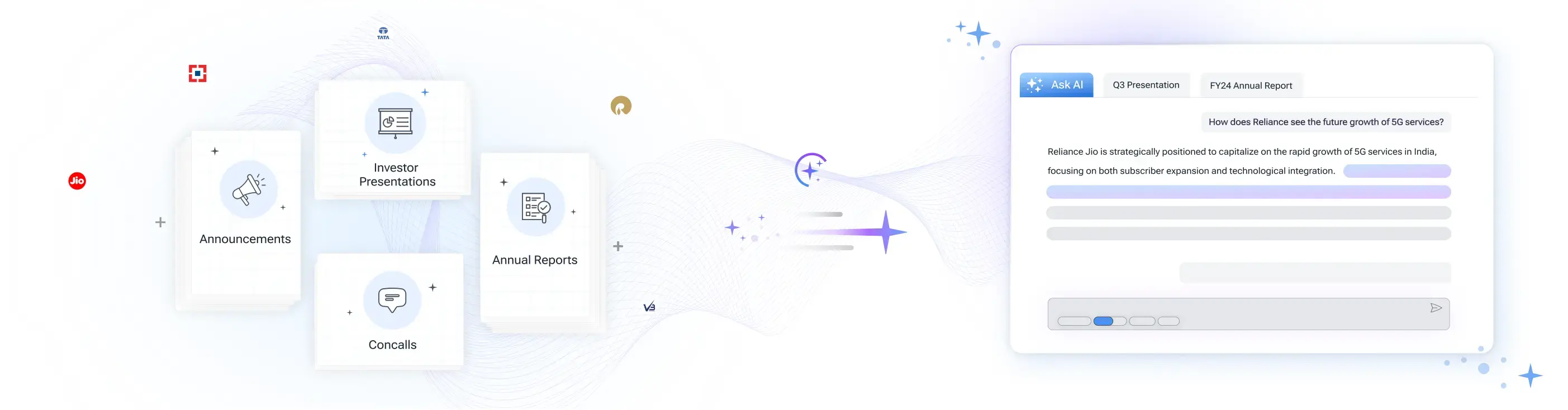
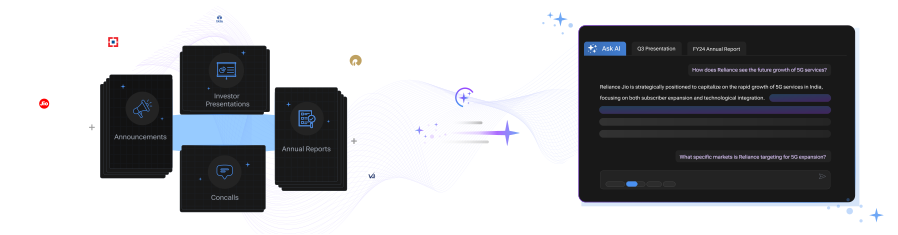
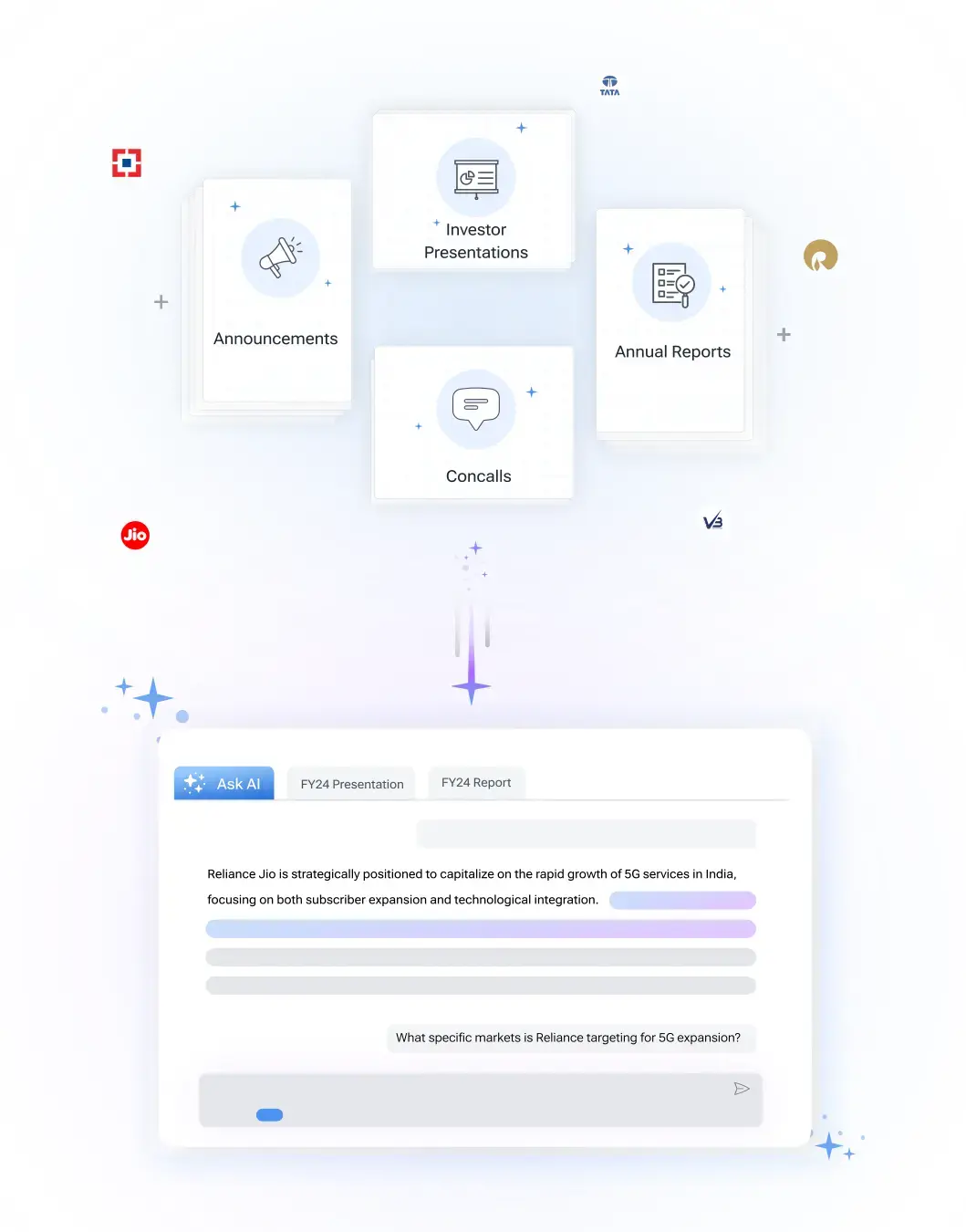
Get instant AI-powered insights about company performance, financials, and strategy. Ask questions about trends, competition, and developments while receiving responses backed by official documents and market data, with clear attribution to source documents.

 Discovery themes featuring this stock
Bearish
5
Neutral
1
Bullish
8
Bearish
37
Neutral
1
Bullish
8
Bearish
32
Neutral
0
Bullish
0
Bearish
5
Neutral
1
Bullish
8
Bearish
5
Neutral
1
Bullish
8
Bearish
32
Neutral
0
Bullish
0
Bearish
32
Neutral
0
Bullish
0
Bearish
32
Neutral
0
Bullish
0




Investor Presentation
Q3 FY26
Investor Presentation
Q3 FY26
Investor Presentation
Q2 FY26
Investor Presentation
Q2 FY26
Investor Presentation
Q1 FY26
Investor Presentation
Q4 FY25


Hindustan Tin Works Limited is a longstanding, vertically integrated metal packaging manufacturer and exporter that produces tin cans, printed sheets and related components for food, edible oils, paints, lubricants and industrial customers, operating automated plants at Murthal and a newly operational unit at Sonepat, with a clientele including Nestle India, Heinz, Brooke Bond Lipton and Asian Paints.
The company reported a strong sequential improvement for Q1 ended 30 June 2026: revenue rose to Rs.12,610.42 lakhs from Rs.9,645.19 lakhs and PBT increased sharply to Rs.490.78 lakhs versus Rs.191.07 lakhs in the prior quarter, indicating margin recovery and better operating leverage driven primarily by the manufacturing segment performance and higher volumes.
Export sales remain a meaningful part of the mix at Rs.1,911.97 lakhs in the quarter, while domestic sales dominate; manufacturing accounted for virtually all revenue, underscoring tight focus on industrial metal packaging and the company’s ability to serve large consumer marketing companies across domestic and international markets.
Operationally the company emphasizes automation and modern equipment imported from multiple countries and holds ISO 9001:2015 certification; past investments include a high-speed aluminium beverage can line and in-house printing and lacquering capabilities, positioning the company to capture higher value contracts that require quality printing and precision fabrication.
Industrial Products
Packaging
107 Cr
High Risk
11.5
31.2
-0.4
0.5
162.00
87.05
Sales CAGR
Profit CAGR
ROE
ROCE
Discovery themes featuring this stock

Hindustan Tin Works Ltd (HINDTINWRK) is currently trading at 102.10 per share. Stock prices fluctuate during market hours on NSE and BSE based on demand, company updates, and overall market conditions. Refer to the live price chart above for the most recent price movement.
Hindustan Tin Works Limited is a longstanding, vertically integrated metal packaging manufacturer and exporter that produces tin cans, printed sheets and related components for food, edible oils, paints, lubricants and industrial customers, operating automated plants at Murthal and a newly operational unit at Sonepat, with a clientele including Nestle India, Heinz, Brooke Bond Lipton and Asian Paints. The company reported a strong sequential improvement for Q1 ended 30 June 2026: revenue rose to Rs.12,610.42 lakhs from Rs.9,645.19 lakhs and PBT increased sharply to Rs.490.78 lakhs versus Rs.191.07 lakhs in the prior quarter, indicating margin recovery and better operating leverage driven primarily by the manufacturing segment performance and higher volumes. Export sales remain a meaningful part of the mix at Rs.1,911.97 lakhs in the quarter, while domestic sales dominate; manufacturing accounted for virtually all revenue, underscoring tight focus on industrial metal packaging and the company’s ability to serve large consumer marketing companies across domestic and international markets. Operationally the company emphasizes automation and modern equipment imported from multiple countries and holds ISO 9001:2015 certification; past investments include a high-speed aluminium beverage can line and in-house printing and lacquering capabilities, positioning the company to capture higher value contracts that require quality printing and precision fabrication.
Over the past 52 weeks, Hindustan Tin Works Ltd has traded between a low of ₹87.05 and a high of ₹162.00. The 52-week high and low indicate the stock’s price range over the last year and help investors understand its volatility and recent trading levels.
Hindustan Tin Works Ltd has a market capitalization of approximately 107.38. Market capitalization represents the total value of a company’s outstanding shares and helps investors understand its size, stability, and relative risk compared to other listed companies.
Hindustan Tin Works Ltd’s investment profile depends on its business fundamentals, valuation, and long-term outlook. The stock currently trades at a PE ratio of 11.47 and operates in the its sector sector. Investors typically assess financial performance, growth prospects, and individual risk tolerance before making investment decisions.
Based on its market capitalization of 107.38 Cr, Hindustan Tin Works Ltd is classified as a Small Cap stock. Large-cap stocks are generally more stable, while mid-cap and small-cap stocks tend to offer higher growth potential along with higher price volatility.
Hindustan Tin Works Ltd operates in the its sector sector. Sector classification matters because companies in the same sector are often affected by similar economic conditions, regulatory changes, and competitive dynamics, which can influence overall stock performance.
The Price-to-Earnings (PE) ratio of Hindustan Tin Works Ltd is 11.47. The PE ratio compares a company’s share price to its earnings and is commonly used to assess valuation. Comparing the PE ratio with sector peers and historical levels provides better context.



| Symbol | Watchlist | Price | Market Cap | P/E | P/B | Div Yield (%) | ROE (%) | ROCE (%) | ROA (%) |
82.10 | 125 Cr | 20.71 | 2.67 | 0.00 | 12.86 | 12.70 | 7.09 | ||
1339.00 | 123 Cr | 54.63 | 1.36 | 0.89 | 1.97 | 3.60 | 1.71 | ||
4.15 | 109 Cr | 6.43 | 11.75 | 0.00 | -7.80 | -3.60 | 47.86 | ||
102.10 | 107 Cr | 11.47 | 0.48 | 0.73 | 3.72 | 7.20 | 2.65 | ||
205.90 | 100 Cr | 12.84 | 1.12 | 0.50 | 7.90 | 9.80 | 5.82 | ||
168.25 | 91 Cr | 9.56 | 1.57 | 0.94 | 12.78 | 17.78 | 13.61 | ||
104.90 | 90 Cr | 50.31 | 1.46 | 1.00 | 6.48 | 13.30 | 2.71 | ||
| Median: 7 Co. | — | 104.90 | 107 Cr | 12.84 | 1.46 | 0.73 | 6.48 | 9.80 | 5.82 |


