Actions
Action Type



Welcome to Multibagg AI
Log in to access personalized features
IRIS
Multibagg AI is an AI powered stock research and analysis platform. We provide data, information, content, and analytics for publicly traded Indian companies listed on NSE and BSE. AI can make mistakes, check important information.
Research powered by GOALZEN CAPITAL SERVICES PRIVATE LIMITED · SEBI Research Analyst INH000013448
Prices might be delayed by a few minutes.
Join our Exclusive Community


Join our Exclusive Community
Made with 💙 in India. © Finsky Technologies Pvt Ltd. 2026


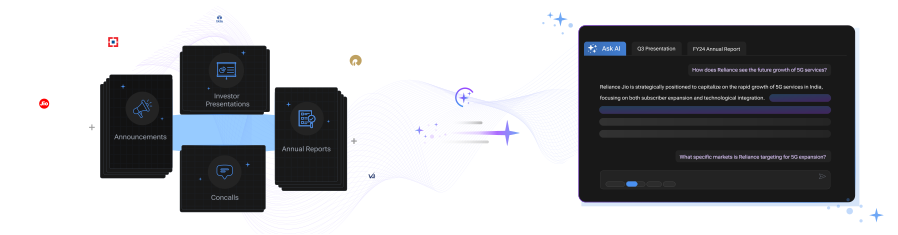
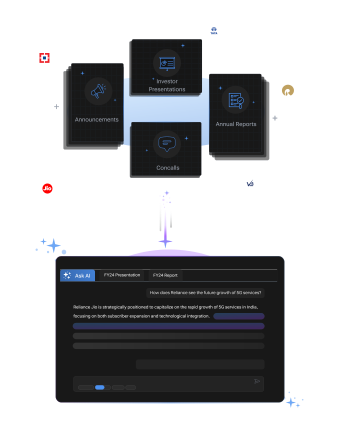
Get instant AI-powered insights about company performance, financials, and strategy. Ask questions about trends, competition, and developments while receiving responses backed by official documents and market data, with clear attribution to source documents.



 Discovery themes featuring this stock
Bearish
5
Neutral
1
Bullish
8
Bearish
37
Neutral
1
Bullish
8
Bearish
32
Neutral
0
Bullish
0
Bearish
5
Neutral
1
Bullish
8
Bearish
5
Neutral
1
Bullish
8
Bearish
32
Neutral
0
Bullish
0
Bearish
32
Neutral
0
Bullish
0
Bearish
32
Neutral
0
Bullish
0



Patel Integrated Logistics Limited is an integrated Indian logistics company focused on air cargo consolidation, passenger-aircraft cargo carriage, warehousing and distribution, and last-mile delivery through divisions such as Patel Airfreight (domestic and international) and Patel Warehouse, operating a pan-India footprint across 112 airports and 125+ offices.
Q1-FY27 shows operational income of INR 1,134 million, a 45.5% YoY increase, with EBITDA of INR 25 million (2.21% margin) and PAT of INR 25 million (53.7% YoY growth); the company demonstrates top-line acceleration but thin operating margins and quarter-on-quarter profit variability compared with Q4-FY26.
The company has built a proprietary, cloud-based operations and billing platform with track-and-trace, digital proof-of-delivery and GST/VAT-compliant cloud accounting, plus a mobile MIS app, enabling real-time shipment visibility and integrated invoicing across domestic and international freight networks to improve operational transparency and collaboration.
Strategic strengths include deep airline tie-ups (IndiGo, Air India, SpiceJet), diversified cargo verticals (seafood, garments, pharma, engineering), and an asset-backed warehousing stance; balance sheet highlights show equity of INR 1,258 million as of 30.6.26 with current borrowings reduced materially but elevated trade receivables (INR 794 million), suggesting working capital focus ahead.
Transport Services
Logistics Solution Provider
83 Cr
Moderate Risk
8.0
19.2
0.3
0.7
16.60
8.04
Sales CAGR
Profit CAGR
ROE
ROCE
Discovery themes featuring this stockView Standalone
View Standalone
View Standalone
View Standalone
View Standalone
View Standalone
View Standalone
View Standalone
Patel Integrated Logistics Ltd (PATINTLOG) is currently trading at 11.75 per share. Stock prices fluctuate during market hours on NSE and BSE based on demand, company updates, and overall market conditions. Refer to the live price chart above for the most recent price movement.
Patel Integrated Logistics Limited is an integrated Indian logistics company focused on air cargo consolidation, passenger-aircraft cargo carriage, warehousing and distribution, and last-mile delivery through divisions such as Patel Airfreight (domestic and international) and Patel Warehouse, operating a pan-India footprint across 112 airports and 125+ offices. Q1-FY27 shows operational income of INR 1,134 million, a 45.5% YoY increase, with EBITDA of INR 25 million (2.21% margin) and PAT of INR 25 million (53.7% YoY growth); the company demonstrates top-line acceleration but thin operating margins and quarter-on-quarter profit variability compared with Q4-FY26. The company has built a proprietary, cloud-based operations and billing platform with track-and-trace, digital proof-of-delivery and GST/VAT-compliant cloud accounting, plus a mobile MIS app, enabling real-time shipment visibility and integrated invoicing across domestic and international freight networks to improve operational transparency and collaboration. Strategic strengths include deep airline tie-ups (IndiGo, Air India, SpiceJet), diversified cargo verticals (seafood, garments, pharma, engineering), and an asset-backed warehousing stance; balance sheet highlights show equity of INR 1,258 million as of 30.6.26 with current borrowings reduced materially but elevated trade receivables (INR 794 million), suggesting working capital focus ahead.
Over the past 52 weeks, Patel Integrated Logistics Ltd has traded between a low of ₹8.04 and a high of ₹16.60. The 52-week high and low indicate the stock’s price range over the last year and help investors understand its volatility and recent trading levels.
Patel Integrated Logistics Ltd has a market capitalization of approximately 83.36. Market capitalization represents the total value of a company’s outstanding shares and helps investors understand its size, stability, and relative risk compared to other listed companies.
Patel Integrated Logistics Ltd’s investment profile depends on its business fundamentals, valuation, and long-term outlook. The stock currently trades at a PE ratio of 7.96 and operates in the its sector sector. Investors typically assess financial performance, growth prospects, and individual risk tolerance before making investment decisions.
Based on its market capitalization of 83.36 Cr, Patel Integrated Logistics Ltd is classified as a Small Cap stock. Large-cap stocks are generally more stable, while mid-cap and small-cap stocks tend to offer higher growth potential along with higher price volatility.
Patel Integrated Logistics Ltd operates in the its sector sector. Sector classification matters because companies in the same sector are often affected by similar economic conditions, regulatory changes, and competitive dynamics, which can influence overall stock performance.
The Price-to-Earnings (PE) ratio of Patel Integrated Logistics Ltd is 7.96. The PE ratio compares a company’s share price to its earnings and is commonly used to assess valuation. Comparing the PE ratio with sector peers and historical levels provides better context.





| Symbol | Watchlist | Price | Market Cap | P/E | P/B | Div Yield (%) | ROE (%) | ROCE (%) | ROA (%) |
7.37 | 94 Cr | -39.64 | 1.43 | 0.00 | -3.52 | 2.11 | -2.60 | ||
18.14 | 93 Cr | 12.36 | 1.18 | 0.00 | 9.56 | 12.79 | 3.93 | ||
11.75 | 83 Cr | 7.96 | 0.68 | 1.67 | 7.76 | 7.97 | 6.41 | ||
44.68 | 78 Cr | 14.60 | 1.66 | 0.23 | 0.66 | 8.39 | 3.00 | ||
215.50 | 72 Cr | 8.70 | 1.23 | 0.00 | 15.43 | 16.58 | 7.89 | ||
176.20 | 67 Cr | 35.58 | 4.15 | 0.00 | 11.71 | 15.93 | 8.44 | ||
54.40 | 62 Cr | -78.82 | 0.00 | 3.07 | 31.22 | 92.55 | -0.42 | ||
| Median: 7 Co. | — | 44.68 | 78 Cr | 8.70 | 1.23 | 0.00 | 9.56 | 12.79 | 3.93 |