







Regulatory/Compliance Filing
Sangam (India) Ltd Postal Ballot Notice
Sangam (India) Ltd submitted copy of the Notice of Postal Ballot published in Business Standard (English) and Pratahkal (Hindi) on 16-09-2026 under Regulation 30 (LODR).



Welcome to Multibagg AI
Log in to access personalized features


Portfolio

Alerts

Ask Iris

Discovery

Timeline
Multibagg AI is an AI powered stock research and analysis platform. We provide data, information, content, and analytics for publicly traded Indian companies listed on NSE and BSE. AI can make mistakes, check important information.
Prices might be delayed by a few minutes.
Join our Exclusive Community


Join our Exclusive Community
Made with 💙 in India. © Finsky Technologies Pvt Ltd. 2026


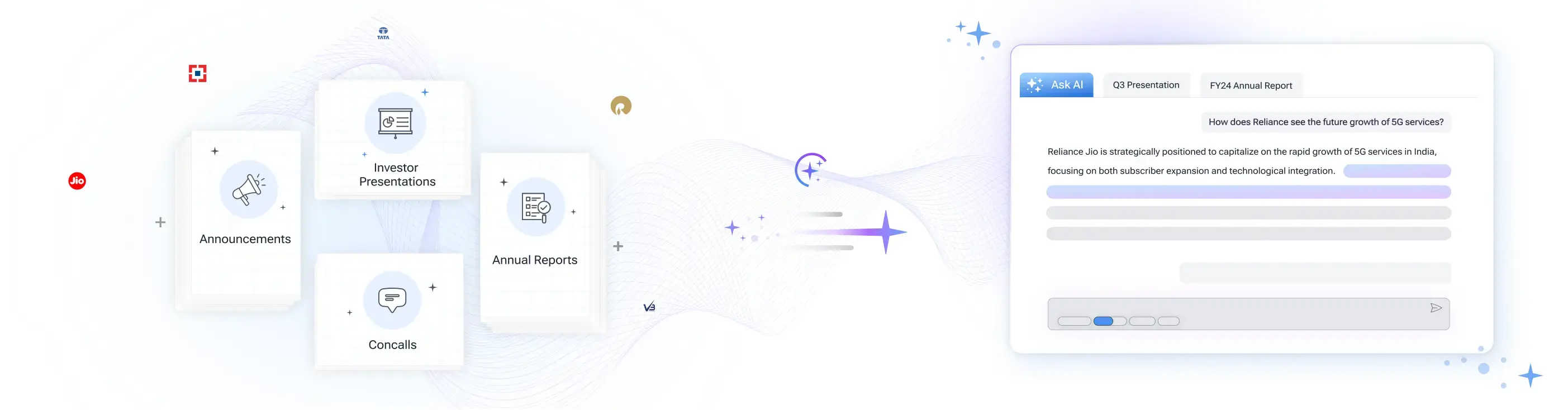
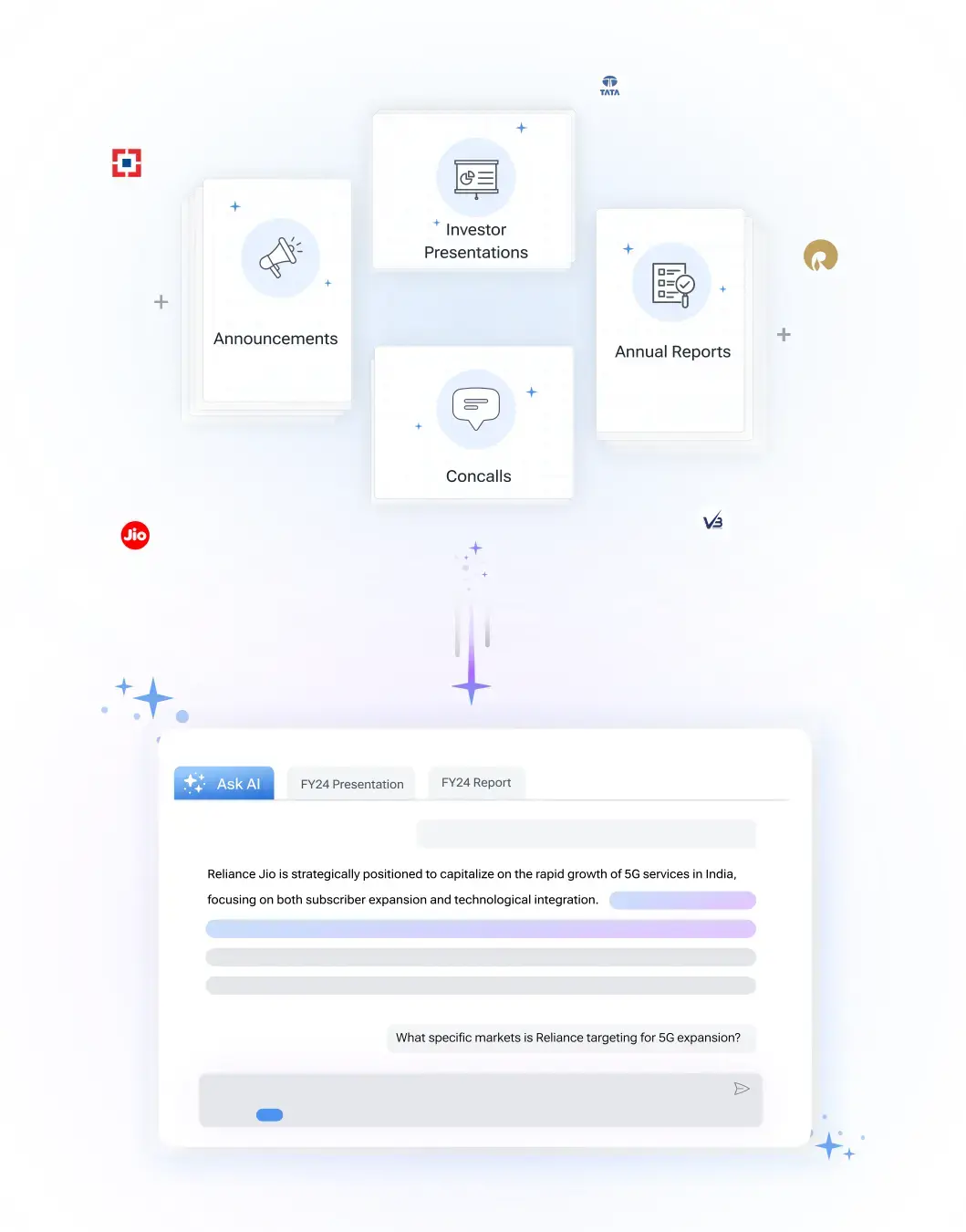
Get instant AI-powered insights about company performance, financials, and strategy. Ask questions about trends, competition, and developments while receiving responses backed by official documents and market data, with clear attribution to source documents.

 Discovery themes featuring this stock
Bearish
3
Neutral
7
Bullish
4
Bearish
13
Neutral
7
Bullish
26
Bearish
10
Neutral
0
Bullish
22
Bearish
3
Neutral
7
Bullish
4
Bearish
3
Neutral
7
Bullish
4
Bearish
10
Neutral
0
Bullish
22
Bearish
10
Neutral
0
Bullish
22
Bearish
10
Neutral
0
Bullish
22


Sangam (India) Limited is a vertically integrated textile manufacturer producing PV-dyed and cotton yarns, denim and PV fabrics, fabric processing and garments, operating multiple plants in Rajasthan and serving 50+ countries through marquee clients and retail channels.
FY26 was a milestone year: consolidated revenue of Rs. 3,243 crore (↑12.9% YoY), EBITDA Rs. 329 crore (10.1% margin, ↑26.4% YoY) and PAT Rs. 83 crore (↑159.7% YoY), reflecting higher VAP mix, better operating leverage and disciplined cost control.
Sangam delivered operational improvements with working capital cycle compressing to 55 days in FY26 from 80 days in FY25 and capacity utilizations rising into the mid-90s for yarn, PV fabric and denim, indicating strong near-term volume sustainability and cash conversion.
Strategic moves include meaningful renewable energy investments and backward integration into recycled polyester fibre (45 TPD), positioning Sangam to capture lower power and raw material costs while strengthening ESG credentials and export competitiveness.
Textiles & Apparels
Other Textile Products
2,919 Cr
Low Risk
24.0
29.2
0.1
2.7
675.95
391.50
Sales CAGR
Profit CAGR
ROE
ROCE
View Standalone
View Standalone
View Standalone
View Standalone
View Standalone
View Standalone
View Standalone
View Standalone
Sangam (India) Ltd (SANGAMIND) is currently trading at 578.05 per share. Stock prices fluctuate during market hours on NSE and BSE based on demand, company updates, and overall market conditions. Refer to the live price chart above for the most recent price movement.
Sangam (India) Limited is a vertically integrated textile manufacturer producing PV-dyed and cotton yarns, denim and PV fabrics, fabric processing and garments, operating multiple plants in Rajasthan and serving 50+ countries through marquee clients and retail channels. FY26 was a milestone year: consolidated revenue of Rs. 3,243 crore (↑12.9% YoY), EBITDA Rs. 329 crore (10.1% margin, ↑26.4% YoY) and PAT Rs. 83 crore (↑159.7% YoY), reflecting higher VAP mix, better operating leverage and disciplined cost control. Sangam delivered operational improvements with working capital cycle compressing to 55 days in FY26 from 80 days in FY25 and capacity utilizations rising into the mid-90s for yarn, PV fabric and denim, indicating strong near-term volume sustainability and cash conversion. Strategic moves include meaningful renewable energy investments and backward integration into recycled polyester fibre (45 TPD), positioning Sangam to capture lower power and raw material costs while strengthening ESG credentials and export competitiveness.
Over the past 52 weeks, Sangam (India) Ltd has traded between a low of ₹391.50 and a high of ₹675.95. The 52-week high and low indicate the stock’s price range over the last year and help investors understand its volatility and recent trading levels.
Sangam (India) Ltd has a market capitalization of approximately 2,918.57. Market capitalization represents the total value of a company’s outstanding shares and helps investors understand its size, stability, and relative risk compared to other listed companies.
Sangam (India) Ltd’s investment profile depends on its business fundamentals, valuation, and long-term outlook. The stock currently trades at a PE ratio of 24.02 and operates in the its sector sector. Investors typically assess financial performance, growth prospects, and individual risk tolerance before making investment decisions.
Based on its market capitalization of 2,918.57 Cr, Sangam (India) Ltd is classified as a Small Cap stock. Large-cap stocks are generally more stable, while mid-cap and small-cap stocks tend to offer higher growth potential along with higher price volatility.
Sangam (India) Ltd operates in the its sector sector. Sector classification matters because companies in the same sector are often affected by similar economic conditions, regulatory changes, and competitive dynamics, which can influence overall stock performance.
The Price-to-Earnings (PE) ratio of Sangam (India) Ltd is 24.02. The PE ratio compares a company’s share price to its earnings and is commonly used to assess valuation. Comparing the PE ratio with sector peers and historical levels provides better context.
Discovery themes featuring this stock


| Symbol | Watchlist | Price | Market Cap | P/E | P/B | Div Yield (%) | ROE (%) | ROCE (%) | ROA (%) |
7.06 | 3,505 Cr | -4.93 | 0.00 | 0.00 | 3.46 | -2.85 | -10.98 | ||
621.00 | 3,485 Cr | 16.45 | 2.37 | 0.48 | 12.07 | 11.85 | 7.27 | ||
578.05 | 2,919 Cr | 24.02 | 2.71 | 0.34 | 7.67 | 9.63 | 3.67 | ||
997.10 | 2,673 Cr | 47.32 | 2.09 | 0.35 | 3.00 | 5.19 | 2.82 | ||
204.60 | 2,588 Cr | 16.02 | 2.49 | 0.50 | 10.73 | 12.98 | 9.26 | ||
528.00 | 2,390 Cr | 10.07 | 1.64 | 9.87 | 15.81 | 18.23 | 10.83 | ||
91.50 | 2,378 Cr | 14.75 | 4.58 | 0.00 | 28.93 | 16.91 | 4.97 | ||
| Median: 7 Co. | — | 528.00 | 2,673 Cr | 16.02 | 2.37 | 0.35 | 10.73 | 11.85 | 4.97 |
Regulatory/Compliance Filing
Sangam (India) Ltd submitted copy of the Notice of Postal Ballot published in Business Standard (English) and Pratahkal (Hindi) on 16-09-2026 under Regulation 30 (LODR).
AGM/EGM Notice
Sangam (India) Ltd announces a Postal Ballot (remote e-voting) from 2026-09-16 to 2026-10-15 for approval to appoint Mr. Ranjan Jagetia as Independent Director; notice available on company and exchange websites.