









🔥 We have been featured on Shark Tank India.Episode 13

🔥 We have been featured on Shark Tank India

logologo
Search anything
Ctrl+K
gift
arrow
WhatsApp Icon

Stock Summary and Key Metrics


Investment Checklist


Financial Statements

AI Powered Summary

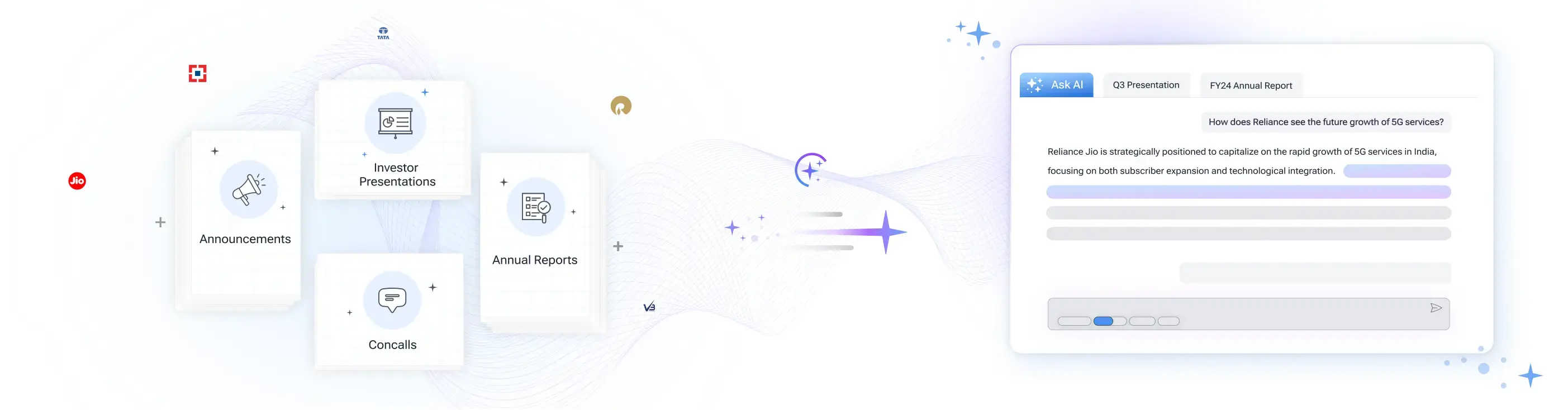
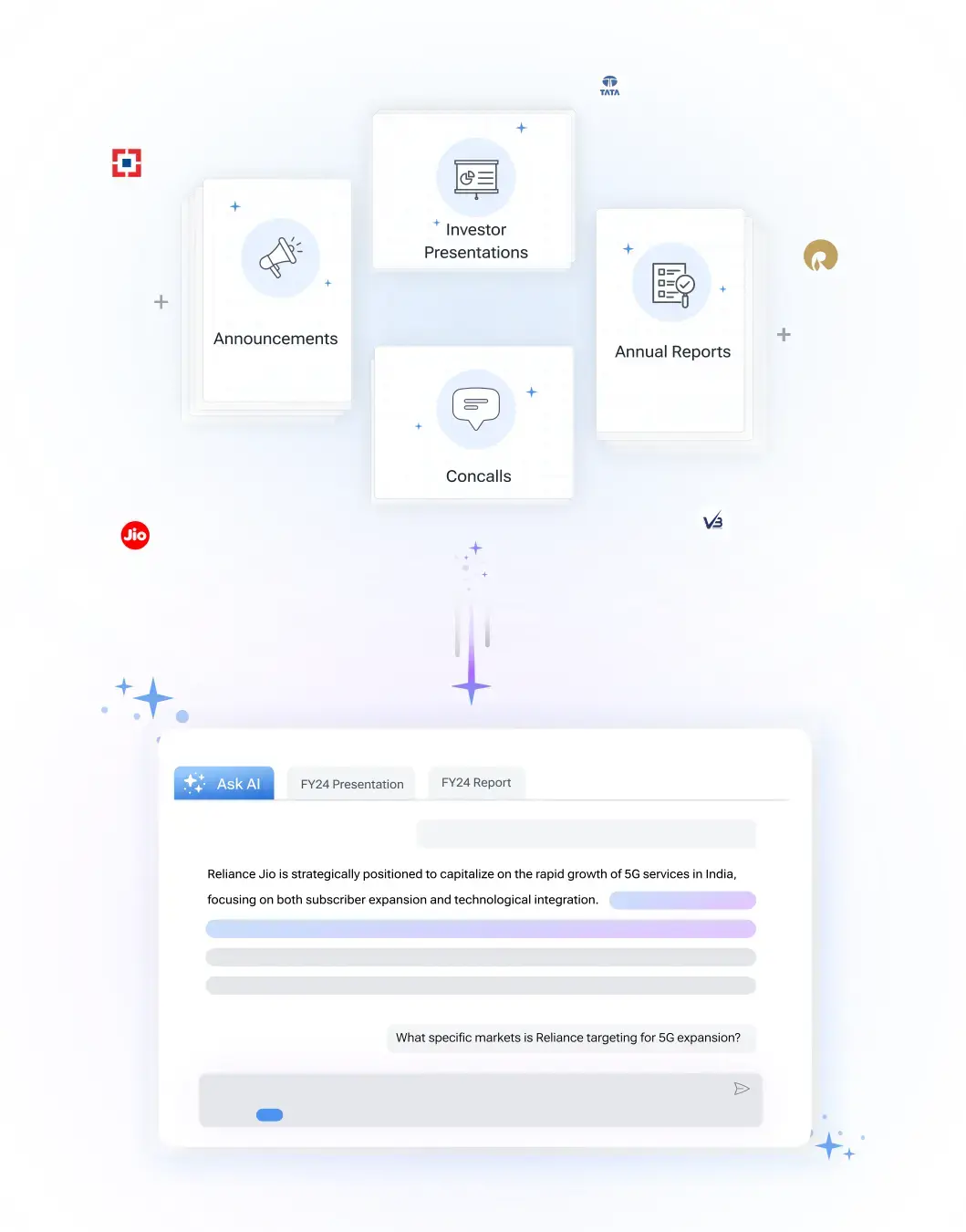
Discover detailed, AI-driven financial summaries that break down key metrics, trends, and insights—empowering you to make smarter investment decisions.

Ask AI

Ask AI

mockupmockup

Standalone Quarterly Results (in ₹ Crores)

Total Figures
QoQ Changes
Total Figures
Sep 2023Dec 2023Mar 2024Jun 2024Sep 2024Dec 2024Mar 2025Jun 2025Sep 2025Dec 2025
Sales31224554565773605862
Expenses28194049515268575560
Operating Profit3.073.114.394.214.985.254.993.612.892.65
OPM %9.8314.109.857.848.969.176.846.005.014.25
Other Income0.120.10-0.010.030.050.050.050.060.170.25
Interest1.000.841.241.051.461.121.080.950.680.86
Depreciation0.220.230.230.270.290.320.320.370.390.40
Profit Before Tax1.962.142.912.923.283.863.652.361.981.63
Tax %21.4322.9039.1827.0523.7830.0534.5227.5423.2336.20
Net Profit1.531.641.772.132.512.702.391.701.521.04
EPS in Rs0.120.130.150.170.200.220.220.140.120.08

Standalone Profit Loss (in ₹ Crores)

Total Figures
YoY Changes
Total Figures
Mar 2017Mar 2018Mar 2019Mar 2020Mar 2021Mar 2022Mar 2023Mar 2024Mar 2025TTM
Sales4459867883100107145282246
Expenses36456861647695111220227
Operating Profit7.87141817192412346219
OPM %18.0123.4420.4922.1923.3423.6511.3323.2921.887.66
Other Income0.240.080.310.170.580.130.270.240.190.21
Interest2.212.192.973.504.393.673.894.024.724.61
Depreciation0.650.840.800.580.710.750.780.871.201.30
Profit Before Tax0.441.111.511.712.564.497.778.431413
Tax %29.9431.7722.7339.3520.2029.9625.1529.1229.1129.28
Net Profit0.310.751.171.042.043.145.825.989.729.30
EPS in Rs0.060.210.080.170.250.470.490.810.56
Dividend Payout %0.0033.900.000.000.000.000.000.000.00

Standalone Balance Sheet (in ₹ Crores)

Total Figures
YoY Changes
Total Figures
Mar 2016Mar 2017Mar 2018Mar 2019Mar 2020Mar 2021Mar 2022Mar 2023Mar 2024Mar 2025
Equity Capital8.48131313131319191925
Reserves9.495.556.187.238.27107.08131963
Borrowings14152226293738345133
Other Liabilities5.65101111191620231429
Total Liabilities3843525769768488103149
Fixed Assets4.934.984.884.815.026.316.216.617.4912
CWIP0.000.180.000.000.000.000.000.000.000.00
Investments0.000.000.000.000.000.000.000.000.000.00
Other Assets333847526470788296138
Total Assets3843525769768488103149

Standalone Cash Flows (in ₹ Crores)

Total Figures
YoY Changes
Total Figures
Mar 2016Mar 2017Mar 2018Mar 2019Mar 2020Mar 2021Mar 2022Mar 2023Mar 2024Mar 2025
Cash from Operating Activity-0.060.49-2.180.041.26-1.39-0.936.11-24-3.71
Cash from Investing Activity-1.64-0.95-0.68-0.68-0.77-2.05-0.45-1.13-2.00-5.26
Cash from Financing Activity2.83-0.333.000.84-0.263.961.65-4.972612
Net Cash Flow1.13-0.790.130.200.220.520.270.010.582.75

Documents

Presentations
Concalls
Reports
Presentations

No documents found!

Actions

Action Type


AI Mode

Get instant AI-powered insights about company performance, financials, and strategy. Ask questions about trends, competition, and developments while receiving responses backed by official documents and market data, with clear attribution to source documents.

Ask AI

Ask AI

ai-corner-premiumai-corner-premium

Frequently Asked Questions about Ultracab (India) Ltd

Ultracab (India) Ltd (ULTRACAB) is currently trading at 7.00 per share. Stock prices fluctuate during market hours on NSE and BSE based on demand, company updates, and overall market conditions. Refer to the live price chart above for the most recent price movement.

Ultracab (India) Limited is engaged in the manufacture and export of a wide range of wires and cables, including PVC cables, power cables, and control cables. The company has a strong market presence both in India and internationally, serving markets such as the UK, UAE, Africa, and Singapore, aided by its advanced manufacturing facility in Rajkot, Gujarat. Ultracab has enhanced its production capacity through additional machinery investment, positioning itself to meet growing demand in diverse sectors including infrastructure and automotive. The company is an approved supplier to multiple government authorities and large public and private sector industries, reflecting trust in its product quality and reliability. With a portfolio exceeding 1300 products in the cable segment, Ultracab sees significant global expansion opportunities, fueled by increasing demand for specialized and power cables.

Over the past 52 weeks, Ultracab (India) Ltd has traded between a low of ₹6.50 and a high of ₹13.59. The 52-week high and low indicate the stock’s price range over the last year and help investors understand its volatility and recent trading levels.

Ultracab (India) Ltd has a market capitalization of approximately 85.21. Market capitalization represents the total value of a company’s outstanding shares and helps investors understand its size, stability, and relative risk compared to other listed companies.

Ultracab (India) Ltd’s investment profile depends on its business fundamentals, valuation, and long-term outlook. The stock currently trades at a PE ratio of 12.50 and operates in the Cables sector. Investors typically assess financial performance, growth prospects, and individual risk tolerance before making investment decisions.

Based on its market capitalization of 85.21 Cr, Ultracab (India) Ltd is classified as a Small Cap stock. Large-cap stocks are generally more stable, while mid-cap and small-cap stocks tend to offer higher growth potential along with higher price volatility.

Ultracab (India) Ltd operates in the Cables sector. Sector classification matters because companies in the same sector are often affected by similar economic conditions, regulatory changes, and competitive dynamics, which can influence overall stock performance.

The Price-to-Earnings (PE) ratio of Ultracab (India) Ltd is 12.50. The PE ratio compares a company’s share price to its earnings and is commonly used to assess valuation. Comparing the PE ratio with sector peers and historical levels provides better context.