Actions
Action Type



Welcome to Multibagg AI
Log in to access personalized features
IRIS
Multibagg AI is an AI powered stock research and analysis platform. We provide data, information, content, and analytics for publicly traded Indian companies listed on NSE and BSE. AI can make mistakes, check important information.
Research powered by GOALZEN CAPITAL SERVICES PRIVATE LIMITED · SEBI Research Analyst INH000013448
Prices might be delayed by a few minutes.
Join our Exclusive Community


Join our Exclusive Community
Made with 💙 in India. © Finsky Technologies Pvt Ltd. 2026


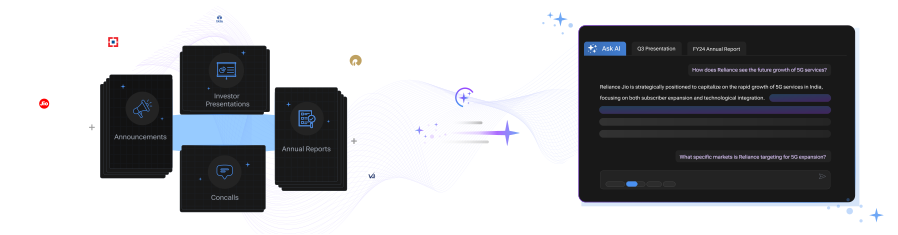
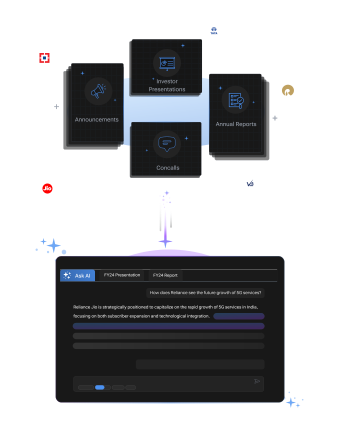
Get instant AI-powered insights about company performance, financials, and strategy. Ask questions about trends, competition, and developments while receiving responses backed by official documents and market data, with clear attribution to source documents.



 Discovery themes featuring this stock
Bearish
5
Neutral
3
Bullish
6
Bearish
37
Neutral
3
Bullish
6
Bearish
32
Neutral
0
Bullish
0
Bearish
5
Neutral
3
Bullish
6
Bearish
5
Neutral
3
Bullish
6
Bearish
32
Neutral
0
Bullish
0
Bearish
32
Neutral
0
Bullish
0
Bearish
32
Neutral
0
Bullish
0



Investor Presentation
Q2 FY26
Investor Presentation
Q4 FY25
Investor Presentation
Q2 FY25
Investor Presentation
Q2 FY25
Investor Presentation
Q1 FY25



Vilas Transcore Limited manufactures transformer components, principally CRGO laminations, slit coils, assembled cores, wound cores, nanocrystalline cores, transformer radiators, and now copper conductors, serving transformer OEMs, EPCs and select export markets from three Vadodara manufacturing units.
The company has materially increased CRGO lamination capacity from 12,000 MTPA to 36,000 MTPA by commissioning Unit 3, a near-term transformational operating change that underpins management’s plan to lift volumes to 30,000 MTPA and target 45%–50% revenue growth in FY27 while maintaining a conservative, net debt‑free balance sheet.
Vilas is broadening value‑added product mix with nanocrystalline cores, radiators and a copper conductor line (Phase‑1 capex INR25–30 crore; trial production planned September 2026), positioning to capture higher wallet share with existing customers and drive margin diversification beyond CRGO commodity exposure.
Management stresses CRGO price volatility and Chinese import dynamics as the primary margin driver; Q4 FY26 margin compression reflected a sharp CRGO price correction and new‑plant ramp‑up costs, while guidance targets normalized EBITDA of ~10%–11% and PAT near 7%–8% assuming steady CRGO prices.
Strategic R&D and JV intent is visible through a separate bushing venture (Vilas to hold 25%) focused on OIP bushings up to 145 kV with an initial INR10 crore capex for testing and product development, indicating a methodical move into technical, high‑entry barrier transformer components.
Electrical Equipment
Heavy Electrical Equipment
863 Cr
High Risk
21.8
43.0
0.9
2.6
495.00
313.25
Sales CAGR
Profit CAGR
ROE
ROCE


Vilas Transcore Ltd (VILAS) is currently trading at 352.50 per share. Stock prices fluctuate during market hours on NSE and BSE based on demand, company updates, and overall market conditions. Refer to the live price chart above for the most recent price movement.
Vilas Transcore Limited manufactures transformer components, principally CRGO laminations, slit coils, assembled cores, wound cores, nanocrystalline cores, transformer radiators, and now copper conductors, serving transformer OEMs, EPCs and select export markets from three Vadodara manufacturing units. The company has materially increased CRGO lamination capacity from 12,000 MTPA to 36,000 MTPA by commissioning Unit 3, a near-term transformational operating change that underpins management’s plan to lift volumes to 30,000 MTPA and target 45%–50% revenue growth in FY27 while maintaining a conservative, net debt‑free balance sheet. Vilas is broadening value‑added product mix with nanocrystalline cores, radiators and a copper conductor line (Phase‑1 capex INR25–30 crore; trial production planned September 2026), positioning to capture higher wallet share with existing customers and drive margin diversification beyond CRGO commodity exposure. Management stresses CRGO price volatility and Chinese import dynamics as the primary margin driver; Q4 FY26 margin compression reflected a sharp CRGO price correction and new‑plant ramp‑up costs, while guidance targets normalized EBITDA of ~10%–11% and PAT near 7%–8% assuming steady CRGO prices. Strategic R&D and JV intent is visible through a separate bushing venture (Vilas to hold 25%) focused on OIP bushings up to 145 kV with an initial INR10 crore capex for testing and product development, indicating a methodical move into technical, high‑entry barrier transformer components.
Over the past 52 weeks, Vilas Transcore Ltd has traded between a low of ₹313.25 and a high of ₹495.00. The 52-week high and low indicate the stock’s price range over the last year and help investors understand its volatility and recent trading levels.
Vilas Transcore Ltd has a market capitalization of approximately 862.92. Market capitalization represents the total value of a company’s outstanding shares and helps investors understand its size, stability, and relative risk compared to other listed companies.
Vilas Transcore Ltd’s investment profile depends on its business fundamentals, valuation, and long-term outlook. The stock currently trades at a PE ratio of 21.81 and operates in the its sector sector. Investors typically assess financial performance, growth prospects, and individual risk tolerance before making investment decisions.
Based on its market capitalization of 862.92 Cr, Vilas Transcore Ltd is classified as a Small Cap stock. Large-cap stocks are generally more stable, while mid-cap and small-cap stocks tend to offer higher growth potential along with higher price volatility.
Vilas Transcore Ltd operates in the its sector sector. Sector classification matters because companies in the same sector are often affected by similar economic conditions, regulatory changes, and competitive dynamics, which can influence overall stock performance.
The Price-to-Earnings (PE) ratio of Vilas Transcore Ltd is 21.81. The PE ratio compares a company’s share price to its earnings and is commonly used to assess valuation. Comparing the PE ratio with sector peers and historical levels provides better context.
| Symbol | Watchlist | Price | Market Cap | P/E | P/B | Div Yield (%) | ROE (%) | ROCE (%) | ROA (%) |
8.17 | 975 Cr | 15.16 | 2.09 | 0.00 | 11.81 | 2.20 | 2.20 | ||
593.05 | 899 Cr | 20.39 | 0.98 | 0.59 | 5.99 | 7.82 | 2.12 | ||
352.50 | 863 Cr | 21.81 | 2.63 | 0.00 | 12.04 | 14.63 | 9.73 | ||
197.75 | 823 Cr | 6.58 | 2.50 | 0.00 | 38.07 | 48.90 | 25.90 | ||
273.30 | 683 Cr | 38.14 | 5.18 | 0.00 | 18.72 | 20.73 | 8.16 | ||
11.50 | 650 Cr | -2.13 | 2.95 | 0.00 | -115.88 | -97.33 | -114.56 | ||
462.80 | 646 Cr | 45.43 | 5.31 | 0.00 | 12.78 | 16.58 | 7.58 | ||
| Median: 7 Co. | — | 273.30 | 823 Cr | 20.39 | 2.63 | 0.00 | 12.04 | 14.63 | 7.58 |