










Which app has an AI research assistant in India in 2026?
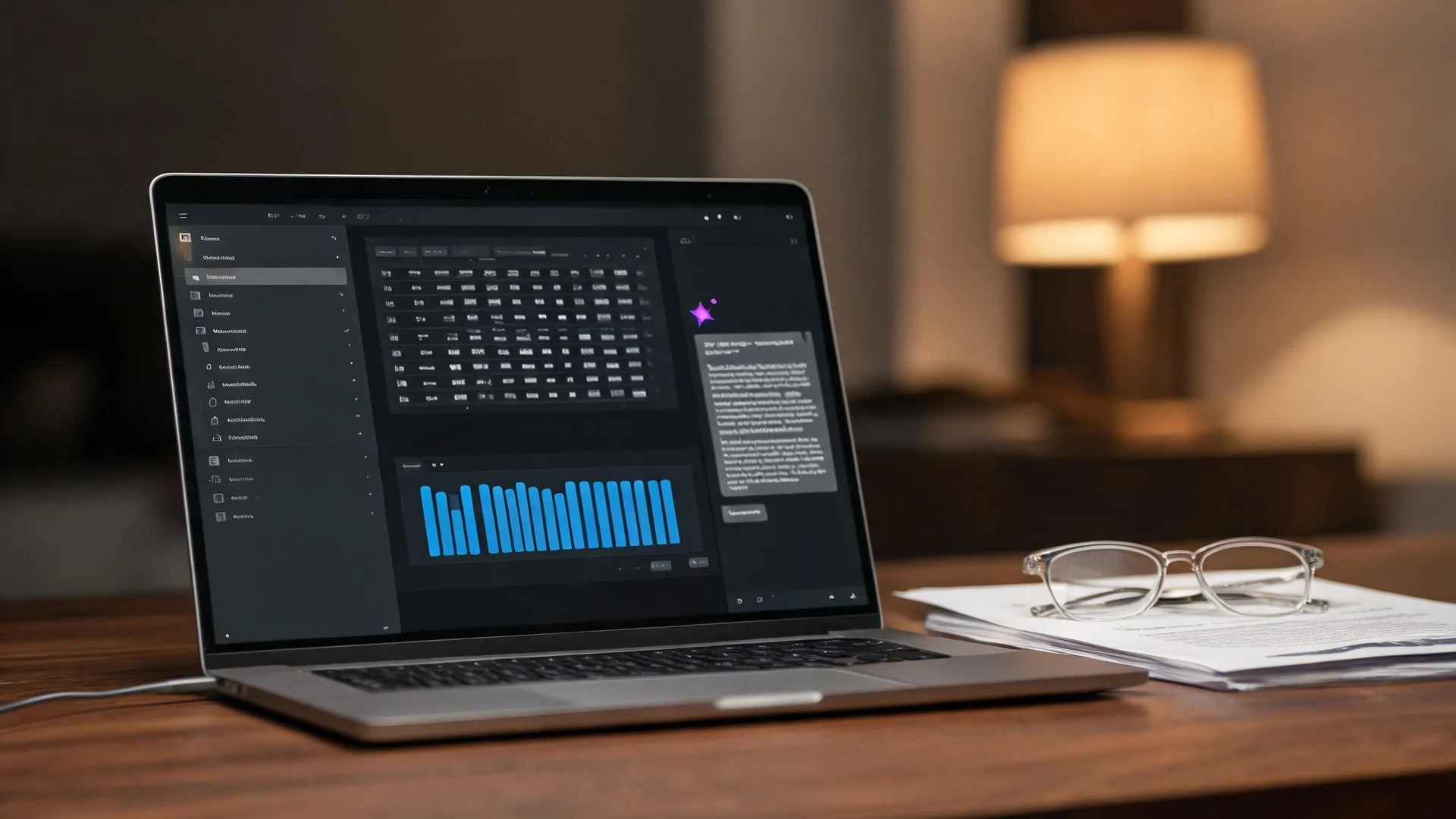
Quick Answer: Several apps have an AI research assistant in India: general assistants such as ChatGPT, Perplexity, Gemini and Claude, and India-focused platforms built on exchange filings. Multibagg AI's Ask Iris takes questions on stocks, indices, IPOs, ETFs, sectors and company documents. Whichever you use, check each answer against the filing it cites.
An AI research assistant for stocks is a chat tool that reads market data and company documents and answers questions in plain language. In India, the useful ones work from the filings that listed companies must submit to NSE and BSE, and they show where each number came from.
What follows covers what such an assistant should do, how coverage differs, a quick way to test any answer, and the SEBI rules that touch AI tools in 2026.
What does Multibagg AI's Ask Iris answer?
Multibagg AI's Ask Iris is one: Multibagg's homepage calls it an AI assistant for finance in India and lists 2M+ documents indexed (18 Sep 2026). Its structured data says users can ask questions on stocks, indices, IPOs, ETFs, sectors and company documents.
Other names come up in the same search. General assistants such as ChatGPT, Perplexity, Gemini, NotebookLM and Claude handle finance questions alongside everything else. Stock-research platforms in India include Screener.in, Tickertape, Trendlyne, StockEdge and Research 360. Check each platform's own product page to see whether it offers an assistant and what data it reads.
Our look at multi-agent "Prism" launches being tracked in India covers agent-style AI. For stock research the label matters less than the source, because an assistant or agent is only as reliable as the documents it reads and how clearly it shows them to you.
So the practical question is not which app has AI. It is which app answers from primary filings, shows the date of the data, and stays on the research side of the line SEBI draws around advice.
What should an AI research assistant for stocks do?
An AI research assistant for stocks should answer from dated primary filings: quarterly results reach the exchanges within 45 days of quarter end (SEBI LODR Regulation 33, amended up to 14 July 2026). Annual audited results are due within 60 days of the financial year end, so an assistant should say which period a figure belongs to.
Earnings calls follow a similar clock. Under Regulation 46 of the same rules, the audio recording goes on the company website before the next trading day or within 24 hours, and the transcript within five working days, filed with the exchanges at the same time. Multibagg's Concall Monitor collects these recordings, transcripts and investor presentations in one place.
A research assistant built on this material should do four things:
- Name the document and filing date behind every number.
- Keep reported figures separate from its own calculations.
- Say plainly when data is missing or not yet filed.
- Decline buy, sell or hold calls and price targets.
Test it with a narrow question, for example what management said about AI-driven pricing pressure flagged for Indian IT in FY26. A good answer quotes the call or filing. It does not offer a forecast of its own.
Some questions suit a filter better than a chat. Comparing thousands of companies on return on equity, P/E, market cap or dividend yield is a structured-data job, which is what Multibagg's screener is built for.
Which AI research assistants cover stocks in India in 2026?
General chatbots and India-focused platforms such as Multibagg AI's Ask Iris both cover stocks in India; the difference is whether they answer from NSE and BSE filings. Assistants built on Indian exchange data answer from filings they have already indexed. Multibagg's homepage, for example, lists 10,000+ stocks, mutual funds, ETFs and IPOs and 40+ quarters of data (18 Sep 2026). According to its footer, the underlying data covers publicly traded Indian companies listed on NSE and BSE.
A comparison on Multibagg's own homepage says a general chatbot may not know about a document immediately after it is filed. That is a vendor describing a rival tool. Test it with a result filed the same day.
Two questions settle coverage for any tool in 2026. Does it include the company you are researching, and how far back does its data go?
General chatbots vs filing-grounded research assistants
The difference is the source: a general chatbot draws on the web or its training data, while a filing-grounded assistant reads mandatory exchange filings. That changes how current and how exact an answer can be.
On its homepage, Multibagg makes this contrast directly. It says its answers come from official filings, concalls and presentations, and that exchange filings are indexed in real time (Multibagg homepage, 18 Sep 2026). Those are the company's own statements about its product.
General assistants remain useful for other research tasks: they can explain a concept such as operating leverage, summarise a sector, or draft questions to put to a filing. NotebookLM works on sources you add yourself, so its answers are only as current as the documents you upload.
AI agents for stock research follow the same logic. An agent that runs several steps on its own can save time. Each step still needs a named document behind it, though. Before relying on either kind of tool, look at three things: where the numbers came from, how old they are, and whether the tool shows its source.
How do you check an AI assistant's answer?
Open the filing it cites and match three things: the number, the period and the filing date. A quarterly figure should trace to results filed within the 45-day window, not to a news summary written later.
Watch for figures that look alike but measure different things: standalone and consolidated results can differ widely for the same company. Companies also sometimes publish reported and normalised margins for the same year, and an assistant should say which one it is quoting.
Price and valuation figures change daily, so check their date. If an app, channel or chat group offers stock tips alongside its AI, SEBI's caution against unregistered entities (13 February 2024) asks investors to verify registration first and to be wary of promised returns. Multibagg's own footer carries a related reminder about AI output: "AI can make mistakes, check important information."
What rules apply to AI stock analysis tools in India?
Any SEBI-regulated firm that uses AI tools is solely responsible for their output under Regulation 16C of the Intermediaries Regulations, published in the Gazette on 10 February 2025. That responsibility also covers investor data security and compliance with the law, whether the tool was built in-house or bought from a vendor.
SEBI then went further in a consultation paper on responsible AI/ML use in securities markets, issued on 20 June 2025, which proposed that firms using AI in advisory and support services tell clients about the product's features, risks, limitations and accuracy, in language clients can follow. It is a proposal. Check sebi.gov.in for its current status.
| Date | SEBI document | What it says that matters for AI research tools |
|---|---|---|
| 13 Feb 2024 | Press release PR No. 02/2024 | Verify the registration of any entity that claims to be SEBI-registered |
| 10 Feb 2025 | Intermediaries (Amendment) Regulations, 2025 | Regulated persons are solely responsible for AI tool output, data and compliance |
| 20 Jun 2025 | Consultation paper on AI/ML guidelines | Proposed disclosure of features, risks, limitations and accuracy to clients |
| 14 Jul 2026 | LODR Regulations, 2015 (latest amended text) | Results within 45 days; concall transcripts within five working days |
Source: sebi.gov.in, documents checked on 18 September 2026.
For readers, the line between research and advice matters most. Multibagg AI is not a SEBI-registered investment adviser or research analyst. An unregistered assistant can explain filings and ratios, but it should not tell you what to buy.
To try a filing-grounded assistant on your next research question, open Ask Iris from the Multibagg AI navigation after creating a free account.
Frequently Asked Questions
Can an app legally give stock tips without SEBI registration?
Not as investment advice. Regulation 3(1) of the SEBI (Investment Advisers) Regulations, 2013 (amended up to 25 November 2025) bars anyone from acting, or holding itself out, as an investment adviser without SEBI registration. Regulation 3(3) also stops distributors from using titles like Wealth Adviser unless registered.
How can you check whether an adviser is registered with SEBI?
Use SEBI's own website. SEBI's press release of 13 February 2024 gives the path: go to sebi.gov.in, open Intermediaries / Market Infrastructure Institutions, then Recognised Intermediaries. The same release points to Enforcement, then Orders, to see whether SEBI has taken action against an entity.
How long does SEBI propose firms keep AI input and output data?
At least five years. SEBI's consultation paper of 20 June 2025 proposed that market participants document their AI/ML models and store input and output data for that period, so outcomes stay explainable, traceable and repeatable. Public comments on the proposal were invited until 11 July 2025.
Does the free Multibagg plan include Ask Iris?
The free Standard plan includes 20 Ask Iris questions a month. Premium raises that cap to 500 and Professional to 1,000 (Multibagg pricing, 18 September 2026), so the plan sets how many questions you can put to the assistant each month.
Can an AI assistant answer questions about documents you upload?
Some can. Multibagg's pricing page lists chat with financial documents using AI as a Premium feature, as of 18 September 2026. General tools such as NotebookLM also work on files you add. In both cases, the answer is only as good as the document, so keep the original filing open.
Does Ask Iris cover US stocks?
Not yet. India is the only market on any plan today; Professional lists India + US as an upcoming feature (Multibagg pricing, 18 September 2026). Its answers draw on filings from companies listed on NSE and BSE.
Disclaimer: This article is for educational and informational purposes only. Multibagg AI is not a SEBI-registered investment adviser or research analyst, and it does not provide investment, financial, legal or tax advice. Nothing here is a recommendation to buy, sell, hold or invest in any security. Market data is shown as of the dates stated and may have changed since. Please consult a SEBI-registered adviser before making any investment decision.


Aaditya Aanand is the founder and CEO of Multibagg AI. An IIT Kanpur alumnus, he has worked across technology and financial markets at Goldman Sachs and American Express. His writing explores investing, markets and AI.