










ACE creates 50:50 KATO venture for heavy-crane businesses
Key highlights
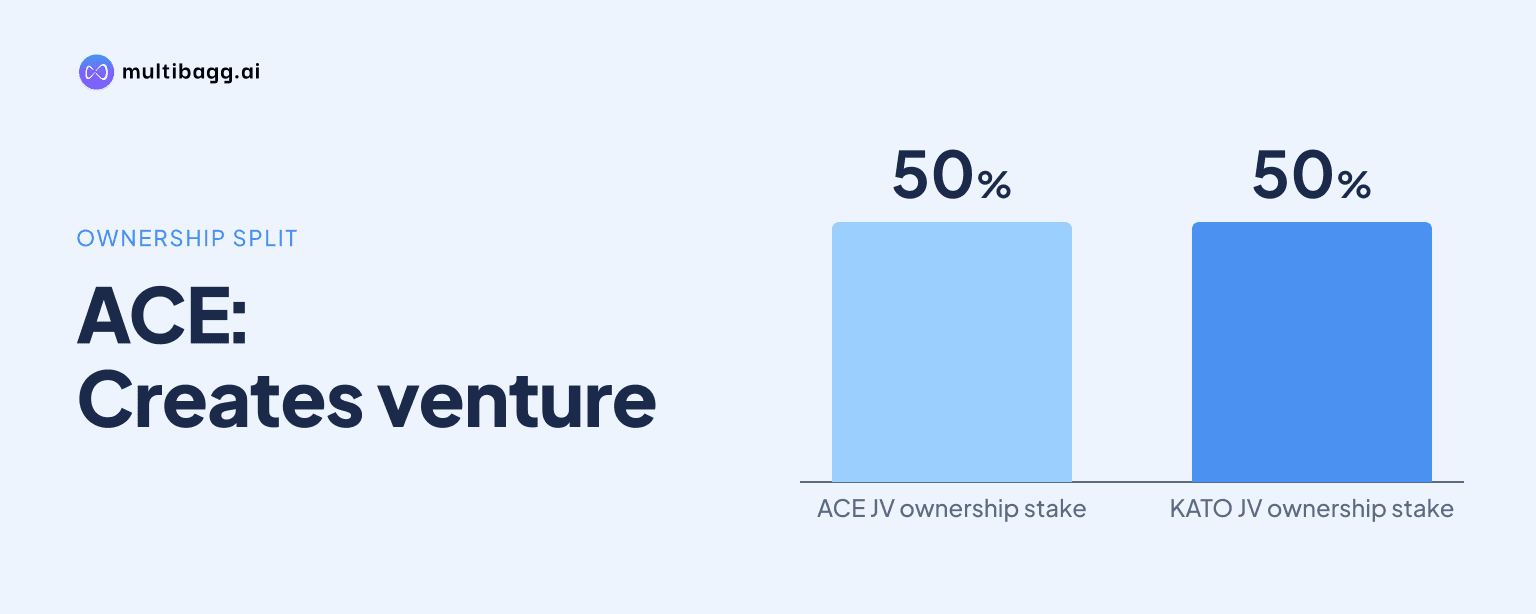
- ACE and KATO WORKS CO., LTD. will each own 50% of the ACE KATO JV.
- ACE is transferring Truck Cranes, Crawler Cranes and Rough Terrain Cranes into the joint venture.
- ACE reported FY26 EBITDA of Rs 614 crore, up from Rs 606.1 crore in FY25.
- The supplied presentation does not disclose a Rs 50 crore slump-sale gain or transaction valuation.
powered by IRIS
Action Construction Equipment Limited is creating a 50:50 joint venture with KATO WORKS CO., LTD. by transferring its truck-crane, crawler-crane and rough-terrain-crane businesses into the ACE KATO JV. The presentation describes the venture as a dedicated heavy-cranes platform for domestic and international markets, but does not disclose a Rs 50 crore slump-sale gain or other financial consideration.
Know Action Construction Equipment inside out
Results, valuation, peers and who's buying, in one view.
What businesses is ACE transferring to the KATO joint venture?
ACE is transferring its Truck Cranes, Crawler Cranes and Rough Terrain Cranes business into the ACE KATO JV. The presentation calls this a dedicated heavy-cranes platform, separating these three heavy-crane categories from ACE's wider cranes, material-handling, construction-equipment and agricultural-equipment portfolio.
The transferred categories are distinct from products ACE continues to list, including Pick & Carry Cranes, Lorry Loaders, Tower Cranes, Backhoe Loaders, Tele Handlers, Vibratory Rollers, Motor Graders, Access Platforms, Forklift Trucks and Piling Rigs. ACE also lists Tractors and Track Harvesters in agricultural equipment, indicating that the transfer covers a defined group of heavy-crane products rather than all crane operations.
The presentation does not provide revenue, assets, liabilities, employees, a transfer date or a valuation for the Truck Cranes, Crawler Cranes and Rough Terrain Cranes business. It also does not disclose a slump-sale gain, including the Rs 50 crore figure cited in the topic, so that amount cannot be separated from ACE's operating earnings using this presentation alone.
Who owns the ACE KATO joint venture?
ACE and KATO WORKS CO., LTD. will each own 50% of the ACE KATO JV. The stated rationale combines ACE's manufacturing and distribution capabilities with KATO's global distribution network and heavy-crane technology leadership.
The equal ownership structure adds KATO's distribution network to ACE's existing footprint of more than 125 locations and 13 regional offices in India. ACE also says it exports to more than 37 countries across the Middle East, Africa, Asia and Latin America, although the presentation does not quantify the heavy-crane business within those exports.
ACE characterises the arrangement as a focused growth vehicle for domestic and international heavy-crane markets. The presentation does not specify governance rights, capital contributions, board composition, intellectual-property arrangements, profit-sharing beyond the 50:50 ownership split, or a timetable for completing the transfer.
Why is ACE creating a separate heavy-cranes platform?
ACE says the ACE KATO JV is intended to accelerate technology upgradation, localisation, export expansion and participation in India's infrastructure and industrial capital-expenditure cycle. These are management-stated objectives rather than financial forecasts, and the presentation provides no revenue, profit or margin target for the venture.
The company positions the heavy-crane platform against infrastructure allocations outlined in the presentation. The Union Budget 2026-27 allocation for the Ministry of Road Transport and Highways is stated at Rs 3.10 lakh crore, compared with Rs 2.87 lakh crore in the previous year's Budget Estimates, while railway capital allocation is stated at Rs 2.95 lakh crore for FY27.
The presentation also cites FY27 railway physical targets of 17,500 general coaches, 200 Vande Bharat trains and 100 Amrit Bharat trains. In manufacturing, it cites Rs 40,000 crore for electronics manufacturing, Rs 10,000 crore for biopharma and Rs 10,000 crore for container manufacturing under Union Budget 2026-27.
ACE's stated end-user mix provides further context for the focus on industrial and infrastructure demand: manufacturing and logistics account for about 45%, construction and infrastructure about 35%, real estate about 13%, and agriculture about 7%. The presentation does not quantify how much of any of these end-user segments will be served by the ACE KATO JV.
Got a follow-up? Ask IRIS
How does the joint venture affect ACE's reported earnings?
The presentation does not quantify the immediate earnings, cash-flow or balance-sheet effect of transferring the three heavy-crane businesses to the ACE KATO JV. In particular, it does not report a gain on transfer, purchase consideration, carrying value of transferred assets, or accounting treatment for the 50:50 venture.
ACE's consolidated total income was Rs 3,390.5 crore in FY26, down from Rs 3,427.4 crore in FY25, while EBITDA, or earnings before interest, tax, depreciation and amortisation, increased to Rs 614 crore from Rs 606.1 crore. EBITDA margin rose to 18.11% from 17.68%, showing a margin increase despite the decline in reported total income.
For H1 FY27, ACE reported total income of Rs 1,772.5 crore and normalised EBITDA of Rs 352.5 crore, producing a 19.89% normalised EBITDA margin. The presentation specifies that H1 FY27 normalised EBITDA and margin exclude exceptional items, but the supplied material does not identify an exceptional gain related to the ACE KATO JV.
What should investors watch after the ACE KATO JV announcement?
Investors should watch for disclosures on completion and operating design of the ACE KATO JV, including the transfer date, consideration, accounting treatment and financial contribution of Truck Cranes, Crawler Cranes and Rough Terrain Cranes. These details are not provided despite the venture being presented as a 50:50 domestic and international heavy-cranes platform.
Further evidence of the strategy would include progress in localisation, technology upgradation and exports, which ACE identifies as the venture's purposes. ACE's broader product-development agenda includes next-generation cranes with AI-integrated systems, clutch-less transmission cranes, truck-mounted aerial platforms, and 10-tonne and 16-tonne flat-top tower cranes, but the presentation does not say which products will sit within the joint venture.
Conclusion
ACE is separating three heavy-crane businesses into a 50:50 venture with KATO WORKS CO., LTD., pairing ACE's manufacturing and distribution with KATO's global distribution and heavy-crane technology. ACE's FY26 EBITDA margin of 18.11%, up from 17.68% in FY25, is a separate consolidated operating measure and cannot be used to calculate a joint-venture transfer gain from the supplied presentation.
The next disclosure to watch is implementation of the ACE KATO JV and its financial terms, because the presentation provides neither a completion date nor a transfer valuation. Management's stated plan is to use the platform for technology upgradation, localisation and export expansion as FY27 allocations include Rs 3.10 lakh crore for roads and Rs 2.95 lakh crore for railways.