










Aprameya Engineering H1 FY27 Revenue Falls 59% to ₹17.13 Crore
Key highlights
- Aprameya Engineering reported H1 FY27 consolidated revenue of ₹17.13 crore, down 59.4% from ₹42.14 crore a year earlier.
- H1 FY27 consolidated net profit fell 82.3% year on year to ₹1.20 crore from ₹6.76 crore.
- Aprameya Engineering's H1 FY27 operating margin declined to 8.8% from 21.5% in H1 FY26.
- Consolidated operating cash flow was ₹28.21 crore and capital expenditure was ₹1.96 crore in H1 FY27.
powered by IRIS
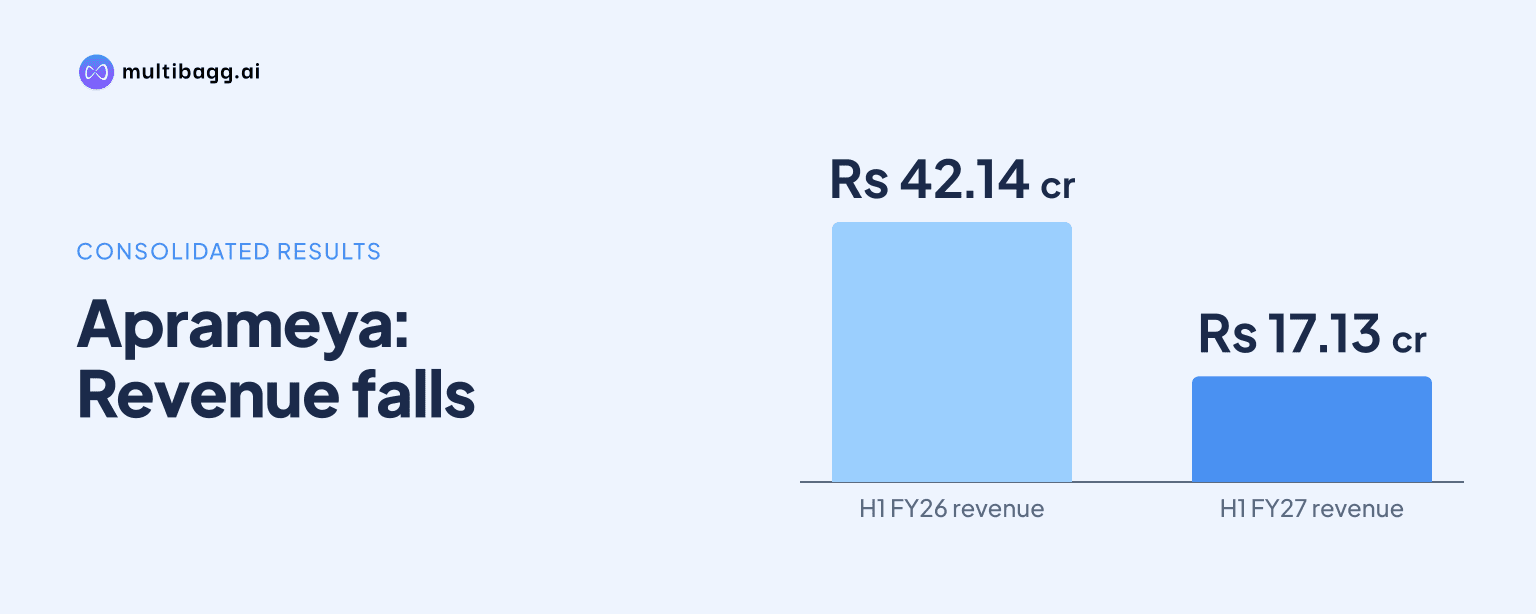
Aprameya Engineering Limited reported consolidated revenue from operations of ₹17.13 crore for H1 FY27, down 59.4% year on year from ₹42.14 crore, while consolidated net profit declined 82.3% to ₹1.20 crore. The results show a sequential return to profitability after the loss reported in H2 FY26, but earnings remained substantially below the previous year's first-half level.
Know Aprameya Engineering inside out
Results, valuation, peers and who's buying, in one view.
What did Aprameya Engineering report for H1 FY27?
Aprameya Engineering reported consolidated revenue from operations of ₹17.13 crore for the half year ended 30 September 2026. This compared with ₹42.14 crore in H1 FY26, representing a decline of 59.4%.
Consolidated profit after tax was ₹1.20 crore, compared with ₹6.76 crore in the corresponding period a year earlier. The decline in profit was 82.3% year on year. Basic and diluted earnings per share stood at ₹0.66, against ₹3.55 in H1 FY26.
The company reported total income of ₹18.13 crore for H1 FY27, including other income of ₹1.00 crore. Profit before exceptional items and tax was ₹1.61 crore, compared with ₹9.07 crore in H1 FY26. No exceptional item was reported in the figures provided, leaving profit before tax at ₹1.61 crore.
On a standalone basis, revenue from operations was ₹16.74 crore for H1 FY27, down 60.3% year on year. Standalone profit after tax declined 79.7% to ₹1.38 crore.
How did Aprameya Engineering's profitability change?
Aprameya Engineering's H1 FY27 operating margin was 8.8%, compared with 21.5% in H1 FY26. The lower margin accompanied the significant contraction in revenue and contributed to the sharper fall in profit relative to sales.
The company remained profitable during the first half, unlike H2 FY26, when it reported a consolidated net loss of ₹1.63 crore. H2 FY26 revenue was ₹12.96 crore, while the operating margin was negative 13.5% during that period.
The result therefore reflects a sequential improvement from the second half of the prior financial year. However, comparison with H1 FY26 shows that both revenue and profitability were lower. Operating profit fell 93.3% year on year, based on the reported growth data.
What were Aprameya Engineering's cash flow and capital expenditure figures?
Aprameya Engineering generated consolidated operating cash flow of ₹28.21 crore during H1 FY27. Investing cash flow was negative ₹22.13 crore, while financing cash flow was negative ₹4.13 crore for the period.
Capital expenditure was ₹1.96 crore in the first half. The reported cash flow figures indicate that operating inflows exceeded the amount spent on investing activities and financing outflows combined during the period.
The company also reported standalone operating cash flow of ₹30.69 crore. The available results information does not provide further detail on the specific operating or investing items driving the difference between consolidated and standalone cash flow.
Cash flow is relevant alongside the profit statement because the company recorded a much lower profit year on year while continuing to report positive operating cash generation. The filings, however, do not provide management guidance on revenue, margin, capital expenditure, or order-book expectations.
Got a follow-up? Ask IRIS
When were the results approved and reviewed?
Aprameya Engineering's board approved the unaudited standalone and consolidated financial results for the half year ended 30 September 2026 at its meeting on 14 November 2026. The company had earlier informed the exchange that the board would consider the half-year results on that date.
CNK & Associates LLP reviewed the unaudited financial results. The review report stated that it had not identified a material misstatement requiring modification to the reported financial information.
The H1 FY27 results were filed 45 days after the end of the September half year. For comparison, the company filed H1 FY26 results on 10 November 2025, 41 days after the end of that half year, according to the disclosed results calendar.
The board also took on record related-party transactions. No separate consolidated July-September quarter revenue or profit figures, or corresponding quarterly comparative figures, were provided in the information available.
Why do the H1 FY27 results matter to investors?
Aprameya Engineering's reported numbers show that the business returned to a consolidated profit after the loss in H2 FY26, but its H1 performance was markedly below the same period last year. Revenue declined by ₹25.01 crore year on year, while net profit declined by ₹5.57 crore.
The margin change is also material. Operating margin fell to 8.8% from 21.5%, indicating that the profit decline was steeper than the revenue contraction. The reported operating profit decline of 93.3% reflects this lower profitability on the reduced revenue base.
For investors, the main disclosed reference points are the H1 revenue level of ₹17.13 crore, net profit of ₹1.20 crore, earnings per share of ₹0.66, and operating cash flow of ₹28.21 crore. The company did not disclose a forward revenue or earnings target in the supplied results information, so the filing does not establish a confirmed full-year outlook.
Conclusion
Aprameya Engineering's H1 FY27 results show a sequential recovery from the loss-making H2 FY26 period, but a substantial year-on-year decline in revenue, operating margin and net profit. Consolidated revenue of ₹17.13 crore was 59.4% below H1 FY26, while net profit of ₹1.20 crore was 82.3% lower.
The next key disclosure will be the company's financial update for the period after 30 September 2026. Investors will be able to assess whether revenue, margins and profitability improve from the H1 FY27 base, as the company has not provided forward guidance or an order-book target in the reported material.