










Bombay Potteries & Tiles Q1 Loss Stands at ₹6.81 Lakh
Key highlights
- Bombay Potteries & Tiles reported a ₹6.81 lakh standalone loss in Q1 FY27, versus a ₹22.58 lakh profit in Q1 FY26.
- Revenue from operations was ₹0 lakh in both Q1 FY27 and Q1 FY26.
- FY26 net profit was ₹6.36 lakh, compared with a ₹107.93 lakh net loss in FY25.
- FY26 other income was ₹51.80 lakh while full-year operational revenue remained ₹0 lakh.
powered by IRIS
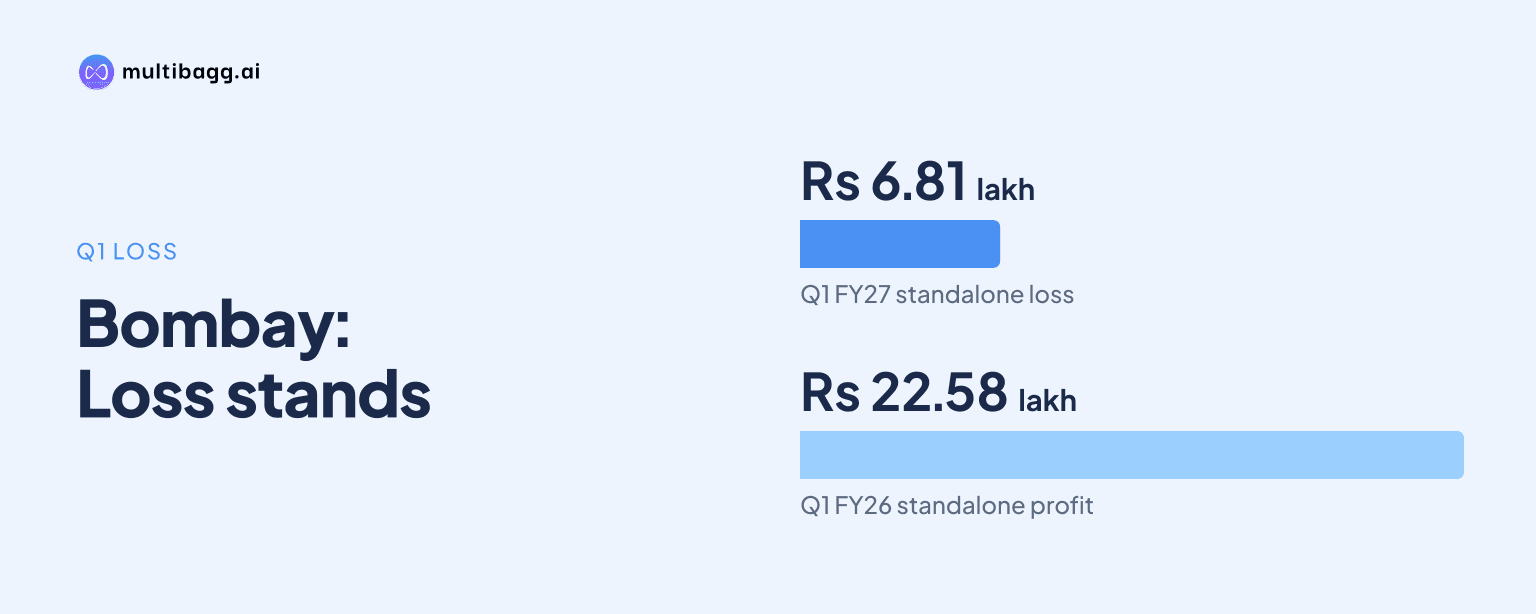
Bombay Potteries & Tiles Limited reported a standalone net loss of ₹6.81 lakh for the quarter ended June 30, 2026, compared with a net profit of ₹22.58 lakh in Q1 FY26, while reporting no revenue from operations in either period. The company is also listed among 501 companies scheduled for results-related announcements on November 12, 2026.
Know Bombay Potteries & Tiles inside out
Results, valuation, peers and who's buying, in one view.
What did Bombay Potteries & Tiles report for Q1 FY27?
Bombay Potteries & Tiles Limited recorded a standalone net loss of ₹6.81 lakh in Q1 FY27, reversing the ₹22.58 lakh net profit reported in the corresponding quarter of FY26. The reported period ended on June 30, 2026, and the company disclosed nil sales for both the latest quarter and the year-earlier quarter.
The company’s Board of Directors approved the unaudited standalone financial results on August 5, 2026, and the results were published on August 6. Statutory auditor M/s JPKD & CO LLP reviewed the statements and issued a limited review report under Regulation 33 of the SEBI (Listing Obligations and Disclosure Requirements) Regulations, 2015.
The quarterly result indicates that the company’s reported earnings remained disconnected from operating sales during the period. Since revenue from operations was nil, the movement from profit to loss must be assessed in the context of non-operating income and expenses disclosed in the standalone accounts rather than sales growth.
Why is Bombay Potteries & Tiles on the November 12 results calendar?
Bombay Potteries & Tiles is included in the November 12, 2026 results calendar, which lists 501 companies for the day. The company has announced a board meeting to review financial results for the quarter and half-year, although the provided disclosure does not specify the meeting date or provide the financial figures to be considered.
The calendar listing should not be treated as confirmation of a fresh quarterly result or a new profit and loss figure. The available financial information remains the Q1 FY27 result for the quarter ended June 30, 2026, along with audited FY26 figures and earlier quarterly reports.
For investors, the next board-reviewed disclosure will be relevant because it may provide an update for the September 2026 quarter and the first half of FY27. However, no such performance numbers, operational developments, or management outlook were provided in the available information.
How has Bombay Potteries & Tiles performed in recent periods?
Bombay Potteries returned to a full-year profit in FY26, reporting net income of ₹6.36 lakh against a net loss of ₹107.93 lakh in FY25. The FY26 outcome was supported by other income of ₹51.80 lakh, while revenue from operations remained nil for the full year.
The company reported a net loss of ₹14.47 lakh in Q4 FY26, compared with a loss of ₹15.89 lakh in Q4 FY25. This meant the full-year return to profit occurred despite a loss in the March 2026 quarter, highlighting the importance of non-operating items in the annual result.
Earlier quarterly disclosures also showed variable profitability without reported sales. Bombay Potteries posted a ₹6 lakh net profit in the December 2025 quarter, compared with a ₹90 lakh loss in the December 2024 quarter. It then reported an ₹8 lakh loss for the September 2025 quarter, against a ₹1 lakh loss in the comparable prior-year period.
Got a follow-up? Ask IRIS
What does nil operational revenue mean for investors?
Nil revenue from operations means Bombay Potteries did not report sales from its operating business in the cited quarters and financial years. This was the case in Q1 FY27, Q1 FY26, FY26, FY25, FY24 and the earlier quarterly reports referred to in the disclosures.
As a result, reported net profit or loss cannot be evaluated using conventional revenue-growth measures. The FY26 profit of ₹6.36 lakh was specifically attributed to other income of ₹51.80 lakh, making the composition and recurrence of such income important when reviewing the company’s financial statements.
The absence of operating revenue also makes period-to-period earnings comparisons less straightforward. A profit in one quarter and a loss in another may reflect changes in other income, expenses, provisions or other items rather than changes in sales volumes or pricing.
What are the key disclosures investors should monitor next?
Investors should monitor the outcome of the board meeting announced to review the quarterly and half-year financial results. The available disclosure establishes the purpose of the meeting but does not state the date, the figures under review, or any proposed corporate action.
The next set of financial statements may clarify whether Bombay Potteries continues to report nil operational revenue and how its net result is being shaped by other income and expenses. The auditor’s review of the Q1 FY27 results also remains relevant because the company’s June-quarter figures were subject to a limited review under SEBI’s listing regulations.
The broader results calendar includes many companies, but each company’s announcement must be assessed separately. For Bombay Potteries, the most concrete current reference point is the ₹6.81 lakh standalone loss in Q1 FY27 and the FY26 profit that followed a substantial FY25 loss.
Conclusion
Bombay Potteries moved from a ₹22.58 lakh profit in Q1 FY26 to a ₹6.81 lakh loss in Q1 FY27, while continuing to report no operational revenue. Its FY26 net profit of ₹6.36 lakh marked a recovery from the ₹107.93 lakh FY25 loss, but that annual profit was supported by ₹51.80 lakh of other income rather than sales.
The next item to watch is the board meeting announced for reviewing quarterly and half-year results. Investors will look for the disclosed period’s net result, the status of operational revenue and any detail on the income or expense items affecting performance.