










Schneider Electric Infrastructure Limited orders rise 25% in H1 FY27
Key highlights
- Schneider Electric Infrastructure's H1 FY27 order intake rose 25% to ₹2,180 crore.
- Q2 FY27 order inflow exceeded ₹1,265 crore, up more than 50% year-on-year.
- Q2 FY27 sales reached around ₹780 crore, close to 20% higher year-on-year.
- Q2 FY27 profit after tax fell 43% to ₹30 crore, while EBIT margin improved to 7.2% from 4% in Q1.
powered by IRIS
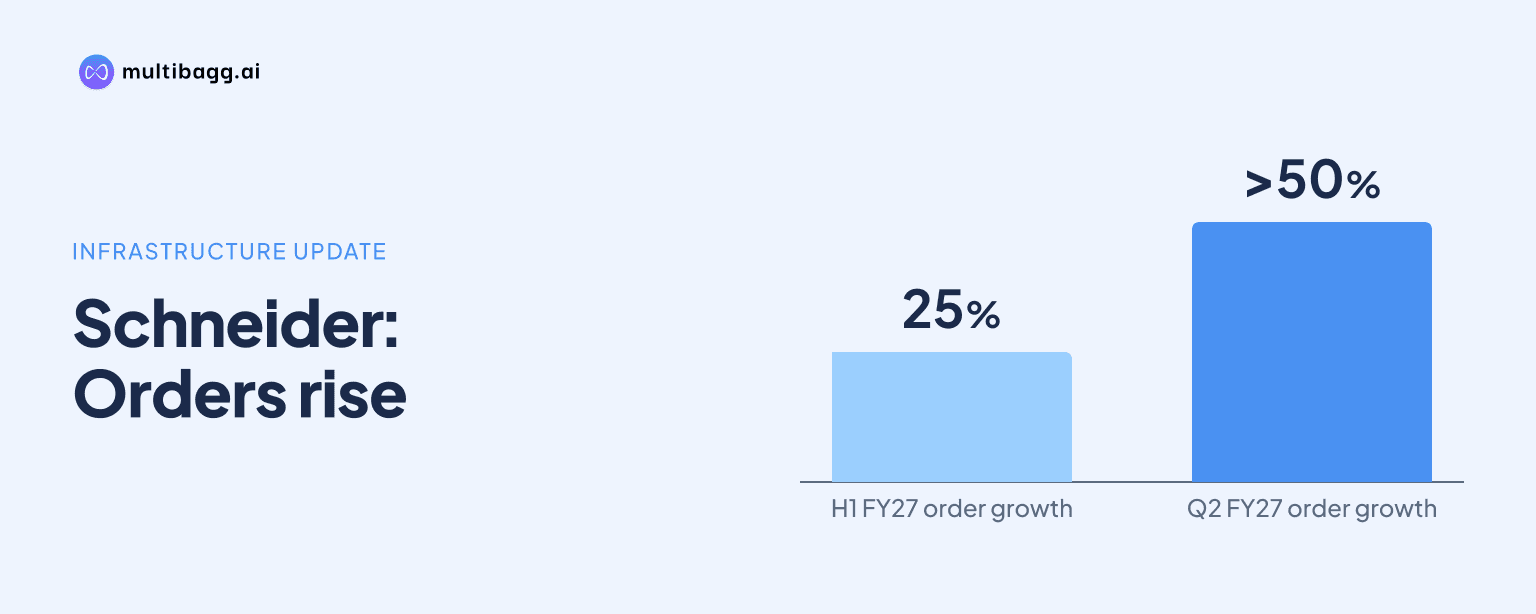
Schneider Electric Infrastructure Limited reported 25% order growth in H1 FY27, with Q2 order inflow exceeding ₹1,265 crore. Sales execution improved to around ₹780 crore in the September quarter, but Q2 profit declined 43% year-on-year to ₹30 crore as material costs remained under pressure.
Know Schneider Electric Infrastructure inside out
Results, valuation, peers and who's buying, in one view.
What did Schneider Electric Infrastructure report for H1 FY27?
Schneider Electric Infrastructure reported H1 FY27 order intake of ₹2,180 crore, up 25% year-on-year, while sales increased 12.5% to ₹1,400 crore. The figures point to continued demand across the company's electrical equipment and infrastructure-facing businesses, even as profitability faced pressure from input costs.
The September-quarter order inflow was above ₹1,265 crore, representing growth of more than 50% from a year earlier. This acceleration followed a slower sales-execution phase in the June quarter, when project progress was affected by execution delays.
Management identified energy transition, artificial intelligence and digitalisation, urbanisation, and Make in India as the four broad trends supporting its demand environment. The company also cited data centres, infrastructure and manufacturing as important areas underpinning order activity.
How did Q2 FY27 sales and margins change?
Schneider Electric Infrastructure accelerated Q2 FY27 sales to around ₹780 crore, close to 20% higher than the year-earlier quarter. H1 sales of ₹1,400 crore were up 12.5%, indicating that the second-quarter pickup partly offset the execution delays experienced during Q1.
Operating profitability improved sequentially as sales increased. EBIT margin rose from 4% in Q1 FY27 to 7.2% in Q2 FY27, while the H1 EBIT margin stood at 6.2%. The sequential improvement indicates better operating leverage in the September quarter as a higher volume of projects moved into execution.
However, the margin improvement did not translate into higher quarterly profit. Q2 FY27 profit after tax fell to ₹30 crore from ₹52 crore in the comparable quarter of the previous year, a decline of 43%. The company attributed the decline primarily to material-cost pressure.
Why did Q2 FY27 profit fall despite stronger execution?
Schneider Electric Infrastructure's Q2 FY27 profit declined because material-cost inflation continued to weigh on earnings. The earnings-call material also referred to commodity inflation and legacy contracts that did not contain price-variation clauses, which can limit the ability to pass higher input costs to customers promptly.
This creates a distinction between order growth, revenue conversion and net profitability. A rising order book can improve factory and project utilisation, as reflected in the sequential EBIT-margin recovery, but the final profit outcome also depends on the cost of materials and the pricing terms of contracts being executed.
The company had previously highlighted commodity inflation as a factor affecting gross margins in FY26 as well. In its Q4 FY26 update, it reported that orders rose 27.4% while sales increased 9.6%, but noted that gross margin had declined because of inflation in commodity costs. The Q2 FY27 result shows that input-cost management remains relevant even as demand stays firm.
Got a follow-up? Ask IRIS
What does the order growth mean for investors and operations?
Schneider Electric Infrastructure's ₹2,180 crore H1 order intake provides visibility for future project execution, while the Q2 sales acceleration suggests that some delayed work has moved forward. For investors, the key data points are the gap between 25% H1 order growth and 12.5% sales growth, alongside the recovery in quarterly EBIT margin to 7.2%.
The results do not include any reported share-price movement, so the disclosed financial and operating figures are the direct indicators available from the earnings call. The Q2 outcome presents both sides of the operating picture: demand and order inflow remained strong, while input costs reduced quarterly profit.
Customers and project partners are also connected to the execution trend because delivery schedules and customer readiness can influence the conversion of orders into sales. The company had described project cyclicality and customer readiness as factors behind execution delays in earlier periods. Its Q2 sales growth indicates improved execution, although the call did not provide a detailed project-wise conversion schedule.
Which demand trends are supporting Schneider Electric Infrastructure?
Schneider Electric Infrastructure is seeing demand support from energy transition, data centres, infrastructure, manufacturing, urbanisation, digitalisation and Make in India. These areas require electrical distribution, automation and related infrastructure, linking the company's order pipeline to broader investment activity.
The company had also reported strong demand in renewables, mobility and data centres during FY26. In Q3 FY26, it said it had secured major wins in data centres, renewables and core sectors, while quarterly sales crossed ₹1,000 crore. This background helps explain why order inflow has continued to grow even when margins have been affected by costs and project timing.
Management has said expansion projects are on track and has previously referred to pricing actions to support performance in coming quarters. The latest numbers provide evidence of improved quarterly sales execution and operating leverage, but they also show that commodity costs and contract pricing remain material variables for earnings.
Conclusion
Schneider Electric Infrastructure's H1 FY27 performance was defined by strong demand and improved Q2 execution. Orders rose 25% to ₹2,180 crore, Q2 sales grew close to 20% to around ₹780 crore, and EBIT margin improved sequentially to 7.2%. Yet Q2 profit fell 43% to ₹30 crore, showing that material costs continued to outweigh part of the benefit from higher volumes.
The next areas to watch are conversion of the order pipeline into sales, the durability of the Q2 margin recovery, and the effect of commodity costs and pricing actions on profitability. Progress on the company's expansion projects and demand from data centres, infrastructure and manufacturing will also remain relevant to its operating performance.