










Coal India, ReNew Win LoIs Under ₹7,280 Crore Magnet Scheme
Key highlights
- Four companies received LoIs under India’s ₹7,280 crore REPM Scheme on 19 November.
- The programme targets 6,000 tonnes per annum of integrated sintered rare-earth magnet capacity.
- The scheme includes a two-year plant gestation period and five years of sales-linked incentives.
- Midwest Energy plans to expand from 500 tonnes per annum to 1,200 tonnes per annum by August 2027.
powered by IRIS
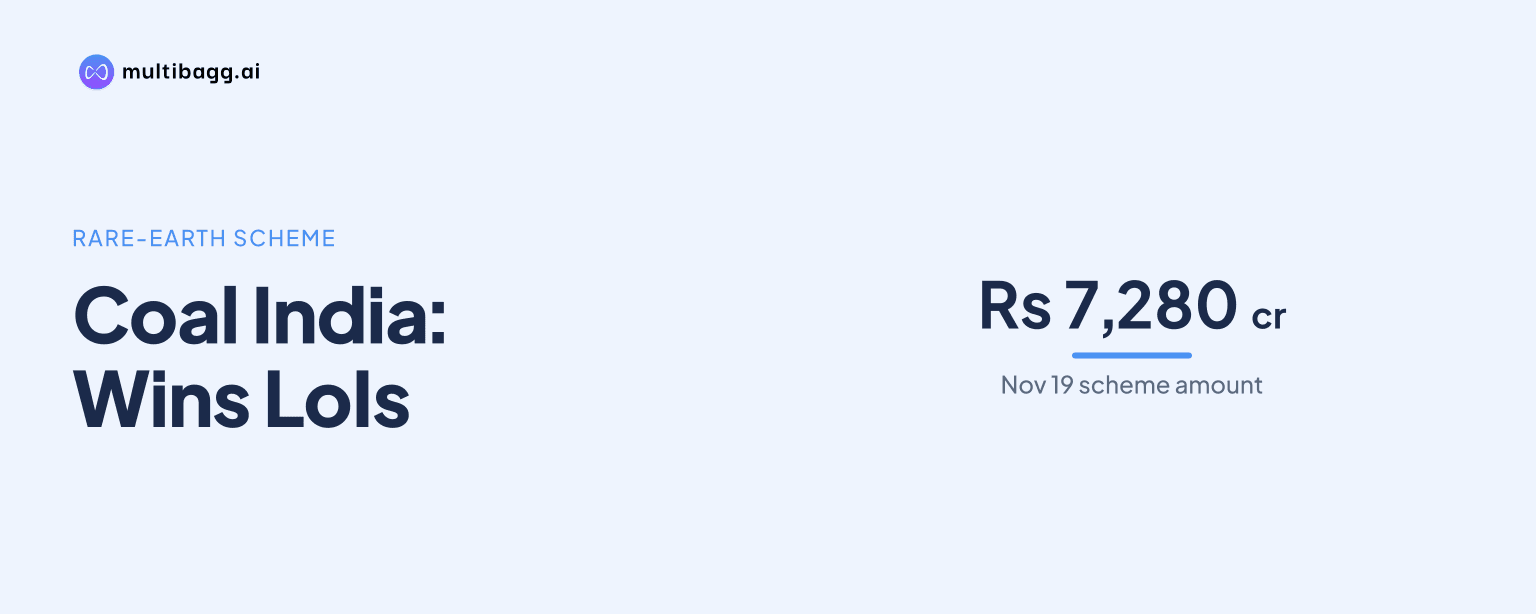
Coal India Limited, Prozeal Green Energy Limited, ReNew Private Limited and Midwest Energy Limited received letters of intent on 19 November under India’s ₹7,280 crore Rare Earth Permanent Magnets Scheme, which targets 6,000 tonnes of annual integrated sintered magnet manufacturing capacity.
Know Midwest Energy inside out
Results, valuation, peers and who's buying, in one view.
Which companies received rare-earth magnet scheme LoIs?
Coal India, Prozeal Green Energy, ReNew and Midwest Energy received the letters of intent, or LoIs, from the Ministry of Heavy Industries under the Scheme to Promote Manufacturing of Sintered Rare Earth Permanent Magnet, also called the REPM Scheme. Union Heavy Industries Minister H D Kumaraswamy handed over the LoIs after the ministry reviewed the companies’ manufacturing preparedness and capabilities.
The LoIs identify the four companies as successful bidders for a planned domestic rare-earth permanent magnet supply chain. The announcement is a step before commercial production, rather than confirmation that any facility has begun operating. Each recipient must establish an integrated manufacturing facility during the scheme’s gestation period before it can qualify for sales-linked incentives.
The four selections come from a competitive process. The Ministry of Heavy Industries had reported receiving 20 bids in August, of which 16 qualified for the financial bidding stage. The ministry has not disclosed the capacity allocation, investment outlay, plant locations, technology arrangements or production schedules for the four recipients.
What capacity does the REPM Scheme seek to create?
The REPM Scheme seeks to establish 6,000 tonnes per annum of integrated manufacturing capacity for sintered rare-earth permanent magnets in India. These magnets are used in electric-vehicle traction motors, wind-turbine generators, electronic devices and defence equipment, making domestic supply relevant to several industrial sectors.
Earlier scheme details envisaged allocating the total capacity among five beneficiaries. A beneficiary could be allotted up to 1,200 tonnes per annum. However, the latest announcement named four LoI recipients and did not state their individual allocations or clarify whether a fifth company will be selected.
The scheme will operate for seven years from the date of award. This includes a two-year gestation period for setting up an integrated manufacturing facility and five years of incentive disbursement linked to sales of REPM products. The structure means the LoIs begin a project-development phase, with incentive eligibility tied to later sales.
How did the bidding process and incentives differ?
The bidding process showed different incentive expectations among applicants. Prozeal Green Energy, ReNew and Midwest Energy sought per-kilogram incentives ranging from ₹243 to ₹505.05 under the scheme. The supplied bid information also said Coal India and a consortium led by IRP Infratech and BaRupOn sought zero production-linked incentives.
Midwest Energy submitted a bid seeking ₹505.05 per kilogram and proposed 1,200 tonnes per annum of production capacity. It also sought a ₹150 crore capital expenditure incentive. Midwest said its Phase I facility, with 500 tonnes per annum capacity, was under commissioning and that it planned to expand capacity to 1,200 tonnes per annum by August 2027.
The government’s LoI announcement did not disclose final incentive rates for the successful bidders. It also did not specify whether the bids submitted by the companies translate into final capacity or incentive allocations. Those details are important because the overall programme has a stated capacity target but no recipient-level award information in the announcement.
Got a follow-up? Ask IRIS
Why are domestic rare-earth magnets important for industry?
Domestic rare-earth magnet manufacturing is relevant because the targeted products are inputs for electric mobility, wind energy, electronics and defence systems. The programme is designed to build integrated capacity in India for sintered rare-earth permanent magnets, reducing reliance on imported components used by these sectors.
For Coal India, the LoI opens participation in a manufacturing programme outside its core coal business. For Prozeal Green Energy, ReNew and Midwest Energy, the awards provide a route into a domestic component supply chain connected to clean-energy equipment, transport and industrial applications. The announcement does not provide project-specific investment or operational details for any of the four companies.
The ministry also launched a ₹3,435 crore digital payment-security portal for electric-bus operators on the same day. The portal is aimed at protecting operators from payment defaults by public transport authorities. While both announcements relate to the broader industrial and transport ecosystem, the supplied details do not establish a direct operational link between the e-bus portal and the magnet awards.
What does the LoI award mean for investors and industry?
The LoI awards confirm the selected companies’ entry into the scheme but do not yet demonstrate manufacturing output, sales, or financial contribution. The two-year facility-development period is central to assessing execution because commercial production must follow the establishment of integrated plants.
For industry, the programme sets a defined policy framework for creating 6,000 tonnes per annum of magnet capacity. The available information supports the potential creation of domestic capacity, but it does not provide enough detail to assess recipient-wise production, final incentives, plant commissioning dates or procurement arrangements. Those disclosures will shape the programme’s operational impact.
Conclusion
The award of LoIs to Coal India, Prozeal Green Energy, ReNew and Midwest Energy moves India’s ₹7,280 crore REPM Scheme into its project-development stage. The programme targets 6,000 tonnes of annual integrated sintered rare-earth magnet capacity for applications spanning electric vehicles, wind turbines, electronics and defence equipment.
The next developments to watch are the government’s disclosure of individual capacity allocations and final incentive terms, along with progress on facility construction during the two-year gestation period. Midwest Energy’s stated plan to expand to 1,200 tonnes per annum by August 2027 is the only recipient-specific production timeline provided in the available information.