








Cubex plans ₹87 crore VIM project, trials by September 2027
Max Plan at ₹4,999/yr₹8,999

Find your next multibaggerBe a Pro Investor
Research stocks and track your picks on the go. Download the app.
Key highlights
- Cubex’s proposed VIM project has an estimated cost of ₹87 crore, including ₹75 crore from preferential warrants.
- Shareholders approved Cubex’s 50 lakh-warrant issue at ₹150 per warrant on 6 November 2026.
- Cubex expects VIM project trials in August–September 2027 after a July 2027 furnace milestone.
- Cubex reported a ₹90.50 crore order book as of 31 October 2026, led by ₹42 crore in heat exchangers.
powered by IRIS
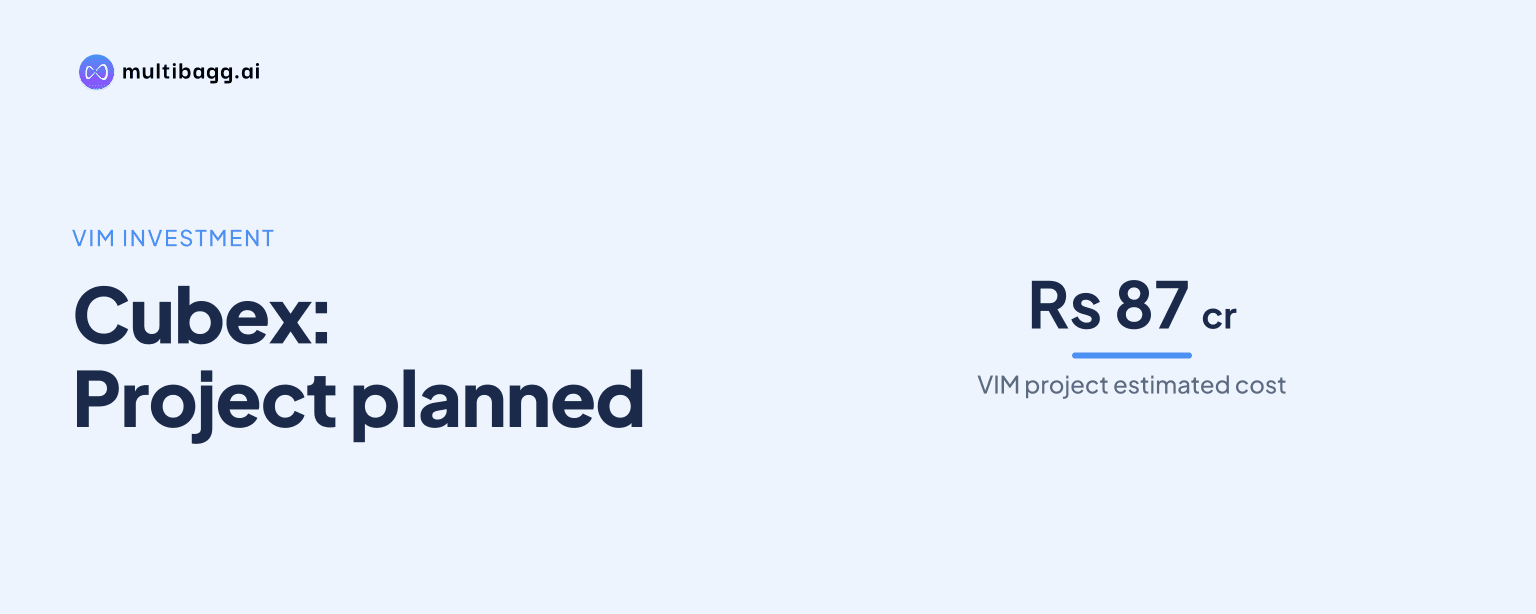
Cubex plans an ₹87 crore Vacuum Induction Melting, or VIM, project, with trials expected in August–September 2027, to enter titanium, nickel-based and high-purity copper alloys. The proposal uses ₹75 crore of preferential warrant proceeds and ₹12 crore of reserves, expanding beyond Cubex’s current copper, cupronickel and Monel portfolio.
Know Cubex Tubings inside out
Results, valuation, peers and who's buying, in one view.
How will Cubex fund and implement the VIM project?
Cubex plans to fund the ₹87 crore VIM project with ₹75 crore from a preferential warrant issue and ₹12 crore from company reserves for the balance of furnace cost and other equipment. Shareholders approved the preferential issue at an extraordinary general meeting held on 6 November 2026.
The issue comprises 50 lakh warrants priced at ₹150 each. Cubex Securities Ltd., a promoter-group allottee, is to receive 33.90 lakh warrants, while four non-promoter allottees are to receive 16.10 lakh warrants. The presentation identifies the warrant proceeds as funding for land, civil and electrical work and the VIM furnace.
Cubex’s implementation plan begins with land acquisition and civil and electrical works in December 2026. The furnace is scheduled for July 2027, followed by expected project trials in August–September 2027. The presentation describes this as a proposed project and the trial period as an expectation, rather than a commissioning date.
What alloys will the VIM facility enable Cubex to make?
Cubex says VIM is intended to enable alloy families it cannot make today, including nickel-based alloys, titanium and its alloys, beryllium copper, and zirconium/chrome alloys. Its current material base is copper, cupronickel and Monel, while the proposed facility would extend its manufacturing capability into specialised ferrous and non-ferrous alloys.
VIM melts and refines metal under vacuum, a process Cubex says removes dissolved gases and trace impurities, maintains narrow composition limits and protects reactive elements from oxidation. The mechanism is relevant for alloys containing aluminium, chromium and titanium, which the presentation says can be melted more reliably under vacuum conditions.
The proposed nickel-alloy range includes Inconel and Hastelloy for power, nuclear, oil and gas, and aerospace applications. Titanium and its alloys are targeted at aerospace, defence and heavy engineering, while beryllium copper and zirconium/chrome alloys are intended for nuclear, electrical and heavy-engineering uses. Cubex does not disclose production volumes, customer orders or revenue targets for these target materials.
Cubex also links the project to its oxygen-free copper qualification at 5 parts per million, or ppm, of oxygen. It says it has replaced imports in cupronickel, aluminium bronze, oxygen-free copper and Monel 400, while imports of 90/10 cupronickel tube and Monel have lead times of 12 to 16 weeks. The VIM plan is presented as an extension of this import-substitution approach to more demanding alloys.
Got a follow-up? Ask IRIS
Which sectors could Cubex serve through the expansion?
Cubex intends the VIM capability to address nuclear, electrical, aerospace, defence, oil and gas, and heavy-engineering sectors. The presentation lists approvals or certification links with Nuclear Power Corporation, the Department of Atomic Energy, Engineers India Limited, Naval Directorate of Quality Assurance and the Ordnance Factory under the Ministry of Defence.
Cubex’s listed clientele covers several of these end-markets, including Bharat Petroleum, IndianOil, Oil and Natural Gas Corporation, Hindustan Petroleum and Reliance Industries in petrochemicals and refining. Its other listed customers include GRSE, Mazagon Dock, Cochin Shipyard, ISRO, MIDHANI and Nuclear Fuel Complex across shipbuilding, space, defence and atomic-energy categories. The presentation does not identify contracts for alloys to be made through the proposed VIM facility.
Cubex had an order book of ₹90.50 crore as of 31 October 2026, led by heat exchangers at ₹42 crore and electrical-industry orders at ₹29 crore. Railways contributed ₹13 crore and defence ₹6.50 crore. This disclosed order book concerns the existing business and is separate from the VIM project, whose trials are expected in August–September 2027.
What changes and what remains unresolved for Cubex?
Cubex’s proposed project would broaden its product scope from copper, cupronickel and Monel into titanium and nickel-based speciality alloys, but each new grade must be qualified customer by customer. The presentation calls the initiative early stage, meaning the furnace proposal does not establish commercial approval for every target alloy or application.
The expansion plan follows H1 FY27 revenue of ₹148 crore, up 19.7% year on year, and profit after tax of ₹5.93 crore, up 99.4%. Earnings before interest, tax, depreciation and amortisation, or EBITDA, margin increased by 122 basis points to 5.78%, while profit-after-tax margin rose 160 basis points to 4.01%. These first-half results were generated before the VIM trials expected in 2027.
In Q2 FY27, Cubex reported revenue from operations of ₹82.99 crore, up 27.73% quarter on quarter, and EBITDA of ₹7.15 crore, up 407.56% quarter on quarter. EBITDA margin was 8.62%, an increase of 645 basis points, while profit after tax was ₹4.57 crore, up 234.77% quarter on quarter. The reported Q2 performance therefore reflects the existing business rather than sales from the proposed VIM facility.
The proposed funding structure also separates near-term project spending from the company’s operating order book. Of the ₹87 crore estimated cost, ₹50 crore is allocated to land, civil and electrical works and ₹25 crore to the furnace, with ₹12 crore of reserves covering the balance of furnace cost and other equipment. Cubex has not disclosed a post-trial capacity, utilisation plan or timetable for revenue from titanium and nickel-based grades.
Conclusion
Cubex is proposing a ₹87 crore step into speciality alloys through a VIM furnace and supporting infrastructure, financed mainly by a ₹75 crore preferential warrant issue approved on 6 November 2026. The project could add technical capability for titanium, nickel-based and high-purity copper alloys alongside the company’s current copper, cupronickel and Monel operations, while its ₹90.50 crore order book supports its existing business activity.
The next disclosed milestones are land, civil and electrical work in December 2026, the furnace in July 2027 and expected trials in August–September 2027. The key unresolved commercial step is customer-by-customer qualification of new alloy grades, as Cubex has not disclosed production capacity, orders or revenue targets for the planned titanium and speciality-alloy lines.

