










DEE Development Engineers Ltd Q2 Profit Rises 31.8% to ₹23.45 Crore
Key highlights
- DEE Development Engineers Ltd reported Q2 FY27 consolidated net profit of ₹23.45 crore, up 31.8% year on year.
- Consolidated revenue was ₹292.99 crore, up 8.5% year on year, while total income was ₹295.10 crore.
- The consolidated review was qualified over a ₹50.63 crore asset impairment assessment at Malwa Power Private Limited.
- DEE Development Engineers Ltd raised ₹300 crore through a preferential issue and used ₹225 crore for short-term borrowing repayment.
powered by IRIS
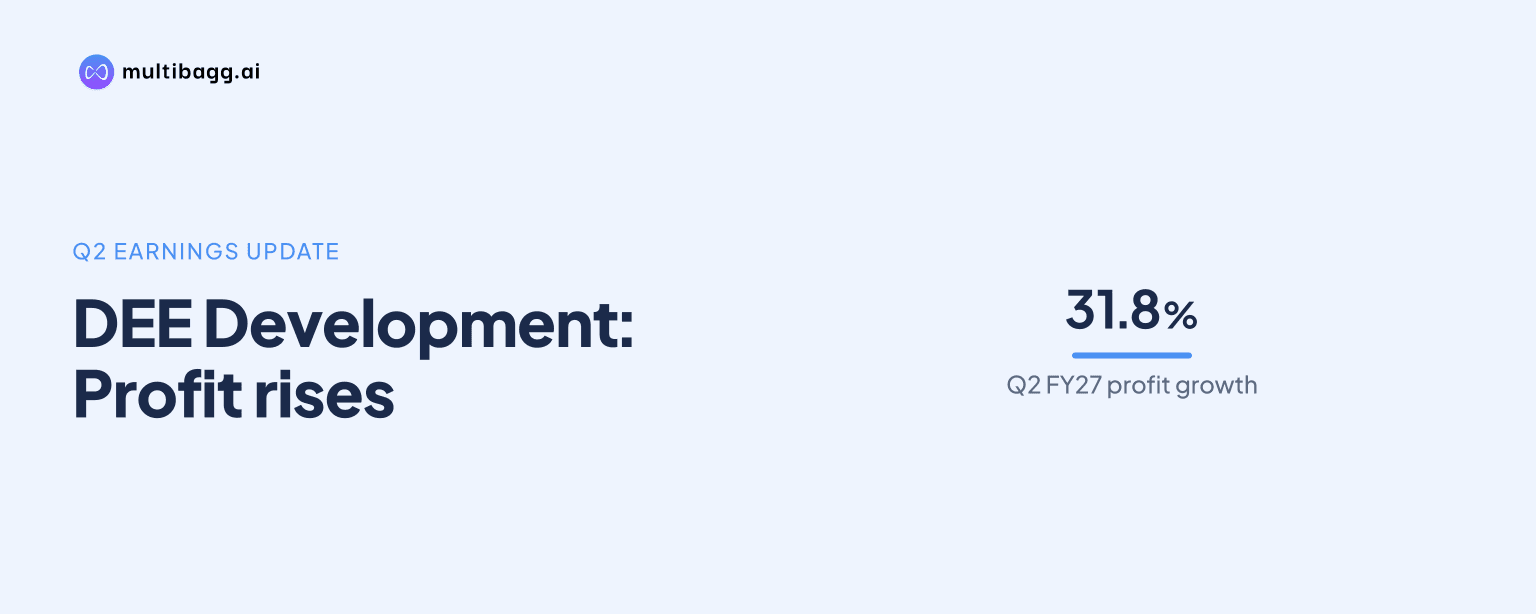
DEE Development Engineers Ltd reported a consolidated net profit of ₹23.45 crore for Q2 FY27, up 31.8% year on year, while consolidated total income rose 7.2% to ₹295.10 crore. The quarterly result is significant because profit growth outpaced income growth, although the consolidated review carried a qualification related to a subsidiary's asset impairment assessment.
Know DEE Development Engineers inside out
Results, valuation, peers and who's buying, in one view.
What were DEE Development Engineers Ltd's Q2 FY27 financial results?
DEE Development Engineers Ltd posted consolidated revenue of ₹292.99 crore in the July-September 2026 quarter, an increase of 8.5% from a year earlier and a sequential decline of 0.5%. Consolidated total income was ₹295.10 crore, up 7.2% year on year and down 0.6% from the preceding quarter. The difference between revenue and total income reflects other income reported in the consolidated financial statements.
Consolidated net profit rose 31.8% year on year to ₹23.45 crore. Basic earnings per share stood at ₹3.14 and was not annualised. The company reported an operating margin of 14.9% for the quarter. No exceptional items were reported in the quarter, meaning the reported profit did not include an exceptional gain or charge disclosed in the results.
How did the standalone business perform in Q2 FY27?
DEE Development Engineers reported standalone total income of ₹243.72 crore, up 10.4% year on year and 1.0% sequentially. Standalone net profit increased 31.5% year on year to ₹17.48 crore, while basic earnings per share were ₹2.34, not annualised. The standalone figures represent the company excluding its subsidiaries.
Standalone finance costs were ₹14.54 crore, equivalent to 6.0% of standalone total income. The gap between standalone and consolidated income and profit reflects the contribution of subsidiaries included in the group accounts. The standalone limited-review conclusion was unmodified, unlike the qualified conclusion issued for the consolidated financial statements.
The board approved the unaudited standalone and consolidated financial results for both Q2 FY27 and the half year ended 30 September 2026 at its meeting on 14 November 2026. The board-meeting notice had stated that the meeting would consider the quarterly and half-yearly financial results.
Got a follow-up? Ask IRIS
Why was the consolidated review report qualified?
The consolidated review report was qualified because the auditor could not assess whether an impairment was required for assets with a carrying value of ₹50.63 crore at Malwa Power Private Limited. Malwa Power is a subsidiary of DEE Development Engineers, and the auditor noted that an impairment assessment had not been made for these assets.
The review reports also referred to pending electricity-tariff litigation. The available filing does not state that an impairment has been booked or quantify any potential financial impact from the matter. The qualification instead identifies a limitation in the auditor's ability to evaluate whether the asset carrying value required an impairment adjustment.
For investors, the matter is relevant because an impairment, if eventually required, could affect the value of the subsidiary's assets and the consolidated financial statements. However, the results filing does not provide a confirmed impairment amount, final litigation outcome, or a timetable for resolution. The standalone financial statements did not carry the same modified conclusion.
How did DEE Development Engineers strengthen its funding position?
DEE Development Engineers raised ₹300 crore through a preferential issue during the quarter at ₹502 per share. The company said it used ₹225 crore from the proceeds to repay short-term borrowings. This use of proceeds links the capital raising directly to the company's short-term debt position.
Repayment of short-term borrowings can alter the funding mix and reduce the immediate refinancing requirement, though the filing does not quantify the resulting debt balance or interest savings. The reported standalone finance cost of ₹14.54 crore provides context for why borrowings and their servicing costs remain relevant financial indicators for shareholders.
Separately, the nomination and remuneration committee approved the allotment of 1,19,824 equity shares of face value ₹10 each under the DEE Employee Stock Option Scheme, 2023. The allotment was made on exercise of options at ₹10 per share and raised ₹1.2 lakh. The company has also scheduled an earnings conference call for 17 November 2026 at 3:00 PM IST to discuss Q2 and H1 FY27 operational and financial performance.
Conclusion
DEE Development Engineers delivered year-on-year profit growth ahead of its consolidated income growth in Q2 FY27, with net profit increasing 31.8% to ₹23.45 crore on total income of ₹295.10 crore. The ₹300 crore preferential issue and ₹225 crore repayment of short-term borrowings were important capital-structure developments during the quarter, while the 14.9% operating margin provides a measure of quarterly operating performance.
The main unresolved matter is the qualified consolidated review concerning the ₹50.63 crore carrying value of assets at Malwa Power and the pending tariff litigation. Investors will watch for management's comments on these matters, the deployment of the remaining preferential-issue proceeds, and operational details provided during the scheduled 17 November 2026 earnings call.