










Energy In Motion signs MoU for 500 electric freight vehicles
Key highlights
- Energy In Motion's MoU covers a proposed deployment of 500 electric heavy commercial vehicles.
- The initial rollout comprises 50 Ashwa 55-tonne electric tractors on the Mumbai-Pune corridor in October 2026.
- The fleet programme uses a 350-kWh battery-swapping model, while the contract value has not been disclosed.
- EIM's Talegaon facility has initial capacity of 5,000 vehicles per shift per year.
powered by IRIS
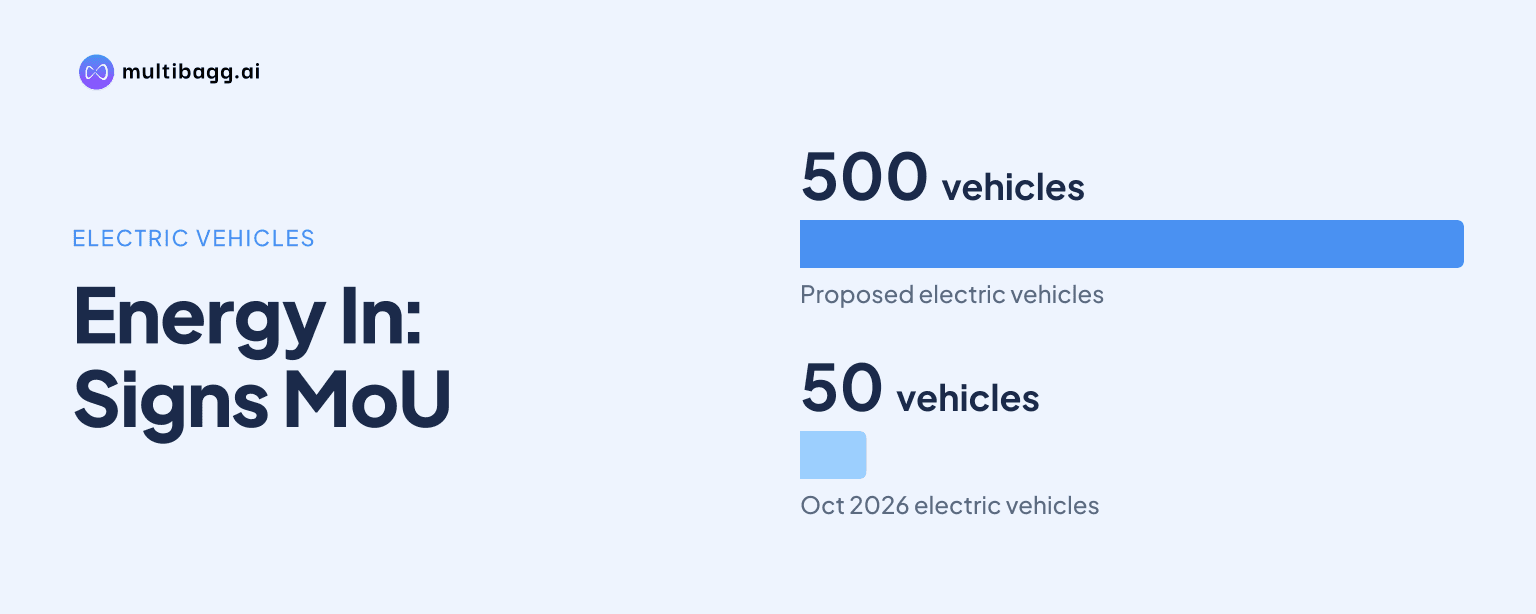
Energy In Motion Limited has signed a memorandum of understanding to deploy 500 electric heavy commercial vehicles across Indian freight corridors, with 50 Ashwa 55-tonne electric tractors scheduled for an initial Mumbai-Pune rollout in October 2026. The programme matters because it combines vehicle deployment with battery swapping and charging support for freight operations.
Know Ravindra Energy inside out
Results, valuation, peers and who's buying, in one view.
What does Energy In Motion's 500-vehicle MoU cover?
Energy In Motion Limited, or EIM, entered into the strategic MoU with Oil Field Warehouse & Services Limited and Radiance Green Mobility Private Limited for the deployment of 500 electric heavy commercial vehicles. Ravindra Energy Limited disclosed the update as EIM is its associate entity, in which it holds a 49.5% stake.
The proposed deployment is intended for major freight corridors with significant cargo movement. The announced rollout plan begins with 50 vehicles on the Mumbai-Pune corridor in October 2026 and subsequently covers the Mundra-Morbi-Ahmedabad and Mumbai-Delhi routes. Financial terms or the contract value of the MoU were not disclosed.
The vehicles will be EIM's Ashwa 55-tonne electric tractors. The company has said the fleet programme will use a 350-kWh battery-swapping model, alongside charging infrastructure and energy-management solutions. These elements are central to the operating model because heavy freight vehicles require high utilisation on cargo-intensive routes.
How will the freight deployment be implemented?
EIM will supply the electric tractors and support them through charging, battery-swapping and energy-management infrastructure. Oil Field Warehouse & Services and Radiance Green Mobility are expected to support the fleet deployment under the MoU, while the programme is structured around routes where freight volumes and operating utilisation are high.
Battery swapping is a key stated component of the plan. EIM has positioned the network as a way to limit refuelling-related downtime and support the economics of electric freight transport. The 350-kWh battery version has been homologated, according to the disclosed market update.
The deployment sequence also depends on the build-out of EIM's swapping network. The company had earlier partnered with Hindustan Petroleum Corporation Limited to establish charging and battery-swapping infrastructure at retail outlets across India. That partnership targeted 40 swapping stations by March 2027.
Got a follow-up? Ask IRIS
Why are these freight corridors important for EIM?
The Mumbai-Pune route is the announced starting point, before expansion to the Mundra-Morbi-Ahmedabad and Mumbai-Delhi corridors. These are identified in the disclosure as corridors suitable for freight operations, where vehicle utilisation, energy costs and operational efficiency can influence fleet operators' decisions.
For EIM, the MoU adds to an order pipeline for electric heavy vehicles. The company sold 277 electric heavy vehicles and leased a further 34 in FY26. It has also disclosed 66 e-tractors lined up for Transvolt and a separate MoU for 1,000 vehicles with DRIVN.
EIM opened its Electric Heavy-Duty Commercial Vehicle Complex at Ambi village in Talegaon, Pune, on October 14, 2026. The facility has initial capacity of 5,000 vehicles per shift per year and represents the first phase of a planned ₹1,000 crore investment in Maharashtra. Ravindra Energy said the complex was developed in just over a year from the signing of its MoU.
What does the MoU mean for Ravindra Energy and freight operators?
The MoU provides a disclosed pipeline for EIM's electric-truck operations, but it is not a reported revenue contract because the parties have not disclosed its financial value. For Ravindra Energy, which has approved the amalgamation of EIM with itself, the execution of EIM's commercial vehicle programmes is relevant to the associate's operating performance.
For fleet operators, the proposition rests on whether vehicle availability, charging access and swap-network coverage can support day-to-day freight schedules. EIM's proposed integrated model addresses these operational areas, although the announcement does not provide expected cost savings, utilisation figures or delivery milestones beyond the initial 50-vehicle rollout.
The announcement also highlights that heavy-duty electric mobility requires more than vehicle manufacturing. Fleet financing, deployment, operations and maintenance are separate requirements in commercial freight. In a separate proposed 500-vehicle programme involving Sorigin Green Mobility, Sorigin directors said their company would handle these functions, while EIM would provide vehicles and supporting energy infrastructure.
Conclusion
EIM's MoU with Oil Field Warehouse & Services and Radiance Green Mobility sets out a proposed 500-unit electric heavy commercial vehicle deployment, beginning with 50 vehicles on Mumbai-Pune. The arrangement links EIM's Ashwa 55-tonne tractors with 350-kWh battery swapping, charging and energy-management systems, while no deal value has been disclosed.
The next disclosed milestones are the October 2026 initial rollout and the planned extension to the Mundra-Morbi-Ahmedabad and Mumbai-Delhi freight routes. Investors will also track progress on EIM's nationwide swapping network, including the earlier target of 40 stations with Hindustan Petroleum Corporation Limited by March 2027.